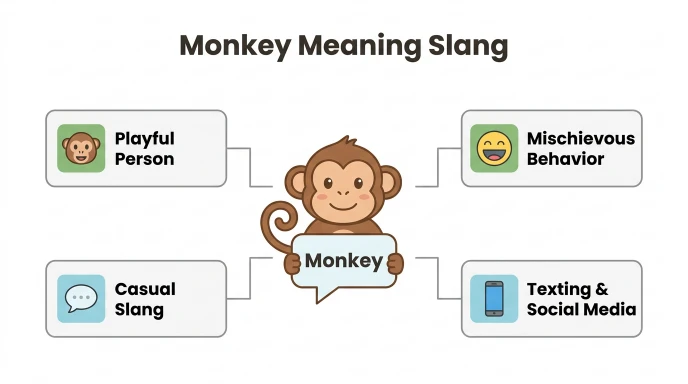
Monkey in slang is often used to describe a playful, mischievous, silly, or energetic person, though its meaning can vary depending on the context and region.
Monkey meaning slang is searched by many people because the word monkey has several slang meanings depending on the situation, country, and conversation. You might see it in text messages, TikTok comments, Reddit discussions, gaming chats, or hear it in everyday speech.
Sometimes it’s used as a playful nickname for someone who is energetic or mischievous. In other situations, it can have negative or offensive meanings, making context extremely important.
Because the term has multiple interpretations, understanding who is saying it, who it refers to, and where it’s being used helps avoid misunderstandings. This guide explains the most common slang meanings of monkey, where they’re used, and when it’s appropriate or inappropriate to use the term.
Quick Answer:
In slang, monkey most commonly describes someone who is playful, energetic, mischievous, or very active. However, in some contexts it can also be used as an insult or offensive racial slur, so it should always be used carefully and with awareness of the situation.
What Does Monkey Mean in Text?
In text messages and online conversations, monkey usually refers to someone’s playful personality.
For example:
“You’re such a little monkey today!”
This means the person is acting energetic, silly, or playful.
Parents often use the word affectionately for young children who enjoy climbing, running around, or making playful messes.
However, because monkey has historically been used as a racial insult against Black people, using it to describe someone especially based on their appearance or ethnicity is widely considered offensive and unacceptable.
The meaning depends entirely on context.
Monkey Full Form / Definition of the Slang
If you’re searching for monkey full form, the answer is simple:
Monkey is not an acronym and has no full form.
Instead, it is an English word that has developed several slang meanings over time.
Common slang meanings include:
- A playful or mischievous person.
- Someone who is energetic or constantly moving.
- A teasing nickname among friends or family.
- In certain contexts, an offensive insult that should never be used toward someone based on race or ethnicity.
Understanding which meaning applies requires paying attention to the conversation.
Different Meanings of Monkey Slang
1. Playful or Mischievous Person
This is the most common and harmless meaning.
Parents, teachers, and friends may call someone a little monkey because they are full of energy.
Example:
“Stop climbing the furniture, you little monkey!”
The tone is affectionate and playful.
2. Energetic Child
Adults often describe active children as monkeys.
Example:
“Those kids are little monkeys today.”
Again, this is usually meant kindly.
3. Friendly Nickname
Some close friends or family members use monkey as a nickname.
Example:
“Morning, monkey! Ready for school?”
This usage depends on a close relationship.
4. Offensive or Racist Usage
Unfortunately, monkey has also been used as a racist slur directed at Black people.
This usage is deeply offensive and unacceptable.
If the word is used to compare a person’s race, ethnicity, or appearance to a monkey, it is considered hateful language rather than harmless slang.
Because of this history, it’s important to be very careful when referring to people as “monkey,” especially outside close family settings.
Is Monkey Rude, Offensive, or Neutral?
The answer depends entirely on context.
| Usage | Tone |
| Talking to a playful child | Friendly |
| Family nickname | Affectionate |
| Friends joking with each other | Casual |
| Referring to someone’s race or appearance | Highly offensive |
| Professional communication | Usually inappropriate |
When in doubt, avoid calling adults “monkey” unless you know they are comfortable with the nickname.
Where Is Monkey Commonly Used?
The slang appears in:
- Text messages
- Family conversations
- TikTok
- Discord
- Snapchat
- Gaming chats
- Children’s books
- Everyday English
The offensive meaning may unfortunately appear in online harassment, but that usage should never be copied or encouraged.
Real-Life Examples of Monkey Usage
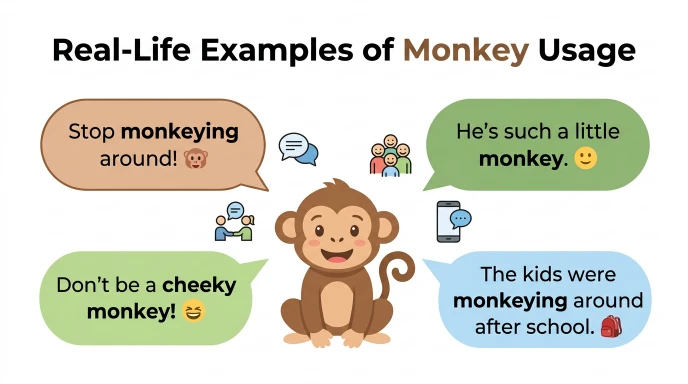
Friendly
“You’re such a cheeky little monkey!”
Casual
“My nephew is a little monkey he never sits still.”
Family
“Come here, monkey. Dinner is ready.”
Social Media
“This puppy acts like a monkey all day!”
Gaming
“Our teammate was jumping around like a monkey.”
In gaming, this usually refers to someone moving constantly rather than insulting them.
Origin and Background of the Slang
The playful meaning developed naturally because monkeys are known for being active, curious, and playful animals.
For generations, parents have compared energetic children to monkeys in an affectionate way.
However, during the colonial era and later periods of racism, the word was also used to dehumanize Black people. Because of this harmful history, many people are understandably sensitive to hearing the term used for adults or strangers.
Today, both meanings exist, making context extremely important.
Comparison with Similar Slang
| Slang | Meaning | Tone | Common Usage |
| Monkey | Playful or mischievous person | Friendly or offensive depending on context | Family, texting |
| Goofball | Silly person | Friendly | Everyday conversation |
| Rascal | Mischievous person | Friendly | Family |
| Troublemaker | Someone causing problems | Neutral | General English |
| Clown | Foolish or funny person | Casual | Social media |
Unlike these alternatives, monkey carries historical baggage in some contexts.
When to Avoid Using Monkey
Avoid using monkey when:
- Speaking to someone you don’t know well.
- Referring to adults in professional settings.
- Describing someone’s race or appearance.
- You’re unsure how the person will interpret it.
- Posting comments that could be misunderstood online.
If you’re complimenting someone’s personality, clearer words are usually safer.
Polite Alternatives
Instead of saying monkey, you can use:
- Playful
- Energetic
- Mischievous
- Silly
- Cheerful
- Goofball
- Rascal
- Lively
These alternatives avoid misunderstanding while expressing the same idea.
Why People Use This Slang
People continue using monkey because it quickly describes someone who is:
- Active
- Curious
- Playful
- Funny
- Always moving
- Full of energy
Parents especially use it affectionately with young children.
However, many people intentionally avoid the term because they recognize its offensive historical use in some situations.
Impact of Using Slang in Communication
Using monkey can make conversations feel warm and playful when everyone understands the intention.
Benefits
- Sounds affectionate in family settings.
- Describes energetic behavior.
- Easy to understand.
- Common in casual speech.
Possible Drawbacks
- Has multiple meanings.
- Can easily be misunderstood.
- May offend people because of its racist history.
- Not appropriate for professional communication.
Choosing more neutral words is often the safest option.
Is Monkey Safe for Social Media?
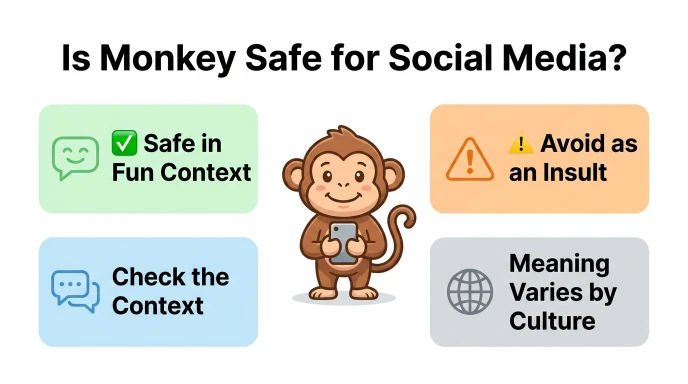
It depends.
Using monkey for pets, children, toys, or playful behavior is generally acceptable on platforms like:
- TikTok
- Discord
- X (formerly Twitter)
However, using monkey to describe or insult someone based on race or ethnicity is offensive and may violate community guidelines on many platforms.
Always consider context before posting.
Real-Life Examples by Tone
Friendly
“You’re my favorite little monkey!”
Casual
“He’s been acting like a monkey all afternoon.”
Argumentative
“Don’t call people names just because you’re upset.”
Gaming
“Our teammate kept climbing every wall like a monkey.”
Social Media
“My toddler has endless energy what a little monkey!”
Frequently Asked Questions
What does monkey mean in slang?
It usually refers to someone who is playful, mischievous, or energetic. In some contexts, however, it has been used as an offensive racial insult, making context extremely important.
What does monkey mean in texting?
In texting, monkey often describes someone acting silly, playful, or full of energy.
Does monkey have a full form?
No. Monkey is not an acronym and has no full form.
Is monkey a compliment?
It can be. Parents and close friends sometimes use it affectionately. However, it should never be used in a way that targets someone’s race or ethnicity.
Is monkey offensive?
It can be. While it is harmless in many family or playful contexts, using it toward someone because of their race is widely recognized as offensive and unacceptable.
Is monkey slang common on social media?
Yes. It appears frequently in casual conversations, memes, and captions, but users should be aware of its different meanings and use it responsibly.
Conclusion
Monkey meaning slang has more than one interpretation, which is why context matters so much. In everyday conversation, it often describes someone who is playful, energetic, curious, or mischievous, especially children or close friends. However, the word also has a history of being used as a racist insult, making it inappropriate in certain situations. Understanding monkey meaning slang, monkey full form, and what does monkey stand for helps you recognize the difference between affectionate, harmless usage and language that can be deeply offensive. When communicating online or in person, choosing respectful language and considering your audience will always lead to clearer and more positive conversations.
Read more about!
- Slang Word for Close Friend: Popular Slang Terms Explained
- Barbie Australian Slang: Definition, History & Common Examples
- Ski Mask Slang: Complete Guide to Its Meaning and Modern Usage

Hi, I’m Ryan Holden, a content writer with over 8 years of experience creating clear, engaging, and easy-to-understand content. I specialize in slang meanings, internet language, text abbreviations, and modern English expressions. My goal is to explain complex words in simple English with real-life examples so readers can quickly understand and use them correctly. I enjoy researching how language changes across social media, online communities, and everyday conversations, ensuring every article is accurate, helpful, and easy to read.