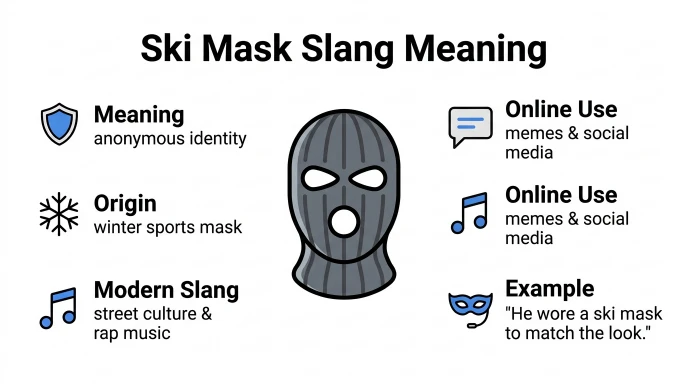
Ski mask slang usually refers to wearing a ski mask as a symbol of anonymity, toughness, or street culture, often seen in memes, rap music, and online slang.
Ski mask slang is a phrase people often search after seeing it in TikTok videos, rap lyrics, memes, gaming chats, or text messages.
While a ski mask is originally a piece of winter clothing designed to keep your face warm, its slang meaning has evolved through internet culture, music, and social media. Today, the phrase can symbolize anonymity, confidence, mystery, or someone acting suspicious, depending on the context.
Because ski mask slang has multiple meanings, it’s important to understand how people are using it rather than assuming it always refers to criminal activity. In many online conversations, the term is humorous, metaphorical, or connected to fashion trends rather than anything illegal.
Quick Answer:
In slang, ski mask usually refers to someone who is mysterious, anonymous, acting sneaky, or embracing a bold internet aesthetic. The exact meaning depends on the conversation and context.
What Does Ski Mask Mean in Text?
In texting and online conversations, ski mask rarely refers only to winter clothing. Instead, it often describes a person, appearance, or attitude.
Depending on the context, ski mask may mean:
- Someone hiding their identity.
- A mysterious or secretive person.
- A trendy fashion style.
- A humorous way of describing sneaky behavior.
- A reference to rap culture or internet memes.
For example:
“He showed up wearing a ski mask.”
Depending on the conversation, this could simply mean someone is wearing fashionable streetwear, dressing anonymously, or joking around.
Another example:
“Bro is in full ski mask mode.”
This usually means the person is acting secretive or keeping a low profile.
Ski Mask Slang Full Form
Ski mask is not an abbreviation, so it has no full form.
The term originally refers to a balaclava, a knitted face covering worn in cold weather.
In slang, however, ski mask has expanded to describe:
- An anonymous appearance.
- A mysterious personality.
- A streetwear fashion trend.
- A playful internet meme.
- A cultural reference in music and social media.
Related search terms include:
- ski mask meaning slang
- what does ski mask mean in text
- ski mask slang meaning
- what does ski mask stand for
Different Meanings of Ski Mask Slang
1. Anonymous or Hidden Identity
One of the most common slang meanings refers to hiding your identity.
Example:
“He’s in ski mask mode today.”
Meaning:
The person is staying private or doesn’t want attention.
2. Fashion and Streetwear
Many influencers and artists wear ski masks as part of modern street fashion.
Example:
“The ski mask completes the outfit.”
Here, the focus is on style rather than hiding one’s face.
3. Mysterious Personality
Sometimes people describe someone as ski mask because they don’t reveal much about themselves.
Example:
“She’s always in ski mask energy.”
Meaning:
She keeps people guessing and values privacy.
4. Meme or Internet Humor
Social media users sometimes jokingly mention a ski mask before describing a sneaky or unexpected situation.
Example:
“Me putting on the imaginary ski mask before taking the last cookie.”
The joke exaggerates a harmless action by pretending it requires secrecy.
Is Ski Mask Rude, Offensive, or Neutral?
Generally, ski mask is neutral, but the meaning depends on context.
Neutral
Most people use it to describe fashion or internet humor.
Example:
“That ski mask outfit looks cool.”
Playful
Friends often use the phrase jokingly.
Example:
“Don’t make me grab the imaginary ski mask for the last slice of pizza.”
This is simply humorous exaggeration.
Potentially Negative
Because ski masks are sometimes associated with crime in movies or news, the phrase can carry negative assumptions if used carelessly.
Avoid assuming someone wearing a ski mask has bad intentions. In many situations, it’s simply winter clothing or a fashion choice.
Where Is Ski Mask Commonly Used?
You’ll commonly see ski mask slang on:
- TikTok
- Discord
- Snapchat
- X (formerly Twitter)
- YouTube comments
- Gaming communities
- Meme pages
- Text messages
It’s especially popular in streetwear, music, and meme culture.
Real-Life Examples of Ski Mask Usage
Friendly
“That ski mask actually matches your outfit.”
Casual
“He’s wearing a ski mask because it’s freezing outside.”
Social Media
“The ski mask aesthetic is everywhere this winter.”
Meme
“Putting on my imaginary ski mask before eating the last donut.”
Gaming
“My character’s ski mask skin looks awesome.”
Origin and Background of Ski Mask Slang
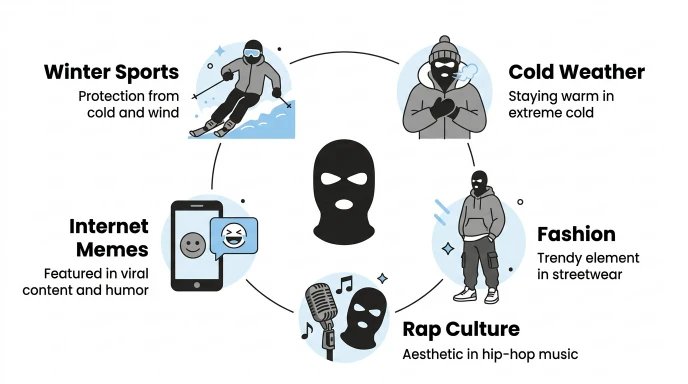
A ski mask, also called a balaclava, was originally designed to protect the face from cold weather during skiing, snowboarding, and military use.
Over time, the item became associated with several different cultures:
- Winter sports
- Street fashion
- Hip-hop culture
- Internet memes
- Music videos
- Online gaming cosmetics
As social media grew, people began using ski mask as shorthand for anonymity, mystery, or certain fashion trends rather than simply referring to cold-weather clothing.
Why People Use Ski Mask Slang
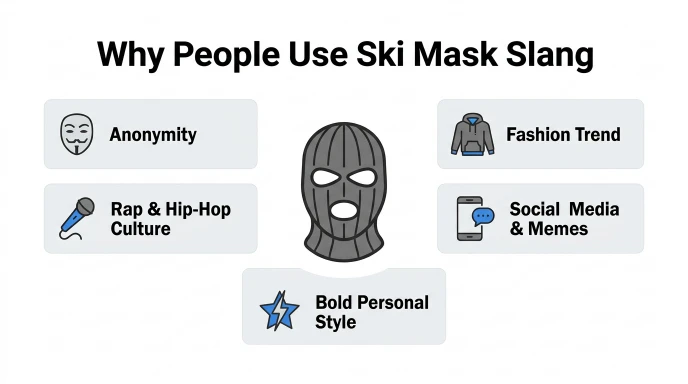
People use ski mask slang for several reasons:
- To describe a mysterious appearance.
- To reference internet memes.
- To talk about fashion.
- To joke about acting secretly.
- To describe anonymous online behavior.
- To reference music or pop culture.
The meaning depends almost entirely on context.
Comparison with Similar Slang
| Expression | Meaning | Tone | Common Usage |
| Ski Mask | Anonymous, mysterious, stylish | Neutral | Social media, memes |
| Incognito | Hidden identity | Neutral | Online and everyday speech |
| Low-Key | Quiet or private | Neutral | Texting, social media |
| Stealth Mode | Avoiding attention | Playful | Gaming, texting |
| Anonymous | Identity unknown | Neutral | General English |
Although these expressions are similar, ski mask often includes a visual or cultural reference rather than simply describing privacy.
When Should You Avoid Using Ski Mask?
Avoid using the expression when:
- It could unfairly stereotype someone.
- You’re discussing serious real-world events.
- The context may cause unnecessary misunderstandings.
- A more neutral description would work better.
Instead of assuming intentions, describe the situation accurately.
Polite Alternatives to Ski Mask
If you’re referring to someone who prefers privacy, consider these alternatives:
- Private
- Low-key
- Anonymous
- Mysterious
- Reserved
- Discreet
- Incognito
- Keeping a low profile
These expressions work well in both casual and professional conversations.
Impact of Using Slang in Communication
Using ski mask slang can make conversations feel modern, especially among younger audiences.
Benefits
- Adds humor.
- Reflects internet culture.
- Connects with meme trends.
- Makes conversations more engaging.
Drawbacks
- May confuse people unfamiliar with the slang.
- Context can easily be misunderstood.
- Some readers may associate it with negative stereotypes.
Using the phrase thoughtfully helps avoid confusion.
Is Ski Mask Safe for Social Media?
Yes. Ski mask is generally safe to use on social media when discussing fashion, memes, gaming, or internet culture.
However, avoid using the phrase to glorify illegal activities or to stereotype individuals. In most casual conversations, it’s simply a reference to clothing, style, or internet humor.
Real-Life Examples in Different Contexts
Friendly
“That black ski mask looks great with your jacket.”
Casual
“It’s so cold today that everyone is wearing a ski mask.”
Argumentative
“Don’t judge someone just because they’re wearing a ski mask in winter.”
Gaming
“I finally unlocked the ski mask cosmetic.”
Social Media
“The ski mask trend is becoming popular again.”
Texting
Friend: “Why are you hiding in every photo?”
You: “I’m in full ski mask mode today.”
Comparison: Ski Mask vs. Balaclava
These terms are often confused because they describe the same item.
| Feature | Ski Mask | Balaclava |
| Original Meaning | Face covering for cold weather | Technical name for the garment |
| Slang Usage | Very common | Rare |
| Fashion Reference | High | Moderate |
| Social Media Popularity | Very high | Lower |
| Everyday Recognition | High | Moderate |
In modern slang, ski mask is far more common than balaclava.
FAQs
What does ski mask mean in slang?
In slang, ski mask usually refers to someone who appears mysterious, anonymous, private, or follows a streetwear-inspired style. The exact meaning depends on the context.
Is ski mask slang offensive?
No. The phrase is generally neutral. However, avoid using it in ways that stereotype people or imply criminal behavior without reason.
Does ski mask have a full form?
No. Ski mask is a regular English term and is not an abbreviation.
Where is ski mask slang commonly used?
It’s popular on TikTok, Instagram, Reddit, Discord, Snapchat, gaming communities, and in text messages.
Is ski mask always related to crime?
No. While movies and news sometimes create that association, in modern slang the term often refers to fashion, memes, privacy, or internet culture.
What is the difference between a ski mask and a balaclava?
They usually refer to the same type of face covering, but balaclava is the traditional name, while ski mask is the more commonly used everyday term.
Conclusion
Understanding ski mask slang helps you recognize that the phrase has evolved far beyond its original meaning as winter clothing. Today, it commonly represents anonymity, privacy, modern streetwear, internet humor, or a mysterious personality, especially on TikTok, Reddit, Instagram, Discord, and other social platforms.
Like many slang expressions, the meaning depends on the context rather than the words themselves. In most casual conversations, ski mask is a neutral expression connected to fashion, memes, or online culture not a reference to illegal behavior. Paying attention to the surrounding conversation will help you interpret and use the term accurately.
Read more about!
- Slang Word for Close Friend: Popular Slang Terms Explained
- Lowkey in Slang: Simple Meaning, Examples & Everyday Usage
- Honduras Slang Bad Words: Popular Offensive Terms Explained

Hi, I’m Zunaira Shafiq, a slang writer and language enthusiast. I enjoy exploring modern slang, internet expressions, texting abbreviations, and social media terms, then explaining them in simple, easy-to-understand English. My goal is to help readers understand the meaning, origin, and correct usage of popular slang words through clear definitions and real-life examples. I love making online language easier for students, language learners, and anyone who wants to stay updated with modern communication.