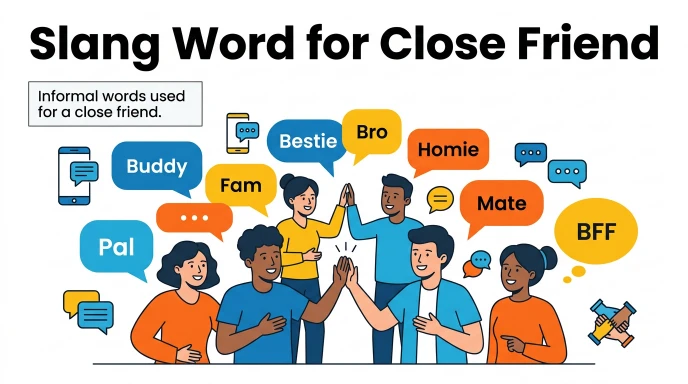
Slang word for close friend is a popular search because people often see casual words like bro, bestie, homie, fam, or mate in text messages, TikTok videos, Instagram captions, and online chats. These informal terms help people express friendship in a fun, relaxed, and personal way.
Depending on where you live and who you’re talking to, the slang word for a close friend can change. Some are common worldwide, while others are more popular in specific countries or online communities.
Understanding these slang words helps you communicate naturally and avoid misunderstandings when chatting with friends or reading social media posts.
Quick Answer:
A slang word for close friend is an informal nickname used to describe someone you trust and care about, such as bestie, bro, homie, fam, buddy, or mate.
What Does Slang Word for Close Friend Mean in Text?
In texting and online conversations, a slang word for a close friend is an informal way to address someone you know well. These words show friendship, trust, and familiarity rather than a formal relationship.
For example:
- “Thanks for helping me, bestie!”
- “What’s up, bro?”
- “You’re always there for me, homie.”
The exact meaning depends on the slang term, your relationship with the other person, and the situation.
Full Form / Definition of the Slang
Unlike abbreviations such as LOL or BRB, slang words for close friend usually do not have a full form.
Instead, they are informal words or nicknames people use to refer to someone they are close with.
Common examples include:
| Slang | Meaning |
| Bestie | Best friend |
| Bro | Brother or close male friend |
| Homie | Trusted friend |
| Fam | Close friend or family-like person |
| Buddy | Friend or companion |
| Mate | Friend (common in the UK and Australia) |
| Pal | Friend |
| BFF | Best Friends Forever |
Is It Rude, Offensive, or Neutral?
Most slang words for close friends are friendly and neutral.
However, context matters.
Usually Friendly
- Bestie
- Buddy
- Pal
- Mate
- Homie
- Bro
Can Sound Rude in Certain Situations
Some words like bro or buddy may sound sarcastic if used during an argument.
For example:
“Listen, buddy, that’s not what happened.”
The tone makes the difference.
Where Is It Commonly Used?
These slang terms appear in many everyday conversations, including:
- Text messages
- TikTok comments
- Instagram captions
- Snapchat chats
- Discord servers
- Reddit discussions
- Online gaming
- School conversations
- College life
- Workplace chats among friends
Many influencers and content creators also use these words to sound more casual and relatable.
Popular Slang Words for a Close Friend
Here are some of the most common options.
Bestie
One of the most popular modern slang terms for a best friend.
Example:
You’re my bestie forever.
Bro
Originally meant “brother,” but now commonly refers to a close friend.
Example:
Thanks, bro!
Homie
Popular in American English and hip-hop culture, meaning a trusted close friend.
Example:
My homie always has my back.
Fam
Short for family, but often used for very close friends.
Example:
You’re family, fam.
Buddy
A classic informal word for a friend.
Example:
Hey buddy, how’s everything?
Mate
Very common in the UK, Australia, and New Zealand.
Example:
Thanks, mate!
Pal
A friendly, traditional way to say friend.
Example:
Good to see you, pal.
Why People Use These Slang Words
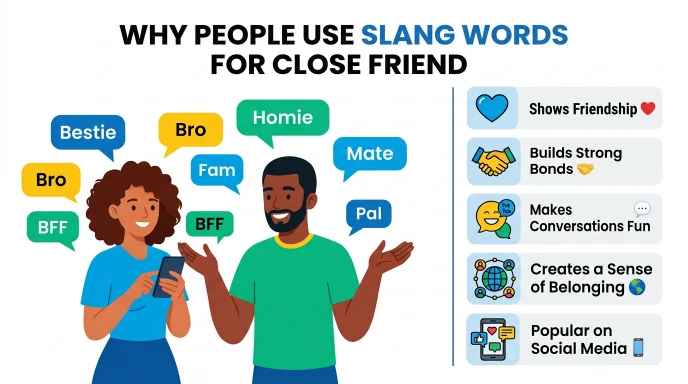
People use slang because it makes conversations feel:
- More relaxed
- More personal
- Friendlier
- More expressive
- More natural
Instead of saying:
Hello, my close friend.
Most people simply say:
Hey bro!
or
Hi bestie!
The shorter wording feels warmer and more conversational.
Origin and Background
Friendship slang has existed for generations.
Some examples have different origins:
- Bro comes from “brother.”
- Buddy dates back more than a century.
- Mate has long been popular in British English.
- Homie became widely known through American urban culture and hip-hop.
- Bestie became especially popular through social media in the 2010s.
Today, platforms like TikTok and Instagram help spread new friendship slang around the world.
Real-Life Examples of Usage
Friendly
Happy birthday, bestie!
You’re the best, bro.
Casual
Let’s grab coffee, buddy.
Thanks, mate.
Argumentative
Relax, buddy. I wasn’t talking about you.
Okay, bro, whatever you say.
Gaming
Nice save, homie!
GG, bro. Let’s play again tomorrow.
Social Media
Love you, bestie ❤️
My fam always supports me.
Comparison with Similar Slang
| Slang | Meaning | Common Usage | Tone |
| Bestie | Best friend | Social media, texting | Very friendly |
| Bro | Close friend | Everyday conversation | Casual |
| Homie | Trusted friend | Gaming, texting | Friendly |
| Fam | Family-like friend | Online chats | Warm |
| Mate | Friend | UK, Australia | Casual |
| Buddy | Friend | General English | Friendly |
| Pal | Friend | Everyday speech | Neutral |
When to Avoid Using These Slang Words
Although these expressions are common, they are not suitable everywhere.
Avoid using them:
- During job interviews
- In formal emails
- With customers unless appropriate
- In academic writing
- When speaking to someone who prefers formal communication
In professional settings, use:
- Friend
- Colleague
- Team member
- Classmate
- Companion
Polite Alternatives
If you want a more formal option, try:
- Friend
- Close friend
- Dear friend
- Companion
- Colleague
- Neighbor
- Classmate
These work well in professional or respectful conversations.
Impact of Using Slang in Communication
Using friendship slang can make conversations:
More Personal
It creates a stronger emotional connection.
More Relaxed
People often feel more comfortable.
More Modern
It reflects current online communication styles.
More Relatable
Many younger users naturally speak this way on social media.
However, using too much slang in formal situations may appear unprofessional.
Is It Safe for Social Media?
Yes.
Most slang words for close friends are completely safe for:
- TikTok
- Snapchat
- Discord
- X (formerly Twitter)
Just make sure the slang matches your audience and the tone of the conversation.
FAQs
What is the most common slang word for a close friend?
Bestie, bro, homie, buddy, mate, and fam are among the most commonly used slang words.
What does “bestie” mean?
Bestie simply means your best friend or someone you’re very close to.
Is “bro” only used for men?
No. Although it originally referred to a brother, many people now use “bro” casually with friends regardless of gender.
Is “homie” offensive?
No. It is generally a friendly slang term for a trusted friend, though it may not fit formal situations.
What does slang word for close friend stand for?
It doesn’t stand for anything. It refers to informal words people use instead of saying “close friend.”
Which slang word is best for texting?
“Bestie,” “bro,” “fam,” and “homie” are some of the most popular choices in text messages and social media.
Conclusion
A slang word for close friend is an informal way to refer to someone you trust and enjoy spending time with. Popular choices include bestie, bro, homie, buddy, mate, pal, and fam, each carrying a slightly different tone depending on the relationship and cultural context. While these expressions are perfect for texting, social media, and casual conversations, they should generally be avoided in formal or professional settings. By understanding their meaning, tone, and appropriate usage, you can communicate more naturally and confidently in both online and everyday conversations.
Read more about!
- OC Meaning in Slang: Definition, Examples & Everyday Usage
- Guap Slang Meaning: Simple Definition, Origin & Texting Examples
- What Is Sherm Slang For? Complete Guide with Examples

Hi, I’m Zunaira Shafiq, a slang writer and language enthusiast. I enjoy exploring modern slang, internet expressions, texting abbreviations, and social media terms, then explaining them in simple, easy-to-understand English. My goal is to help readers understand the meaning, origin, and correct usage of popular slang words through clear definitions and real-life examples. I love making online language easier for students, language learners, and anyone who wants to stay updated with modern communication.