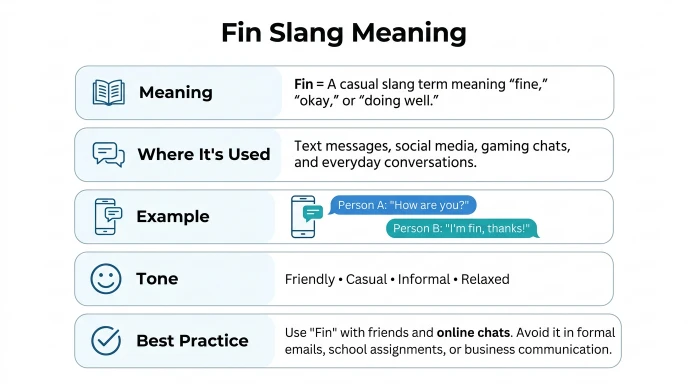
Fin slang is a casual term that can mean the end, money (especially a five-dollar bill), or a fin-shaped object, depending on the context.
Fin slang is a term that can have several meanings depending on the conversation, platform, and region. You may come across fin in text messages, TikTok captions, Reddit discussions, Discord chats, gaming communities, or casual conversations.
Sometimes it simply means “the end,” while in other contexts it refers to money, particularly a five-dollar bill or five units of currency in older American slang. Because the word has more than one meaning, many people search for its definition before using it in conversation.
Understanding the context is the key to interpreting fin correctly. This guide explains the different slang meanings of fin, where it’s commonly used, how it developed over time, and when it’s appropriate to use it.
Quick Answer:
In slang, fin most commonly means “the end” (borrowed from the French word fin) or a five-dollar bill in older American slang. The correct meaning depends on the context.
What Does Fin Mean in Text?
In text messages and online conversations, fin usually has one of two meanings.
1. “The End”
Many people write fin at the end of a story, joke, meme, or post to indicate that it has finished.
Example:
“That’s how I accidentally deleted my homework. Fin.”
Here, fin simply means:
“The end.”
2. Five Dollars (Older American Slang)
In older American slang, a fin refers to a $5 bill.
Example:
“Can you lend me a fin until tomorrow?”
Meaning:
“Can you lend me five dollars?”
This usage is much less common among younger speakers today.
Fin Full Form / Definition of the Slang
If you’re searching for fin full form, here’s the answer:
Fin is not an acronym and has no full form.
Instead, it comes from two different origins:
- The French word fin, meaning “end.”
- American slang referring to a $5 bill.
Related searches include:
- fin meaning slang
- what does fin stand for
- fin meaning in text
The meaning depends entirely on the conversation.
Is Fin Rude, Offensive, or Neutral?
Fin is generally neutral.
| Usage | Tone |
| “The end” | Neutral |
| Five-dollar slang | Casual |
| Storytelling | Friendly |
| Social media | Informal |
| Professional writing | Usually unnecessary |
The word is not offensive and is considered safe in everyday conversations.
Where Is Fin Commonly Used?
You may see fin in:
- Text messages
- TikTok
- Discord
- X (formerly Twitter)
- Storytelling
- Online forums
- Meme pages
- Older American slang
- Film references
Many creators use fin at the end of humorous posts or personal stories.
Different Meanings of Fin Slang
1. Fin = The End
This is the most common modern usage.
Example:
“After three hours of fixing my computer, it finally worked. Fin.”
The word adds a dramatic or humorous ending.
2. Fin = Five Dollars
Older American slang uses fin to mean $5.
Example:
“I only have a fin in my wallet.”
Meaning:
“I only have five dollars.”
Although still recognized, this meaning is less common today.
3. Fin as a Stylistic Ending
Some writers intentionally use fin to imitate old movies, silent films, or dramatic storytelling.
Example:
“The mystery was finally solved… Fin.”
Real-Life Examples of Fin Usage
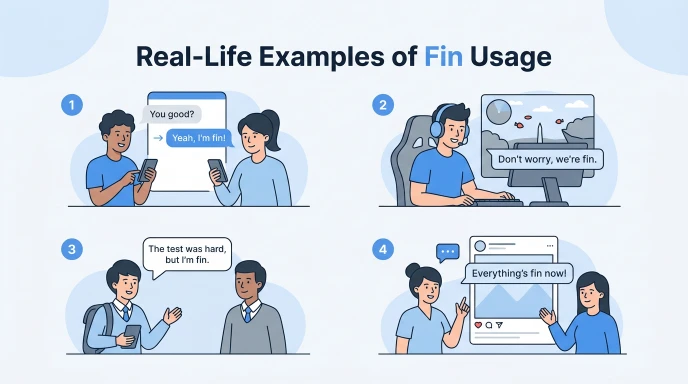
Friendly
“That was the funniest story ever. Fin.”
Casual
“Can I borrow a fin?”
Social Media
“Vacation photos are finally finished. Fin.”
Storytelling
“And that’s how we missed the train. Fin.”
Gaming
“Final boss defeated. Fin.”
Origin and Background of the Slang
The slang has two separate origins.
French Origin
The French word fin simply means “end.”
For many years, classic European and silent films displayed FIN on the screen instead of “The End.” This made the word recognizable around the world.
American Slang Origin
The money-related meaning dates back to American slang in the late 19th and early 20th centuries.
A fin became a nickname for a $5 bill, although the exact reason is uncertain. Some historians believe it may relate to the design or historical appearance of early U.S. currency.
Today, the storytelling meaning is far more common online.
Comparison with Similar Slang
| Slang | Meaning | Common Usage | Tone |
| Fin | The end | Storytelling | Neutral |
| End | Conclusion | Everyday English | Neutral |
| GG | Good game | Gaming | Friendly |
| That’s a wrap | Finished | Entertainment | Casual |
| Fin | Five dollars | Older American slang | Casual |
When to Avoid Using Fin
Avoid using fin when:
- Writing formal business documents.
- Completing academic assignments.
- Speaking with people unfamiliar with the expression.
- Discussing money if clarity is important.
Instead of saying fin, use five dollars or the end if your audience may not understand the slang.
Polite Alternatives
Depending on the meaning, you can use:
For “the end”:
- The end
- Finished
- That’s all
- Conclusion
- Done
For “$5”:
- Five dollars
- $5 bill
- Five bucks
- Five
These alternatives are easier for international audiences to understand.
Why People Use This Slang
People continue using fin because it is:
- Short.
- Easy to type.
- Recognizable.
- Dramatic.
- Nostalgic.
- Popular in storytelling.
The money meaning survives mostly because of older American slang and classic movies.
Impact of Using Fin Slang in Communication
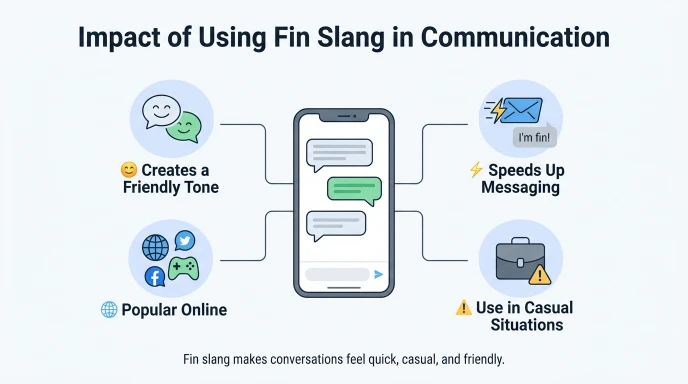
Using fin can make conversations feel more creative.
Benefits
- Adds personality.
- Creates humorous endings.
- Easy to recognize.
- Common in storytelling.
Possible Drawbacks
- Some readers won’t know the money meaning.
- Younger audiences may never have heard it used for $5.
- It may confuse non-English speakers.
Choosing the right context improves communication.
Is Fin Safe for Social Media?
Yes.
Fin is completely safe to use on:
- TikTok
- Discord
- X (formerly Twitter)
- YouTube
It contains no offensive language and is commonly used to end stories, videos, or humorous posts.
Real-Life Examples by Tone
Friendly
“We finally finished the project. Fin.”
Casual
“I’ve only got a fin left until payday.”
Argumentative
“That’s all I have to say. Fin.”
Gaming
“Quest complete. Fin.”
Social Media
“Vacation album uploaded. Fin.”
Frequently Asked Questions
What does fin mean in slang?
Fin usually means “the end” or, in older American slang, a five-dollar bill.
What does fin mean in text?
In texting, fin most often means “the end” and is used to finish a story, joke, or conversation.
Does fin have a full form?
No. Fin is not an acronym and has no full form.
What does fin stand for?
It doesn’t stand for anything. It is either the French word for “end” or an older slang term for $5.
Is fin still used for five dollars?
Yes, but mostly in older American slang. Today, most people simply say five bucks or five dollars.
Is fin slang safe for social media?
Yes. It is a neutral expression commonly used in captions, memes, stories, and online conversations.
Conclusion
Fin slang has two well-known meanings, and the correct interpretation depends on the context. In modern texting and social media, fin most often means “the end,” making it a creative way to finish a story, post, or joke. In older American slang, it can also refer to a $5 bill, though this usage is much less common today. Understanding fin meaning slang, fin full form, and what does fin stand for helps you recognize the word if you’re reading online conversations, classic films, or older American expressions. Used in the right context, fin is a simple, harmless slang term that adds personality and style to everyday communication.
Read more about!
- Grassed Slang: Definition,Texting Examples & Everyday Usage
- Nothing in Slang: Meaning, Origin, Uses & Real-Life Examples
- MF Slang: Complete Guide with Real-Life Examples

Hi, I’m Zunaira Shafiq, a slang writer and language enthusiast. I enjoy exploring modern slang, internet expressions, texting abbreviations, and social media terms, then explaining them in simple, easy-to-understand English. My goal is to help readers understand the meaning, origin, and correct usage of popular slang words through clear definitions and real-life examples. I love making online language easier for students, language learners, and anyone who wants to stay updated with modern communication.