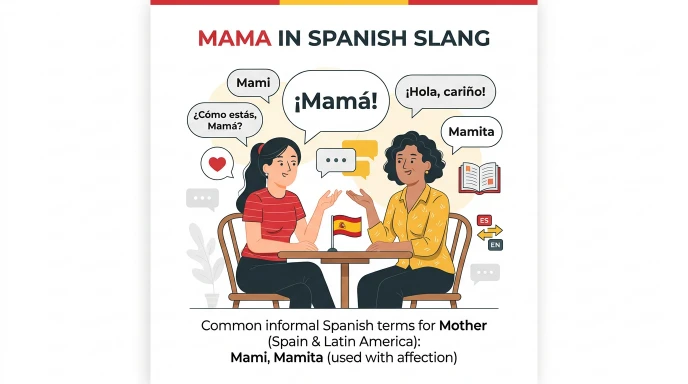
Mama in Spanish slang is an informal term that usually means “mom” or “mother,” though in some Spanish-speaking regions it can have different slang meanings depending on the context.
Mama in Spanish slang is a phrase many people search for after hearing it in Spanish songs, movies, TikTok videos, or conversations with native speakers.
While mamá literally means “mom” or “mother” in Spanish, the word mama (with or without the accent, depending on context) can also have several slang meanings. These meanings vary across Spanish-speaking countries, making context especially important.
In some regions, mama is used as a warm nickname for a woman or romantic partner. In others, it appears in idioms or slang expressions that have completely different meanings.
Because these uses differ by country, it’s helpful to understand both the standard meaning and the regional slang before using the word yourself.
Quick Answer:
In Spanish slang, mama can be an affectionate nickname, part of regional expressions, or simply mean “mom.” Its exact meaning depends on the country, context, and tone of the conversation.
What Does Mama in Spanish Slang Mean in Text?
In text messages and social media, mama may have several meanings.
1. Affectionate Nickname
One of the most common slang uses is as a warm nickname.
Example:
“Hola, mama. ¿Cómo estás?”
Depending on the relationship, this can mean something like:
- Sweetheart
- Beautiful
- Dear
- Babe
This usage is especially common between couples or close friends in some Latin American countries.
2. Mother
The standard meaning remains the most common.
Example:
“Voy a llamar a mi mamá.”
Meaning:
“I’m going to call my mom.”
3. Part of Regional Slang Expressions
In some countries, mama appears in informal expressions or idioms. These expressions often have meanings that cannot be understood by translating each word literally.
For this reason, always consider the full sentence rather than the word alone.
Mama Full Form / Definition of the Slang
If you’re searching for mama full form, the answer is simple:
Mama is not an acronym and has no full form.
The word comes from the Spanish noun mamá, meaning mother.
In slang, however, it may also be used as:
- A term of affection.
- A playful nickname.
- Part of regional idioms.
- A respectful or friendly way to address a woman in certain communities.
The intended meaning depends entirely on context.
Is Mama Rude, Offensive, or Neutral?
Most of the time, mama is neutral or affectionate.
| Usage | Tone |
| Referring to your mother | Neutral |
| Romantic nickname | Affectionate |
| Friendly nickname | Casual |
| Regional slang expression | Depends on context |
| Formal conversation | Usually avoided as slang |
The word itself is not offensive, but some regional expressions that include mama may carry stronger or more informal meanings.
Where Is Mama Commonly Used?
You may hear or read mama in:
- Everyday conversations
- Family settings
- Text messages
- TikTok
- Snapchat
- Spanish-language music
- Television shows
- Movies
Its meaning often depends on the country where it is being used.
Different Meanings of Mama in Spanish Slang
1. Loving Nickname
Many Spanish speakers use mama to show affection.
Example:
“Buenos días, mama.”
Meaning:
“Good morning, sweetheart.”
This is common between couples in some regions.
2. Mother
The traditional meaning remains the most common.
Example:
“Mi mamá cocina muy bien.”
Meaning:
“My mom cooks very well.”
3. Regional Expression
Some Spanish-speaking countries include mama in slang phrases that have meanings unrelated to family.
Because these expressions vary widely by country, it’s important not to assume they have the same meaning everywhere.
Real-Life Examples of Mama Usage
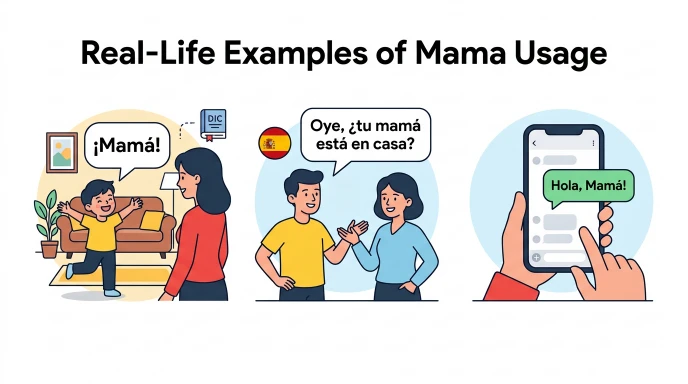
Friendly
“Hola, mama. ¿Todo bien?”
Family
“Voy con mi mamá.”
Romantic
“Te extraño, mama.”
Social Media
“Mama, that outfit looks amazing!”
In bilingual communities, English and Spanish are often mixed naturally in social media posts.
Text Message
“Buenas noches, mama.”
Origin and Background of the Slang
The word mamá has been part of Spanish for centuries and ultimately comes from one of the earliest sounds children learn to pronounce.
Over time, speakers in different Spanish-speaking countries began using the word affectionately for:
- Mothers
- Grandmothers
- Romantic partners
- Close friends
Regional slang later expanded its usage into a variety of idiomatic expressions.
Today, both the literal and slang meanings continue to exist side by side.
Comparison with Similar Spanish Slang
| Word | Meaning | Tone | Common Usage |
| Mamá | Mother | Neutral | Everyday Spanish |
| Mama | Affectionate nickname (in some regions) | Friendly | Casual conversation |
| Mami | Babe, sweetheart, mommy | Affectionate | Very common in Latin America |
| Mamita | Little mama, darling | Warm and affectionate | Family and romance |
| Señora | Madam | Formal | Respectful conversation |
Among these, mami and mamita are generally more common as affectionate slang than mama itself.
When to Avoid Using Mama
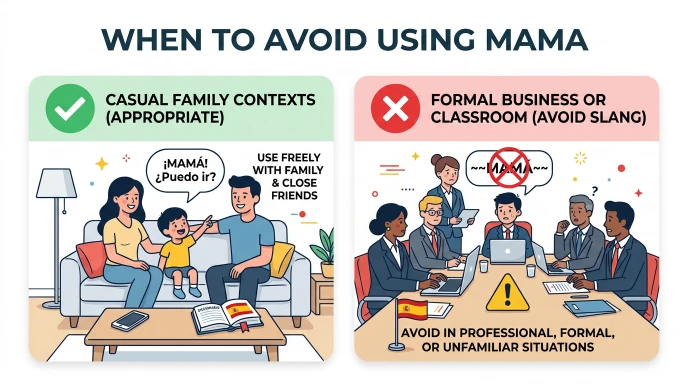
Avoid using mama when:
- Speaking with someone you don’t know well.
- Writing formal business emails.
- Communicating with professionals.
- You’re unsure if the local culture uses it as an affectionate nickname.
In formal situations, using the person’s name or a respectful title is usually the better choice.
Polite Alternatives
Depending on the situation, you can use:
- Mamá (for your mother)
- Señora
- Amiga
- Cariño
- Querida
- Nombre de la persona (their name)
These options help match the tone of the conversation.
Why People Use This Slang
People use mama because it:
- Shows affection.
- Creates warmth.
- Sounds friendly.
- Reflects local culture.
- Strengthens personal relationships.
- Appears frequently in music and popular culture.
The exact usage depends on regional customs and personal relationships.
Impact of Using Slang in Communication
Using mama appropriately can make conversations feel more natural.
Benefits
- Builds closeness.
- Sounds affectionate.
- Reflects local culture.
- Makes conversations more personal.
Possible Drawbacks
- Meanings differ between countries.
- May confuse Spanish learners.
- Not always appropriate in formal settings.
- Some regional expressions may be misunderstood.
Understanding the local context helps avoid confusion.
Is Mama Safe for Social Media?
Yes.
The word mama is commonly used on:
- TikTok
- Snapchat
- X (formerly Twitter)
Most uses are affectionate or refer to someone’s mother. However, if the word appears within a regional slang phrase, readers should consider the surrounding context before interpreting its meaning.
Real-Life Examples by Tone
Friendly
“Hey mama, hope you’re having a great day!”
Casual
“Mama, let’s grab lunch later.”
Family
“I miss my mamá so much.”
Social Media
“Shoutout to all the amazing mamas out there!”
Texting
“Good night, mama ❤️”
Frequently Asked Questions
What does mama mean in Spanish slang?
Depending on the country, mama can be an affectionate nickname, a term for one’s mother, or part of a regional slang expression.
What does mama mean in text?
In text messages, mama often refers to mom or is used as a warm nickname between close friends or romantic partners.
Does mama have a full form?
No. Mama is not an abbreviation and has no full form.
Is mama offensive?
No. On its own, mama is generally neutral or affectionate. However, some regional phrases containing the word may have different meanings.
What’s the difference between mamá and mami?
Mamá usually means mother, while mami is more commonly used as an affectionate nickname meaning sweetheart, babe, or mommy, depending on the context.
Is mama commonly used on social media?
Yes. It frequently appears in TikTok videos, Instagram captions, text messages, songs, and casual online conversations.
Conclusion
Mama in Spanish slang can have several meanings, making context the most important factor in understanding it. While mamá most commonly means mother, the word mama is also used in some Spanish-speaking regions as an affectionate nickname or as part of local slang expressions. Because Spanish varies across countries, the same word may carry slightly different meanings depending on where it is used. Learning mama in Spanish slang, mama full form, and what does mama stand for helps you communicate more naturally while avoiding misunderstandings. When in doubt, pay attention to the conversation and regional context to interpret the word correctly and respectfully.
Read more about!
- Nothing in Slang: Meaning, Origin, Uses & Real-Life Examples
- Fin Slang: Complete Meaning, Origin & Everyday Examples
- Fish Gay Slang: Meaning, Origin & Examples

Hi, I’m Ryan Holden, a content writer with over 8 years of experience creating clear, engaging, and easy-to-understand content. I specialize in slang meanings, internet language, text abbreviations, and modern English expressions. My goal is to explain complex words in simple English with real-life examples so readers can quickly understand and use them correctly. I enjoy researching how language changes across social media, online communities, and everyday conversations, ensuring every article is accurate, helpful, and easy to read.