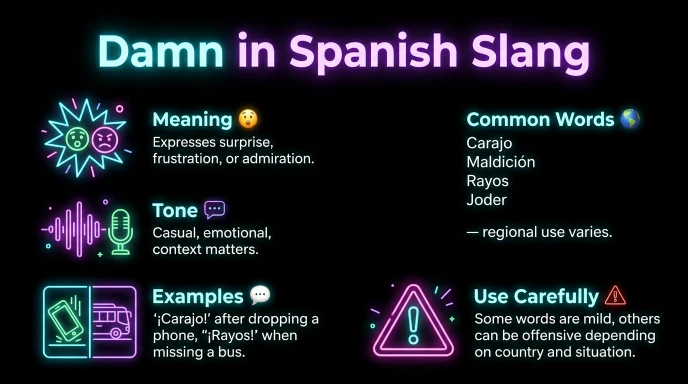
Damn in Spanish slang is a popular search because there isn’t one perfect Spanish word that always translates the English exclamation “damn.” Instead, Spanish speakers use different slang expressions depending on the country, emotion, and situation.
Some phrases express surprise, frustration, admiration, or disappointment, while others may be considered mild or stronger swear words.
If you heard a phrase in a TikTok video, a Spanish movie, a song, or a text message, understanding the context is essential. A word that sounds harmless in one country may be considered rude in another.
Learning the most common Spanish equivalents helps you communicate naturally while avoiding misunderstandings.
Quick Answer:
There is no single Spanish slang word that always means “damn.” Common equivalents include “caramba,” “rayos,” “diablos,” “mierda,” and other regional expressions, with the appropriate choice depending on the situation and country.
What Does Damn in Spanish Slang Mean in Text?
In texting and online conversations, Spanish speakers use several expressions instead of the English word damn.
Depending on the context, these expressions can show:
- Surprise
- Frustration
- Excitement
- Disappointment
- Admiration
- Anger
For example:
“¡Rayos! Olvidé mi teléfono.”
Meaning:
“Damn! I forgot my phone.”
Or:
“¡Diablos! Eso estuvo cerca.”
Meaning:
“Damn! That was close.”
Unlike English, Spanish does not rely on one universal slang word for every situation.
Damn Full Form / Definition of the Slang
If you’re searching for damn full form, it’s important to know:
Damn is not an abbreviation or acronym.
It is an English exclamation used to express emotion.
Spanish speakers usually replace it with words or phrases that match the speaker’s feelings rather than translating it word for word.
Common Spanish Slang Equivalents for “Damn”
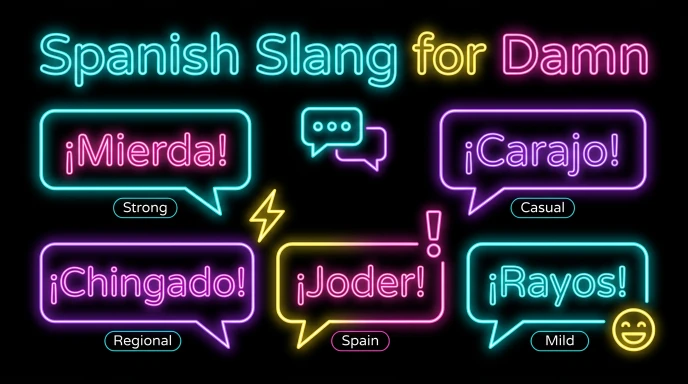
Below are some of the most common alternatives.
Caramba
Meaning:
A mild expression of surprise.
Tone:
Friendly and family-friendly.
Example:
“¡Caramba! No esperaba eso.”
Rayos
Meaning:
“Darn!” or “Damn!”
Tone:
Very mild.
Example:
“¡Rayos! Perdí las llaves.”
Diablos
Meaning:
“Damn!” or “What the heck!”
Tone:
Moderately informal.
Example:
“¡Diablos! Eso fue rápido.”
Mierda
Literal meaning:
“Sh*t.”
Usage:
Sometimes used where English speakers would say “damn,” but it is considerably stronger and more vulgar.
Example:
“¡Mierda! Llegué tarde.”
Chale (Mexico)
Meaning:
An expression of disappointment or frustration.
Example:
“¡Chale! Se canceló el partido.”
Híjole (Mexico)
Meaning:
A mild expression of surprise.
Example:
“¡Híjole! Qué caro está.”
Is Damn in Spanish Slang Rude, Offensive, or Neutral?
It depends entirely on the expression.
| Expression | Tone |
| Caramba | Very polite |
| Rayos | Mild |
| Híjole | Friendly |
| Diablos | Informal |
| Chale | Casual |
| Mierda | Vulgar |
If you’re learning Spanish, it’s usually safest to use caramba or rayos in everyday conversations.
Where Is It Commonly Used?
Spanish equivalents for damn appear in:
- Text messages
- TikTok
- Snapchat
- Spanish TV shows
- Movies
- Video games
- Everyday conversations
Regional preferences vary significantly across Spain and Latin America.
Real-Life Examples of Usage
Friendly
“¡Caramba! Qué bonito quedó.”
Meaning:
“Damn, that looks beautiful!”
Casual
“¡Rayos! Llegué tarde otra vez.”
Meaning:
“Damn, I’m late again.”
Frustrated
“¡Diablos! Perdí mi cartera.”
Meaning:
“Damn, I lost my wallet.”
Strong Emotion
“¡Mierda! Se dañó la computadora.”
Meaning:
“Damn, the computer broke.”
Social Media
“¡Rayos! Ese video tiene millones de vistas.”
Meaning:
“Damn, that video has millions of views.”
Origin and Background of the Slang
Spanish has never had a single direct equivalent for the English word damn.
Instead, speakers developed many regional expressions influenced by:
- Religion
- Culture
- Local dialects
- Everyday speech
- Historical traditions
Some expressions are centuries old, while others have become popular through music, television, memes, and social media.
Today, younger generations often mix traditional expressions with modern internet slang.
Comparison with Similar Spanish Expressions
| Expression | Meaning | Strength | Best Used |
| Caramba | Wow / Damn | Mild | Family-friendly |
| Rayos | Darn | Mild | Everyday conversation |
| Híjole | Wow | Mild | Mexican Spanish |
| Diablos | Damn | Medium | Casual speech |
| Chale | Seriously? / Damn | Mild | Mexican slang |
| Mierda | Sh*t | Strong | Informal only |
When to Avoid Using These Expressions
Avoid stronger expressions when:
- Speaking with teachers.
- Talking to older relatives.
- Writing business emails.
- Attending interviews.
- Giving presentations.
- Speaking with strangers.
In formal situations, choosing polite language is always the safest option.
Polite Alternatives
Instead of stronger slang, you can say:
- Caramba
- Rayos
- Qué sorpresa
- Vaya
- Increíble
- No puede ser
These alternatives express emotion without sounding offensive.
Why People Use This Slang
People use Spanish equivalents of damn because they help express:
- Surprise
- Frustration
- Excitement
- Admiration
- Disappointment
- Shock
Using these expressions makes conversations sound more natural and emotionally expressive.
Impact of Using Slang in Communication
Using regional slang can make your Spanish sound authentic.
Benefits
- Makes conversations feel natural.
- Helps express emotions quickly.
- Reflects local culture.
- Improves conversational fluency.
Possible Drawbacks
- Meanings differ by country.
- Some expressions are stronger than they appear.
- Formal situations usually require more neutral language.
- Direct English translations don’t always work.
Understanding the audience and regional context is the key to using these expressions appropriately.
Is It Safe for Social Media?
Yes, depending on the expression.
Words like:
- Caramba
- Rayos
- Híjole
are generally safe for social media.
Stronger expressions like mierda may violate community guidelines in some contexts or be inappropriate for younger audiences. If you’re unsure, choose a milder alternative.
Real-Life Examples by Tone
Friendly
“¡Caramba! Lo hiciste muy bien.”
Casual
“¡Rayos! Perdimos el autobús.”
Argumentative
“¡Diablos! Eso no es justo.”
Gaming
“¡Rayos! Casi gano la partida.”
Social Media
“¡Caramba! Ese concierto estuvo increíble.”
Frequently Asked Questions
What does damn mean in Spanish slang?
There is no single translation. Depending on the context, Spanish speakers commonly use caramba, rayos, diablos, chale, híjole, or stronger expressions like mierda.
Is there a Spanish full form for damn?
No. Damn is not an abbreviation and has no full form.
What’s the safest way to say damn in Spanish?
Caramba and rayos are generally the safest and most widely accepted choices.
Is “mierda” the same as “damn”?
Not exactly. Mierda is stronger and is closer to the English word “sh*t.” It is more vulgar than damn.
Does every Spanish-speaking country use the same word?
No. Different countries have different expressions for surprise or frustration, so the most natural choice varies by region.
Can I use these expressions on social media?
Yes, especially milder expressions like caramba or rayos. Stronger profanity should be used carefully depending on the audience and platform.
Conclusion
Damn in Spanish slang does not have a single universal translation. Instead, Spanish speakers choose different expressions based on the emotion they want to express and the country they are in. Mild options like caramba, rayos, and híjole are suitable for most casual conversations, while stronger expressions such as mierda should be used with caution because they are more vulgar. Understanding damn in Spanish slang, damn meaning slang, and what does damn stand for helps you communicate naturally while respecting regional differences and social context. When in doubt, choose the milder expressions they are widely understood and appropriate in most situations.
Read more about!
- Mama in Spanish Slang: Common Expressions, Usage & Examples
- Foreplay in Spanish Slang: Everyday Expressions Explained

Hi, I’m Zunaira Shafiq, a slang writer and language enthusiast. I enjoy exploring modern slang, internet expressions, texting abbreviations, and social media terms, then explaining them in simple, easy-to-understand English. My goal is to help readers understand the meaning, origin, and correct usage of popular slang words through clear definitions and real-life examples. I love making online language easier for students, language learners, and anyone who wants to stay updated with modern communication.