
Climbing slang refers to the informal words and phrases climbers use to describe techniques, equipment, routes, and experiences while climbing.
Climbing slang is a collection of informal words and phrases used by rock climbers, boulderers, mountaineers, and indoor climbing enthusiasts.
If you’re new to climbing or have watched climbing videos online, you’ve probably heard terms like send, beta, crux, or flash and wondered what they mean.
Learning climbing slang makes it easier to understand conversations at climbing gyms, outdoor climbing areas, and online communities.
These expressions help climbers communicate quickly about routes, techniques, equipment, and performance. While some terms sound unusual to beginners, they become second nature as you gain experience in the sport.
Quick Answer:
Climbing slang refers to the informal words and expressions climbers use to describe routes, techniques, challenges, and achievements. Most climbing slang is friendly, practical, and specific to the climbing community.
What Does Climbing Slang Mean in Text?
When people search for climbing slang, they usually want to understand the specialized language used by climbers.
Unlike internet slang such as LOL or BRB, climbing slang is sport-specific jargon that helps climbers communicate more efficiently.
For example:
- “Nice send!”
- “What’s the beta?”
- “That crux was tough.”
These expressions describe climbing experiences rather than general conversations.
Climbing Slang Full Form / Definition
Climbing Slang Full Form
There is no full form for this slang term.
It refers to the collection of informal terms commonly used in the climbing community.
Definition
Climbing slang includes words and phrases that describe climbing techniques, equipment, route difficulty, success, and communication between climbers.
What Does Climbing Slang Stand For?
It doesn’t stand for a single phrase. Instead, it describes the unique vocabulary developed within climbing culture.
Is Climbing Slang Rude, Offensive, or Neutral?
Most climbing slang is completely neutral.
These terms are designed to make communication easier rather than to insult anyone.
| Context | Tone |
| Indoor climbing gym | Friendly |
| Outdoor climbing | Casual |
| Competitions | Technical |
| Social media | Informal |
| Coaching | Educational |
Some playful expressions may be humorous, but most climbing slang is respectful.
Where Is Climbing Slang Commonly Used?
Climbing Gyms
Indoor climbers regularly use climbing slang while practicing routes.
Outdoor Climbing
Rock climbers use these terms to discuss routes and techniques.
Social Media
Climbing influencers often include slang in captions and videos.
YouTube
Instructional climbing videos frequently explain or use climbing terminology.
Competitions
Athletes and commentators use climbing slang during events.
Common Climbing Slang Words and Their Meanings
| Climbing Slang | Meaning |
| Send | Successfully complete a climb without falling |
| Beta | Advice or information about how to climb a route |
| Crux | The hardest part of a climb |
| Flash | Complete a climb on the first try with prior knowledge |
| Onsight | Complete a climb on the first attempt without any prior information |
| Pumped | Tired forearms after climbing |
| Dyno | A dynamic jump to reach the next hold |
| Project | A difficult climb you’re working on |
| Chalk Up | Apply chalk to improve grip |
| Jug | A large, easy-to-hold climbing hold |
These are among the most common climbing terms beginners hear.
Real-Life Examples of Climbing Slang

Friendly
Nice send! You climbed that route perfectly.
Casual
Can you give me some beta for this problem?
At the Gym
The crux is near the top.
Outdoor Climbing
I’m still projecting that route.
Social Media
Finally got the send today!
Competition
She flashed every qualifying route.
Origin and Background of Climbing Slang
Climbing slang developed naturally as the sport evolved.
Many expressions originated in:
- Traditional rock climbing
- Mountaineering
- Bouldering
- Indoor climbing gyms
As climbing communities grew around the world, experienced climbers created short, memorable words to describe common situations.
Today, social media, YouTube, climbing competitions, and online forums have helped spread this vocabulary to beginners everywhere.
Although some terms have existed for decades, new expressions continue to appear as climbing evolves.
Comparison with Similar Sports Terminology
| Sport | Common Slang | Purpose |
| Climbing | Send | Complete a route |
| Surfing | Stoked | Excited |
| Skateboarding | Ollie | Jump trick |
| Snowboarding | Shred | Ride aggressively |
| Cycling | Bonk | Lose energy suddenly |
Every sport develops its own informal language to improve communication among participants.
When Should You Avoid Using Climbing Slang?
Although climbing slang is useful within the climbing community, avoid using it when:
- Speaking with beginners unfamiliar with the sport.
- Writing formal reports.
- Creating academic content.
- Communicating with non-climbers.
- Giving professional presentations.
In these situations, using plain English makes your message easier to understand.
Polite Alternatives
If your audience isn’t familiar with climbing terms, use these alternatives.
| Climbing Slang | Plain English |
| Send | Successfully finish the climb |
| Beta | Advice |
| Crux | Hardest section |
| Flash | First successful attempt |
| Project | Climb you’re practicing |
| Pumped | Tired arms |
These alternatives improve clarity for beginners.
Why Do People Use Climbing Slang?
Climbing slang has become part of climbing culture for several reasons.
Faster Communication
Short words save time during climbs.
Shared Community
Using the same vocabulary creates a sense of belonging.
Clear Instructions
Specific terms describe climbing situations accurately.
Tradition
Many expressions have been passed down through generations of climbers.
Learning Tool
Beginners gradually learn the language as they improve.
Impact of Using Climbing Slang in Communication
Using climbing slang has several advantages.
Benefits
- Improves communication
- Saves time
- Builds community
- Makes coaching easier
- Helps explain techniques
Drawbacks
- Beginners may feel confused.
- Non-climbers may not understand.
- Some terms require explanation.
When teaching new climbers, it’s helpful to explain unfamiliar expressions.
Is Climbing Slang Safe for Social Media?
Yes.
Climbing slang is completely safe to use on platforms like:
- TikTok
- YouTube
- Discord
- X (Twitter)
Many climbing creators use these terms daily in captions, tutorials, and competition highlights.
Common Climbing Expressions
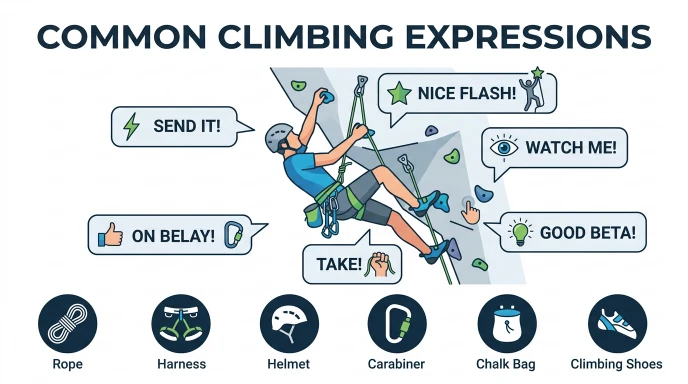
Here are several phrases you’ll hear often.
- Nice send!
- Good beta.
- That crux is brutal.
- I flashed it.
- Time to chalk up.
- I’m pumped.
- Let’s project this route.
- Great onsight!
Learning these expressions helps beginners feel more comfortable in climbing communities.
Tips for Using Climbing Slang Naturally
If you’re new to climbing:
- Learn one term at a time.
- Listen to experienced climbers.
- Ask questions when you hear unfamiliar words.
- Use climbing slang only in climbing-related conversations.
- Don’t worry about memorizing everything immediately.
With practice, the vocabulary becomes natural.
Comparison
| Climbing Term | Meaning | Beginner Friendly | Common Use |
| Send | Finish a climb | Yes | Very common |
| Beta | Climbing advice | Yes | Very common |
| Crux | Hardest section | Yes | Very common |
| Flash | First successful attempt with prior knowledge | Moderate | Common |
| Onsight | First successful attempt without prior knowledge | Moderate | Common |
| Pumped | Tired forearms | Yes | Very common |
FAQs
What does climbing slang mean?
Climbing slang refers to the informal vocabulary climbers use to describe routes, techniques, equipment, and climbing experiences.
Does climbing slang have a full form?
No. It is simply a term for the specialized language used in climbing.
What is “send” in climbing slang?
A send means successfully completing a climb without falling or resting on the rope.
What does “beta” mean in climbing?
Beta is advice or information about how to climb a specific route or problem.
Is climbing slang difficult to learn?
No. Most beginners quickly learn common terms through practice and conversations at climbing gyms.
Can I use climbing slang on social media?
Yes. It is widely used by climbers on Instagram, TikTok, YouTube, Reddit, and other climbing communities.
Conclusion
Understanding climbing slang makes it much easier to enjoy conversations with other climbers and follow climbing videos, competitions, and tutorials. Terms like send, beta, crux, flash, and project are practical expressions that help climbers communicate clearly and efficiently about routes and techniques.
If you’re climbing indoors or outdoors, learning these common terms will help you feel more confident and connected to the climbing community. While climbing slang is perfect for casual conversations and social media, using plain English with beginners or non-climbers ensures everyone can understand and enjoy the discussion.
Read more about!
HR Slang: Definition, Meaning, and Everyday Usage
Fax Slang: Complete Guide to Its Meaning and Usage
Funny UK Slang: A Complete Guide to British Words and Phrases

Hi, I’m Zunaira Shafiq, a slang writer and language enthusiast. I enjoy exploring modern slang, internet expressions, texting abbreviations, and social media terms, then explaining them in simple, easy-to-understand English. My goal is to help readers understand the meaning, origin, and correct usage of popular slang words through clear definitions and real-life examples. I love making online language easier for students, language learners, and anyone who wants to stay updated with modern communication.