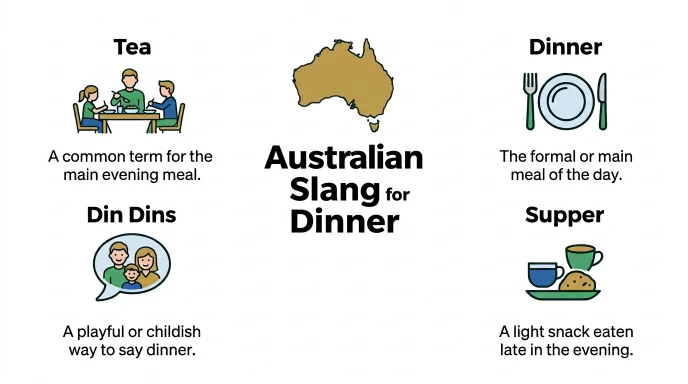
Australian slang for dinner commonly includes words like “tea,” “dinner,” or “din dins,” depending on the region, family, and time of day.
Australian slang for dinner is a popular search because many people hear Australians use different words for everyday meals and wonder what they mean.
If you’re watching an Australian TV show, chatting with Aussie friends, planning a trip to Australia, or simply learning English slang, knowing these terms helps you understand conversations better.
Unlike internet abbreviations, Australian dinner slang isn’t usually a single acronym. Instead, it’s made up of casual words that Australians naturally use in everyday speech.
The most common term depends on the region, family, and situation. Some words are used nationwide, while others are more common in certain states.
Learning these expressions can make your English sound more natural and help you connect with Australian culture.
Quick Answer
The most common Australian slang for dinner is tea, especially in many homes and regional areas. Australians also commonly say dinner or din dins in casual conversations, depending on the situation and location.
What Does Australian Slang for Dinner Mean in Text?
When people search for australian slang for dinner meaning in text, they usually want to know what Australians mean when they send messages like:
- “Come over for tea tonight.”
- “What’s for din dins?”
- “Dinner’s ready.”
- “Let’s grab tea.”
In Australia, tea often means the evening meal rather than the hot drink. Context usually makes the meaning clear.
For example:
- “Tea is at 6:30.” → Evening meal.
- “Would you like a cup of tea?” → The drink.
Australian Slang for Dinner Full Form
Unlike abbreviations, Australian slang for dinner has no full form.
Instead, it includes several informal words and phrases:
| Slang Term | Meaning | Common Use |
| Tea | Evening meal | Very common in many families |
| Din dins | Cute way to say dinner | Children and social media |
| Dinner | Standard evening meal | Everywhere |
| Feed | A meal, often a large one | Casual Australian English |
| Tucker | Food in general | Traditional Australian slang |
So if you’re searching for:
- Australian slang for dinner full form
- Australian slang for dinner meaning slang
- What does Australian slang for dinner stand for
The answer is simple: it doesn’t stand for anything. These are everyday slang words rather than abbreviations.
Is Australian Slang for Dinner Rude, Offensive, or Neutral?
Australian dinner slang is neutral and friendly.
These words are commonly used among:
- Families
- Friends
- Coworkers
- Neighbors
- Restaurants (casually)
They are not considered offensive.
For example:
- “Tea’s ready.”
- “Come over for dinner.”
- “Let’s grab a feed.”
All of these are perfectly acceptable in everyday conversation.
Where Is It Commonly Used?
Australian slang for dinner appears in many places.
Family Conversations
Parents often say:
- “Tea’s nearly ready.”
- “Wash your hands it’s dinner time.”
Text Messages
Friends might text:
- “Coming over for tea?”
- “Let’s get a feed.”
Social Media
You’ll often see captions like:
- “Homemade tea tonight.”
- “Best pub feed ever.”
Restaurants and Cafés
Menus may advertise:
- Lunch specials
- Dinner menu
While locals may casually say:
- “Let’s grab a feed.”
Real-Life Examples of Australian Slang for Dinner
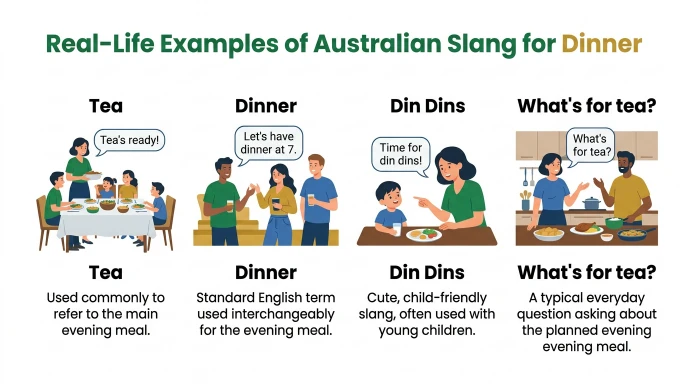
Here are some natural examples.
Friendly
“We’re having tea at six if you’d like to join us.”
Casual
“Let’s grab a feed after work.
Family
“Mum’s making roast lamb for tea.”
Text Message
“Are you coming for dinner tonight?”
Social Media
“Nothing beats a home-cooked tea.”
Workplace
“Want to grab dinner after the meeting?”
Origin and Background of Australian Slang for Dinner
The use of tea for the evening meal has historical roots in the United Kingdom.
Early British settlers brought this habit to Australia, where it became part of everyday speech. Over time, Australians developed their own casual expressions around meals.
Words like feed became popular because Australians often shorten conversations and prefer relaxed language.
Meanwhile, din dins became popular through families, baby talk, memes, and social media.
Today, Australians use a mix of traditional and modern expressions depending on age, location, and personal preference.
Comparison with Similar Slang
| Term | Meaning | Formality | Common Situation |
| Tea | Evening meal | Casual | Home and family |
| Dinner | Evening meal | Neutral | Everywhere |
| Feed | Meal | Very casual | Friends |
| Tucker | Food | Casual | Traditional Australian English |
| Din dins | Dinner | Very informal | Kids and online |
When to Avoid Using Australian Slang for Dinner
Although these terms are friendly, they’re not always the best choice.
Avoid slang when:
- Writing academic papers
- Business reports
- Legal documents
- Formal presentations
- Professional emails
Instead, use:
- Dinner
- Evening meal
- Meal
These sound more professional.
Polite Alternatives
If you’re speaking formally, choose standard English.
| Casual Slang | Polite Alternative |
| Tea | Dinner |
| Feed | Meal |
| Din dins | Dinner |
| Tucker | Food |
These alternatives work well in schools, workplaces, and official settings.
Why People Use Australian Slang for Dinner
Australians often prefer relaxed and friendly communication.
Using dinner slang helps:
- Sound natural
- Create a friendly atmosphere
- Show cultural identity
- Make conversations feel less formal
- Build stronger social connections
Many families continue using these expressions because they’ve been passed down through generations.
Impact of Using Slang in Communication
Slang makes conversations feel warm and approachable.
Advantages
- Builds friendships
- Sounds authentic
- Reflects local culture
- Makes conversations more relaxed
Possible Drawbacks
- Can confuse international visitors
- May not suit formal settings
- Meanings vary between regions
Understanding your audience is the key to using slang effectively.
Is Australian Slang for Dinner Safe for Social Media?
Yes.
Terms like:
- Tea
- Feed
- Dinner
- Din dins
- Tucker
are completely safe for:
- TikTok
- Snapchat
- X
They are family-friendly and widely understood in Australia.
Examples in Different Contexts
Friendly
Alex: Want to come over for tea?
Sam: Sure! I’ll be there around six.
Casual
“I’m starving. Let’s grab a feed.”
Argumentative
“You promised dinner hours ago!”
Gaming
“I’m AFK going for tea.”
Social Media
“Friday night feed with the family.”
Travel
“Everyone invited us over for tea, but they actually meant dinner!”
Common Australian Dinner Expressions
Here are a few expressions you may hear:
- Tea’s on.
- Time for tea.
- Grab a feed.
- Big family dinner.
- Pub feed tonight.
- What’s for tea?
- Roast for tea.
- Quick feed before work.
These are common in everyday Australian English.
Comparison of Australian Dinner Slang
| Expression | Meaning | Tone | Best Used |
| Tea | Evening meal | Friendly | Home conversations |
| Dinner | Evening meal | Neutral | Everywhere |
| Feed | Meal | Casual | Friends |
| Tucker | Food | Informal | Everyday Australian slang |
| Din dins | Dinner | Playful | Children and social media |
FAQs
What is the most common Australian slang for dinner?
The most common term is tea, especially in many Australian homes.
Does tea always mean the drink in Australia?
No. Depending on the conversation, tea can mean either the evening meal or the hot beverage.
What does “grab a feed” mean?
It means going out or stopping somewhere to eat a meal.
Is “din dins” real Australian slang?
Yes. It’s a playful and affectionate way of saying dinner, often used with children or online.
Is Australian dinner slang offensive?
No. These expressions are friendly, polite, and commonly used in everyday conversations.
Can tourists use Australian dinner slang?
Yes. Using terms like tea or feed naturally can help visitors sound more familiar with Australian English, though dinner is always a safe choice.
Conclusion
Understanding australian slang for dinner makes it easier to follow everyday Australian conversations and appreciate local culture. While dinner is the standard term, many Australians also use tea for the evening meal, along with casual expressions like feed, tucker, and din dins. None of these terms are rude they simply reflect Australia’s relaxed style of communication. By learning when and where to use these expressions, you’ll sound more natural, avoid misunderstandings, and feel more confident when chatting with Australians in person, online, or while traveling.
Read more about!
HR Slang: Definition, Meaning, and Everyday Usage
Fax Slang: Complete Guide to Its Meaning and Usage
Funny UK Slang: A Complete Guide to British Words and Phrases

Hi, I’m Zunaira Shafiq, a slang writer and language enthusiast. I enjoy exploring modern slang, internet expressions, texting abbreviations, and social media terms, then explaining them in simple, easy-to-understand English. My goal is to help readers understand the meaning, origin, and correct usage of popular slang words through clear definitions and real-life examples. I love making online language easier for students, language learners, and anyone who wants to stay updated with modern communication.