HR slang is commonly used online as a short way to express a heart reaction, affection, or emotional response, depending on the context of the conversation.
HR slang is a term people often search when they see “HR” in text messages, social media posts, gaming chats, or workplace conversations.
While HR is widely known as the abbreviation for Human Resources, its meaning can vary depending on the context.
In casual texting, some people may also use “HR” as a short form for hour, while in professional settings it almost always refers to the Human Resources department.
Understanding the context is important because the same abbreviation can have different meanings.
If you’re chatting with friends, reading office emails, or browsing online discussions, knowing what HR stands for can help you avoid confusion.
Quick Answer:
HR most commonly stands for Human Resources in workplace communication and hour in casual texting. It is an abbreviation rather than internet slang, and its meaning depends on the context.
What Does HR Slang Mean in Text?
When people search for hr slang, they usually want to know what “HR” means in a message.
In most situations, HR has two common meanings:
- Human Resources (workplace or office discussions)
- Hour (casual texting)
Examples
- “I have an HR meeting at 2 PM.” → Human Resources
- “I’ll be there in 1 hr.” → One hour
Unlike slang terms such as “LOL” or “FR,” HR is primarily an abbreviation rather than a true slang word.
What Does HR Mean in Texting and Chat?
People often search what does hr mean in texting when they see “hr” in a casual message. In most texting situations, hr in chat usually means hour, especially when someone talks about time.
For example, someone might text, “I’ll call you in 1 hr.” Here, “hr” simply means one hour. This short form helps people communicate quickly without typing the complete word.
The hr meaning chat can change when the conversation involves work. For example, “Ask HR about your leave” refers to Human Resources, not a unit of time. Context helps readers understand the intended meaning.
People may also search hr in slang because they see the abbreviation in casual conversations. However, HR is usually better described as an abbreviation than traditional slang.
HR Full Form / Definition of the Slang
HR Full Form
The most common full form of HR is:
Human Resources
In informal messages, it can also mean:
Hour
Definition
HR is an abbreviation used to refer to the Human Resources department in organizations or to shorten the word “hour” in everyday texting.
What Does HR Stand For?
Depending on the context, HR stands for:
- Human Resources
- Hour
Reading the surrounding sentence helps identify the correct meaning.
Is HR Rude, Offensive, or Neutral?
HR is completely neutral.
It is neither rude nor offensive.
| Context | Meaning | Tone |
| Office | Human Resources | Professional |
| Text message | Hour | Neutral |
| Social media | Usually hour | Casual |
| Human Resources | Formal |
The abbreviation itself carries no negative meaning.
Where Is HR Commonly Used?
Workplace
The most common place you’ll see HR is in offices and businesses.
Example:
Please contact HR for payroll questions.
Text Messages
Many people shorten “hour” to “hr.”
Example:
I’ll arrive in 2 hrs.
Emails
Employees often refer to the Human Resources department simply as HR.
Online Forums
Career discussions frequently mention HR policies and interviews.
Job Applications
Applicants often communicate with HR representatives during the hiring process.
HR Meaning on Social Media and TikTok
The phrase hr meaning in social media can have different answers depending on the conversation. When users discuss time, “hr” commonly means hour. For example, “I spent 3 hr editing this video” uses “hr” as a short form of hour.
People also search hr meaning slang tiktok because short abbreviations appear frequently in TikTok comments, captions, and messages. In this context, the surrounding words usually reveal whether “hr” means hour or something else.
The search hr meaning slang can also create confusion because HR has a well-known professional meaning. In workplace-related posts, HR usually refers to Human Resources. In casual social-media conversations, lowercase hr often refers to hour.
Real-Life Examples of HR Usage

Friendly
I’ll call you in an hr.
Casual
Give me half an hr and I’ll finish.
Workplace
HR scheduled our orientation for Monday.
Social Media
Spent two hrs editing this video!
Group Chat
We’re meeting in one hr.
Office Conversation
HR sent everyone the updated company policy.
Origin and Background of HR
The abbreviation HR has existed for decades.
Human Resources
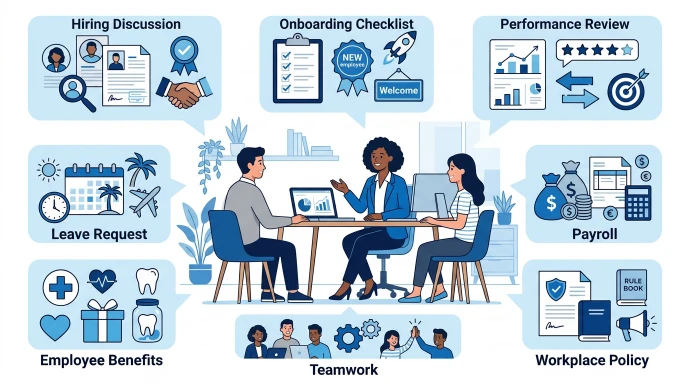
Businesses adopted the term Human Resources to describe the department responsible for hiring, training, payroll, employee benefits, and workplace policies.
Hour
As texting became popular, people shortened common words to save time. “Hour” naturally became “hr.”
Unlike internet slang such as “LOL” or “BRB,” HR developed as a practical abbreviation rather than a humorous online expression.
Comparison with Similar Abbreviations
| Abbreviation | Meaning | Common Use |
| HR | Human Resources / Hour | Workplace, texting |
| PR | Public Relations | Business |
| IT | Information Technology | Workplace |
| ETA | Estimated Time of Arrival | Travel, texting |
| FYI | For Your Information | Email, messaging |
| ASAP | As Soon As Possible | Work and texting |
These abbreviations are commonly used because they make communication faster.
HRM Meaning and Other HR Abbreviations
Some readers also search hrm meaning text slang or what does hrm mean in texting when they see “HRM” in a message. Unlike HR, which commonly means Human Resources or hour, HRM can have different meanings depending on the context.
In workplace discussions, HRM often relates to Human Resource Management. However, readers should not automatically assume that every “HRM” message refers to this meaning because online abbreviations can vary between communities.
The query hrm meaning text may therefore require context before giving one fixed interpretation. Looking at the complete sentence can help identify what the writer intended.
When Should You Avoid Using HR?
Although HR is widely understood, there are situations where spelling out the full term is clearer.
Avoid using only “HR” when:
- Writing academic papers
- Creating legal documents
- Communicating with people unfamiliar with workplace abbreviations
- Writing for international audiences who may not know the abbreviation
Using “Human Resources” or “hour” in full improves clarity.
Polite Alternatives
If you want to be more formal, use these alternatives.
| HR | Better Alternative |
| HR | Human Resources |
| 1 hr | One hour |
| HR team | Human Resources department |
| HR manager | Human Resources manager |
These options reduce confusion in professional writing.
Why Do People Use HR?
People use HR because it’s quick and widely recognized.
Saves Time
Typing “HR” is faster than writing “Human Resources.”
Makes Texting Easier
People often shorten “hour” to “hr.”
Common in Business
Most companies use HR as the official department abbreviation.
Easy to Understand
Millions of people recognize HR immediately from work or school.
Impact of Using HR in Communication
Using abbreviations like HR has both advantages and disadvantages.
Benefits
- Saves typing time
- Common in workplaces
- Easy to recognize
- Improves communication speed
- Frequently used worldwide
Drawbacks
- New employees may not understand the abbreviation.
- It can confuse readers if the context isn’t clear.
- It has multiple meanings.
Always provide enough context for readers.
Is HR Safe for Social Media?
Yes.
Using HR is perfectly safe on:
- TikTok
- X (Twitter)
- Discord
- Snapchat
If you mean Human Resources or hour, the abbreviation is widely accepted and does not have offensive meanings.
Common HR Expressions
Here are some phrases you may see.
Workplace
- HR department
- HR manager
- HR interview
- HR policy
- HR onboarding
Time
- 1 hr
- 2 hrs
- Half hr
- Within an hr
These expressions are common in both professional and casual communication.
Tips for Using HR Correctly
Follow these tips to avoid confusion.
- Use HR for Human Resources in workplace discussions.
- Use hr or hrs for time in casual messages.
- Spell out the full term in formal documents when clarity matters.
- Don’t assume everyone knows which meaning you intend.
- Read the sentence carefully to understand the context.
Comparison
| Term | Meaning | Context | Formality |
| HR | Human Resources | Workplace | Professional |
| hr | Hour | Texting | Casual |
| HRS | Hours | Time | Casual |
| Human Resources | Employee management department | Business | Formal |
| Hour | Unit of time | Everyday English | Formal |
FAQs
What does HR mean in slang?
HR usually isn’t slang. It most commonly stands for Human Resources or hour, depending on the context.
What is the HR full form?
The most common HR full form is Human Resources.
What does HR stand for in text messages?
In texting, HR often means hour.
Example:
“I’ll be there in 1 hr.”
Is HR an offensive abbreviation?
No. HR is completely neutral and safe to use.
Can HR have more than one meaning?
Yes. The most common meanings are Human Resources and hour.
Is HR commonly used on social media?
Yes. People frequently use “hr” when referring to time, while workplace discussions often use “HR” for Human Resources.
Conclusion
Understanding hr slang is mainly about recognizing that HR is an abbreviation with different meanings based on context. In professional settings, it almost always stands for Human Resources, while in text messages and casual conversations it usually means hour. Although many people refer to it as slang, HR is more accurately described as a common abbreviation.
If you’re reading office emails, chatting with friends, or browsing social media, paying attention to the surrounding words will help you understand the intended meaning. Using HR correctly makes communication clearer, faster, and more effective in both professional and everyday situations.
Read more about!
Dig 1960 Slang: Everything You Need to Know
Gen X Slang Urban Dictionary Meaning in Text
Lizard Slang Meaning: Complete Guide with Examples and Usage

Hi, I’m Zunaira Shafiq, a slang writer and language enthusiast. I enjoy exploring modern slang, internet expressions, texting abbreviations, and social media terms, then explaining them in simple, easy-to-understand English. My goal is to help readers understand the meaning, origin, and correct usage of popular slang words through clear definitions and real-life examples. I love making online language easier for students, language learners, and anyone who wants to stay updated with modern communication.