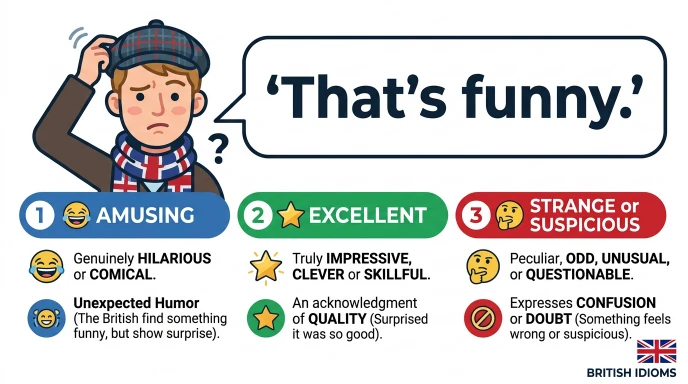
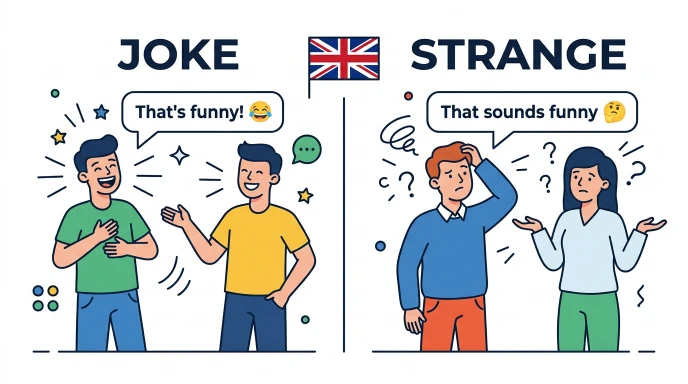
Funny (UK slang) means excellent, strange, or suspicious depending on the context not always something that makes you laugh.
Funny UK slang is popular because British people often use unique words and phrases that sound amusing to people from other countries.If you’re watching British TV shows, chatting with friends online, visiting the UK, or scrolling through social media, you’ll probably come across slang that seems confusing at first.
British slang changes from region to region, and many expressions have humorous meanings or creative ways of describing everyday situations.Learning these words can help you better understand conversations, jokes, memes, and online messages.
Unlike formal English, UK slang is usually informal and should be used only in the right setting with people who understand it. If you’re looking for funny UK slang, these expressions can help you understand British conversations and online content.
Quick Answer
Funny UK slang refers to informal British words and expressions that are humorous, creative, or uniquely British. They are commonly used in everyday conversations, texting, social media, and entertainment.
What Does Funny UK Slang Mean in Text?
Funny UK slang means informal British expressions that people use to make conversations more relaxed, entertaining, or expressive.
Many of these slang terms don’t mean exactly what the words suggest. Many funny UK slang words have meanings that are very different from their literal wording. Instead, they have special meanings understood by native British speakers.
For example:
- “Knackered” means extremely tired.
- “Gobsmacked” means very surprised.
- “Cheeky” describes someone playfully bold.
These expressions often appear in:
- Text messages
- Social media posts
- TV shows
- Movies
- Online gaming
- Daily conversations
Funny UK Slang Full Form
Unlike internet abbreviations, funny UK slang does not have one full form.
Instead, it is a collection of humorous British slang words and phrases used in informal communication.
Examples include:
| UK Slang | Meaning |
| Gobsmacked | Extremely surprised |
| Knackered | Very tired |
| Bloke | Man |
| Mate | Friend |
| Dodgy | Suspicious or unreliable |
| Chuffed | Very pleased |
| Gutted | Extremely disappointed |
| Fancy | Like or want |
| Skint | Having no money |
| Bollocks | Can mean nonsense or a rude expression depending on context |
Is Funny UK Slang Rude, Offensive, or Neutral?
Most funny UK slang is completely harmless.
Neutral Slang
- Mate
- Cheers
- Chuffed
- Knackered
- Bloke
- Fancy
These are safe in everyday conversations.
Some expressions may sound funny between close friends but can be rude or offensive in other situations. Funny British slang insults are often used jokingly, but their tone depends on the relationship between the speakers.
Mildly Rude
Some expressions are acceptable among friends but may sound impolite elsewhere.
Examples:
- Bloody
- Git
- Sod off
Offensive
Some slang should be avoided in professional or formal situations.
Examples include swear words and insults such as:
- Bollocks (depends on context)
- Wanker
- Bellend
Always consider your audience before using these expressions.
You may also see British slang insults sentences in casual conversations, jokes, social media posts, and online discussions.
Where Is Funny UK Slang Commonly Used?
British slang appears almost everywhere in informal communication.
Common places include:
- Text messages
- WhatsApp chats
- TikTok
- Snapchat
- YouTube comments
- Online gaming
- TV series
- British movies
- Everyday conversations
Many younger people also use slang in memes and viral videos.
Real-Life Examples of Funny UK Slang Usage
Here are some common examples.
Example 1
“I’m absolutely knackered after work.”
Meaning:
“I’m very tired.”
Example 2
“That’s a cheeky burger before dinner.”
Meaning:
A playful extra snack.
Example 3
“My mate is coming over later.”
Meaning:
“My friend is coming.”
Example 4
“I’m chuffed with my exam results.”
Meaning:
“I’m very happy.”
Example 5
“That movie was brilliant, mate!”
Meaning:
The movie was excellent.
Some British slang insults sentences can sound humorous when friends are joking with each other, but the same words may sound offensive when used seriously.
Origin and Background of Funny UK Slang
British slang has developed over hundreds of years.
It comes from many sources, including:
- Regional dialects
- Cockney rhyming slang
- Working-class communities
- British military
- Music culture
- Television
- Football fans
- Social media
Some slang words date back hundreds of years, while new ones appear every year through the internet and pop culture.
Different areas of the UK often have their own unique expressions.
Comparison with Similar Slang
| Type | UK Slang | US Slang |
| Friend | Mate | Buddy |
| Very tired | Knackered | Worn out |
| Happy | Chuffed | Pumped |
| No money | Skint | Broke |
| Great | Brilliant | Awesome |
| Surprised | Gobsmacked | Shocked |
Although both countries use informal English, many expressions are unique to each culture.
When to Avoid Using Funny UK Slang
Avoid using slang in situations like:
- Job interviews
- Business emails
- Academic writing
- Official documents
- Speaking with people unfamiliar with British English
Using too much slang can also confuse international audiences.
Polite Alternatives
If a slang word is rude or inappropriate, use a more polite version.
| Slang | Better Alternative |
| Knackered | Very tired |
| Bloody | Very |
| Bollocks | That’s incorrect |
| Wanker | Rude person |
| Skint | Low on money |
These alternatives work better in professional communication.
Why People Use Funny UK Slang
People enjoy slang because it makes conversations more natural and expressive.
Common reasons include:
- Showing personality
- Sounding friendly
- Adding humor
- Expressing emotions
- Feeling connected to a group
- Making conversations less formal
- Reflecting British culture
Slang also helps speakers sound more relaxed in casual situations.
Impact of Using Slang in Communication
Funny UK slang can make conversations:
More Natural
Native speakers often use slang every day.
More Entertaining
Many expressions are humorous and memorable.
More Personal
Slang creates a friendly atmosphere between people.
Sometimes Confusing
People learning English may misunderstand unfamiliar expressions.
The key is knowing when slang is appropriate.
Is Funny UK Slang Safe for Social Media?
Yes, most funny UK slang is perfectly safe on social media.
Common examples include:
- Mate
- Cheers
- Brilliant
- Chuffed
- Knackered
- Fancy
However, avoid offensive slang because it may:
- Upset readers
- Violate platform rules
- Create misunderstandings
When in doubt, choose neutral expressions.
Real-Life Examples in Different Situations
Friendly Conversation
A: Cheers for helping me!
B: No worries, mate.
Casual Text Message
“I’m knackered after the gym 😂.”
Argumentative Context
“That’s complete bollocks.”
This expression may offend some people and should be used carefully.
Gaming Chat
“Nice one, mate! We smashed that match.”
Social Media Caption
“Feeling absolutely chuffed with today’s results! 🎉”
Popular Funny UK Slang Words
| Slang | Meaning | Tone |
| Mate | Friend | Friendly |
| Cheers | Thanks | Friendly |
| Gobsmacked | Very surprised | Casual |
| Knackered | Extremely tired | Casual |
| Chuffed | Very happy | Positive |
| Skint | Broke | Casual |
| Dodgy | Suspicious | Neutral |
| Bloke | Man | Neutral |
| Fancy | Want or like | Neutral |
| Gutted | Very disappointed | Emotional |
Why British Slang Is Popular Worldwide
British TV shows, movies, YouTubers, football culture, and social media have introduced UK slang to millions of people worldwide.
Many learners enjoy using these expressions because they:
- Sound unique
- Add humor
- Make conversations feel authentic
- Help understand British entertainment
Learning a few common terms can make British English much easier to follow.
FAQs
What does funny UK slang mean in text?
It refers to informal British words and phrases used in casual conversations, texting, and social media.
Does funny UK slang have a full form?
No. It is not an abbreviation. It describes humorous British slang expressions.
Is UK slang the same as American slang?
No. Some meanings overlap, but many UK slang words are unique to British English.
Is UK slang appropriate for work?
Most slang should be avoided in professional writing unless you’re certain it suits the audience.
Can tourists use UK slang?
Yes. Using simple, common slang like “mate” or “cheers” is usually welcomed when used naturally.
Why is British slang difficult to understand?
Many expressions have meanings that differ completely from their literal words, and regional variations add even more diversity.
Conclusion
Funny UK slang makes everyday British English more colorful, expressive, and enjoyable. From words like mate, knackered, and chuffed to humorous expressions used in texts and social media, these informal phrases help people communicate naturally in casual situations. While most UK slang is friendly and harmless, some terms can be rude or offensive, so it’s important to understand the context before using them. Learning common British slang not only improves your English skills but also helps you better enjoy British culture, entertainment, and online conversations.
Read more about!
Gen X Slang Urban Dictionary Meaning in Text
Fax Slang: Complete Guide to Its Meaning and Usage
HR Slang: Definition, Meaning, and Everyday Usage

Hi, I’m Zunaira Shafiq, a slang writer and language enthusiast. I enjoy exploring modern slang, internet expressions, texting abbreviations, and social media terms, then explaining them in simple, easy-to-understand English. My goal is to help readers understand the meaning, origin, and correct usage of popular slang words through clear definitions and real-life examples. I love making online language easier for students, language learners, and anyone who wants to stay updated with modern communication.