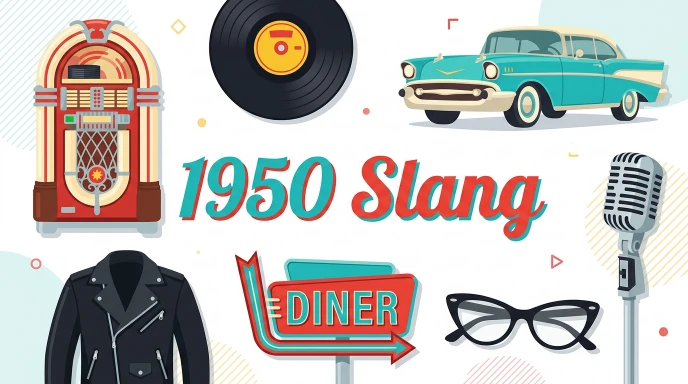
1950 slang continues to fascinate people because it captures the unique style and personality of one of America’s most memorable decades.
From classic movies and rock ‘n’ roll songs to vintage TV shows and retro fashion, the slang of the 1950s still appears in modern conversations, memes, and social media. You may have heard phrases like “cool cat,” “dig it,” or “daddy-o” and wondered what they actually mean.
Unlike today’s internet abbreviations, most 1950s slang consists of colorful words and expressions that describe people, emotions, or everyday situations.
Learning these terms can help you better understand classic American culture while adding a fun historical twist to your vocabulary.
Quick Answer:
1950 slang refers to informal words and expressions that became popular during the 1950s. Many of these phrases reflected youth culture, rock ‘n’ roll, cars, fashion, and everyday life, and some are still recognized today.
What Does 1950 Slang Mean?
1950 slang is the collection of informal expressions that people commonly used during the 1950s. These words were especially popular among teenagers and young adults, although many adults also adopted them in casual conversation.
Unlike modern internet slang, these expressions were spoken far more often than they were written. Today, they still appear in:
- Classic movies
- Television shows
- Retro-themed events
- Vintage music
- Historical novels
- Social media posts about the 1950s
Many of these phrases remain recognizable because they became part of American pop culture.
1950 Slang Full Form / Definition
If you’re searching for:
- 1950 slang full form
- What does 1950 slang stand for?
The answer is simple.
1950 slang is not an acronym. It does not have a full form. Instead, it refers to the collection of informal expressions that were widely used throughout the 1950s.
Popular 1950 Slang Words and Their Meanings
Here are some of the best-known expressions from the decade.
| Slang Word | Meaning | Example |
| Cool cat | A stylish or fashionable person | “He’s a real cool cat.” |
| Daddy-O | Friendly way to address someone | “Thanks, Daddy-O!” |
| Dig | To understand or appreciate | “I dig that new song.” |
| Hep | Fashionable or trendy | “She’s hep to the latest styles.” |
| Square | Someone considered old-fashioned | “Don’t be such a square.” |
| Cruisin’ | Driving around for fun | “We’re cruisin’ downtown tonight.” |
| Greaser | Teen known for slicked-back hair and leather jackets | “The movie featured several greasers.” |
| Threads | Clothes | “Nice threads!” |
| Cat | A person, usually a man | “That cat plays great guitar.” |
| Blast | A great time | “We had a blast at the dance.” |
Most Common 1950 Slang Expressions
Some expressions became symbols of the decade and are still recognized today.
Cool Cat
A confident, fashionable, or relaxed person.
Example:
“That jazz musician is one cool cat.”
Tone: Friendly and complimentary.
Daddy-O
A casual way to greet or address someone.
Example:
“What’s happening, Daddy-O?”
Tone: Relaxed and playful.
Dig It
Means to understand, enjoy, or appreciate something.
Example:
“I really dig this record.”
Tone: Positive and enthusiastic.
Square
Describes someone who dislikes new trends or behaves very traditionally.
Example:
“Don’t be a square come dance with us.”
Tone: Usually playful, though it can sound mildly insulting.
Cruisin’
Driving around town simply for fun.
Example:
“We’re cruisin’ after school.”
This expression became closely associated with American car culture.
Is 1950 Slang Rude, Offensive, or Neutral?
Most 1950 slang is harmless and suitable for casual conversations.
Neutral Expressions
- Cool cat
- Daddy-O
- Dig
- Blast
- Cruisin’
Slightly Negative Expressions
- Square
- Greaser (depending on context)
Some terms reflected social attitudes of the 1950s that have changed over time. Because of this, a few historical expressions may sound outdated or insensitive today.
When discussing vintage slang, it’s helpful to understand the historical context before using unfamiliar phrases.
Where Is 1950 Slang Commonly Used Today?
Although these expressions are no longer part of everyday speech for most people, they still appear in several places.
You might hear them in:
- Classic Hollywood films
- Retro television shows
- Rock ‘n’ roll music
- Vintage fashion communities
- History documentaries
- 1950s-themed parties
- Social media videos
- Nostalgia blogs
- Classic car events
Modern creators also use these expressions to recreate the atmosphere of the 1950s or add a nostalgic touch to their content.
Why 1950 Slang Became So Popular
The 1950s was a decade of major cultural change. Teenagers had more influence on music, fashion, and entertainment than ever before, leading to the rapid spread of new expressions.
Several factors shaped the slang of the era:
- Rock ‘n’ roll music
- American diners
- Drive-in theaters
- Classic cars
- Television
- Youth culture
- Jazz music
- Hollywood films
These influences helped create many memorable expressions that are still recognized decades later.
Real-Life Examples of 1950 Slang Usage
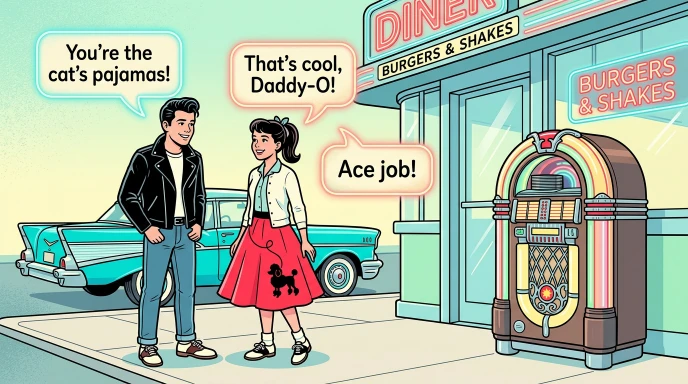
The best way to understand 1950 slang is to see how people used these expressions in everyday conversations. While the wording may sound old-fashioned today, many phrases still feel fun and easy to understand.
Friendly Conversation
Friend 1: “That’s a sharp jacket!”
Friend 2: “Thanks, Daddy-O!”
Here, Daddy-O is a friendly and playful way to address someone.
Casual Conversation
Person A: “Do you dig this new rock ‘n’ roll band?”
Person B: “Yeah, they’re really cool!”
In this example, dig means to like or appreciate something.
Light Argument
Friend 1: “You never want to try anything new.”
Friend 2: “Don’t call me a square!”
The word square is used jokingly to describe someone who seems too traditional or unwilling to have fun.
Social Media Example
Someone posting photos from a retro-themed event might write:
“Feeling like a cool cat in these vintage threads!”
Although 1950 slang isn’t common in daily texting, people still use it online for nostalgia, humor, or themed content.
Classic Car Event
“We’re cruisin’ downtown in our restored ’57 Chevy.”
This reflects how cruisin’ became closely connected with American car culture.
Origin and Background of 1950 Slang
The slang of the 1950s grew from a combination of music, fashion, youth culture, and changing lifestyles.
Several influences shaped these expressions:
- Rock ‘n’ roll music
- Jazz culture
- American diners
- Drive-in theaters
- High school social life
- Classic automobiles
- Radio programs
- Hollywood films
- Television shows
Young people often created or popularized new words to express their identity and separate themselves from older generations. As music and movies spread across the country, many slang terms became widely recognized.
Some expressions faded over time, while others such as cool and dig continued to influence modern English.
Comparison with Similar Slang
| 1950 Slang | Modern Equivalent | Main Difference |
| Cool cat | Cool person | The modern version is shorter and more common. |
| Daddy-O | Buddy, bro | Daddy-O has a vintage 1950s feel. |
| Dig | Like, appreciate | “Dig” sounds nostalgic today. |
| Square | Boring, uncool | Modern slang uses different words with a similar idea. |
| Threads | Outfit, clothes | “Threads” is still occasionally used today. |
| Cruisin’ | Driving around | Modern speakers rarely use it outside classic car culture. |
When to Avoid Using 1950 Slang
Although these expressions are generally harmless, they don’t fit every situation.
It’s best to avoid them when:
- Writing business emails
- Giving professional presentations
- Completing academic papers unless discussing history
- Speaking with people unfamiliar with vintage slang
- Using expressions whose meanings may be misunderstood today
Using modern, straightforward language is often a better choice in formal settings.
Polite Alternatives
If you want to express the same ideas in contemporary English, consider these alternatives.
| 1950 Slang | Modern Alternative |
| Cool cat | Stylish person |
| Daddy-O | Friend |
| Dig | Like, enjoy |
| Square | Traditional person |
| Threads | Clothes |
| Cruisin’ | Driving around |
These alternatives are easier for modern audiences to understand while preserving the original meaning.
Why People Still Use 1950 Slang
Even though the 1950s ended decades ago, many people continue using its slang for several reasons.
People enjoy it because it:
- Creates a nostalgic feeling
- Celebrates classic American culture
- Fits retro-themed parties and events
- Adds personality to conversations
- Reflects an interest in vintage fashion, music, or cars
- Makes historical movies and books feel authentic
Some expressions have also remained popular simply because they’re fun to say.
Impact of Using 1950 Slang in Communication
Using vintage slang can make conversations more colorful, but it’s important to consider your audience.
Benefits
- Adds historical flavor
- Makes conversations more entertaining
- Connects people with classic American culture
- Helps readers understand older movies, songs, and books
- Encourages interest in language history
Possible Drawbacks
- Younger audiences may not recognize certain terms.
- Some expressions sound outdated.
- A few historical words may no longer be considered appropriate.
- Overusing vintage slang can make writing feel unnatural.
Using these expressions thoughtfully helps preserve their charm while keeping communication clear.
Is 1950 Slang Safe for Social Media?
Yes. Most 1950 slang is perfectly safe for social media because it is generally friendly and non-offensive.
People often use these expressions in:
- Retro fashion posts
- Classic car photos
- Rock ‘n’ roll videos
- Vintage music content
- Throwback Thursday posts
- Historical discussions
However, if you’re quoting less common historical slang, it’s worth checking the meaning first to ensure it doesn’t carry outdated or offensive connotations.
Frequently Asked Questions
What is 1950 slang?
1950 slang refers to the informal words and expressions that became popular during the 1950s, especially among young people in the United States.
Is 1950 slang still used today?
Some expressions, such as cool, dig, and threads, are still heard occasionally, while many others are mainly used in retro or historical contexts.
What does “Daddy-O” mean?
Daddy-O is a friendly and informal way of addressing someone, similar to saying “buddy” or “friend.”
Why is 1950 slang so popular?
It represents an iconic era known for rock ‘n’ roll, classic cars, diners, and youth culture, making it appealing to history enthusiasts and fans of vintage style.
Was 1950 slang used only in the United States?
Most well-known 1950 slang originated in the United States, although some expressions later became familiar in other English-speaking countries through music, films, and television.
Can I use 1950 slang in everyday conversation?
Yes, but it’s best used casually or for fun. Since many expressions sound old-fashioned, not everyone may recognize them.
Conclusion
1950 slang offers a fascinating glimpse into the language, culture, and lifestyle of one of America’s most influential decades. Expressions like cool cat, Daddy-O, dig, and cruisin’ reflected the excitement of rock ‘n’ roll, classic cars, and a growing youth culture that shaped modern English in many ways.
Although much of this slang is now considered vintage, it remains popular in classic movies, music, retro events, and social media posts celebrating the 1950s. By understanding the meaning and history behind these expressions, you can better appreciate their cultural significance and enjoy using them in the right context. If you’re exploring language history or simply having fun with nostalgic phrases, 1950 slang continues to bring personality and charm to conversations today.
Read more about!
- Sopranos Slang Insults: Popular Mafia Terms Explained
- Florida Slang Words: A Complete Guide to Local Expressions
- Mama in Spanish Slang: Common Expressions, Usage & Examples

Hi, I’m Zunaira Shafiq, a slang writer and language enthusiast. I enjoy exploring modern slang, internet expressions, texting abbreviations, and social media terms, then explaining them in simple, easy-to-understand English. My goal is to help readers understand the meaning, origin, and correct usage of popular slang words through clear definitions and real-life examples. I love making online language easier for students, language learners, and anyone who wants to stay updated with modern communication.