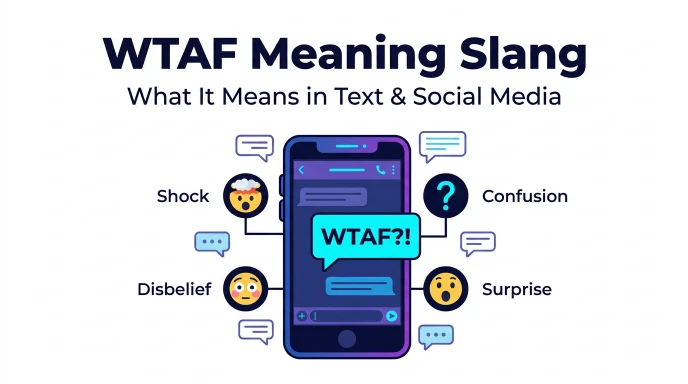
WTAF meaning slang is a common search because people often see this abbreviation in text messages, memes, social media posts, or online discussions and wonder what it means.
While it looks like many internet acronyms, WTAF expresses a strong emotional reaction rather than serving as a casual greeting or response.
You’ll frequently find it on platforms like TikTok, Reddit, X, Instagram, Snapchat, Discord, and in private text conversations.
Depending on the situation, it can show surprise, disbelief, frustration, or shock. Because it contains profanity, it’s important to understand both its meaning and when it’s appropriate to use.
Quick Answer:
WTAF stands for “What the f*?”** It is an informal internet slang abbreviation used to express strong surprise, confusion, disbelief, or frustration. Since it includes profanity, it is generally best reserved for casual conversations with people who are comfortable with that language.
What Does WTAF Mean in Text?
In texting and online conversations, WTAF is a stronger version of “What?” or “What on earth?”
People typically use it when they see something:
- Unexpected
- Shocking
- Confusing
- Ridiculous
- Hard to believe
For example:
“WTAF did I just watch?”
In this case, the person is expressing disbelief rather than asking a genuine question.
WTAF Full Form
WTAF stands for:
What The F*?**
It is an internet abbreviation that shortens a well-known English expression containing profanity. The acronym is widely recognized in texting, online forums, and social media.
Is WTAF Rude, Offensive, or Neutral?
Because WTAF includes a profanity, it is not a neutral expression.
- With close friends: Often acceptable if everyone is comfortable with strong language.
- On social media: Common in casual posts and comments but may not suit every audience.
- At work or school: Usually inappropriate.
- Professional communication: Avoid using it.
If you’re unsure if it’s appropriate, choose a milder alternative instead.
Where Is WTAF Commonly Used?
WTAF is widely used in informal online conversations where people react to something unexpected or unbelievable. Because it is short and expressive, it fits naturally into fast-paced chats and comment sections.
You may see WTAF on:
- Text messages
- TikTok comments
- Reddit threads
- Discord servers
- Snapchat chats
- Instagram comments and captions
- X (formerly Twitter)
- Gaming communities
- Group chats
- Meme pages
Although it’s popular online, WTAF is rarely used in professional or formal communication due to its offensive language.
Real-Life Examples of WTAF Usage
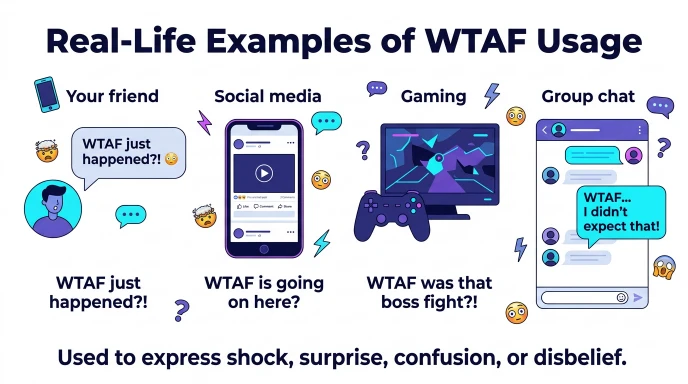
The meaning of WTAF changes slightly depending on the situation, but it always expresses a strong emotional reaction.
Friendly Example
Friend 1: “I accidentally deleted all my photos.”
Friend 2: “WTAF? Are you serious?”
Here, WTAF expresses surprise and concern.
Casual Example
“WTAF is happening with this weather today?”
The speaker is shocked by unusual weather conditions.
Argumentative Example
“WTAF are you talking about? That never happened.”
In this context, WTAF shows frustration or disagreement.
Social Media Example
“WTAF did I just watch? 😂”
People often use this after seeing a funny, strange, or unbelievable video.
Gaming Example
“WTAF was that final boss attack?”
Gamers frequently use WTAF when something unexpected happens during gameplay.
Origin and Background of WTAF
WTAF became popular during the early years of internet messaging when users started shortening common expressions into acronyms.
Like abbreviations such as:
- WTF
- OMG
- BRB
- IDK
- SMH
WTAF helped people type faster while still expressing strong emotions.
As social media platforms grew, the acronym spread rapidly through memes, online forums, gaming communities, and messaging apps. Today, it is recognized by many English speakers around the world.
Comparison with Similar Slang
| Slang | Meaning | Difference from WTAF |
| WTF | What the F***? | Shorter and more common than WTAF. |
| WTH | What the Heck? | Milder and less offensive. |
| OMG | Oh My God | Expresses surprise without asking a question. |
| SMH | Shaking My Head | Shows disappointment or disbelief rather than shock. |
| Seriously? | Genuine disbelief | Polite alternative suitable for most situations. |
When to Avoid Using WTAF
Because WTAF contains profanity, it isn’t appropriate everywhere.
Avoid using it:
- In business emails
- During job interviews
- At school or in academic writing
- In customer service conversations
- Around children
- With people who may find strong language offensive
- On public profiles where professionalism matters
Choosing a more neutral expression helps you communicate respectfully in formal settings.
Polite Alternatives to WTAF
If you want to express surprise without using profanity, try these alternatives:
- What happened?
- What on earth?
- Seriously?
- No way!
- I can’t believe it.
- What in the world?
- That’s unbelievable!
- Wow!
These phrases work well in both personal and professional conversations.
Why People Use WTAF
People use WTAF because it quickly communicates a strong emotional reaction.
Common reasons include:
- Expressing shock
- Showing disbelief
- Reacting to surprising news
- Responding to confusing situations
- Adding emotion to online conversations
- Making reactions feel more dramatic
The acronym is popular because it is short, memorable, and immediately understood by many internet users.
Impact of Using WTAF in Communication
Like many internet slang terms, WTAF has both benefits and drawbacks.
Benefits
- Quickly expresses strong emotions
- Makes casual conversations feel natural
- Commonly understood in online communities
- Adds emphasis to reactions
Drawbacks
- Contains profanity
- May offend some readers
- Can appear unprofessional
- Not suitable for formal communication
- May be misunderstood by people unfamiliar with internet slang
Understanding your audience is the best way to decide if WTAF is appropriate.
Is WTAF Safe for Social Media?
Generally, WTAF is allowed on most social media platforms, but it should be used thoughtfully.
Consider these points:
- It is common in comments and casual posts.
- Some audiences may consider it offensive because it contains profanity.
- Brands, businesses, and professionals usually avoid using it.
- Family-friendly pages often prefer milder alternatives.
If your content is intended for a broad audience, choosing a less explicit expression is often the better option.
Frequently Asked Questions
What does WTAF mean in slang?
WTAF stands for “What the F*?”** It is an internet slang abbreviation used to express surprise, disbelief, confusion, or frustration.
What does WTAF stand for?
WTAF stands for What The F*.** It is commonly used in text messages and online conversations.
Is WTAF rude?
Yes. Since it includes a swear word, WTAF is considered informal and potentially offensive. It should be avoided in professional or formal settings.
Is WTAF the same as WTF?
They are very similar. WTAF usually adds extra emphasis, while WTF is shorter and more commonly used.
Can I use WTAF in a work email?
No. WTAF is not appropriate for workplace communication. Use polite alternatives like “What happened?” or “Could you clarify?” instead.
Why is WTAF popular online?
It allows people to react quickly to shocking or confusing situations, making it a popular choice on social media, messaging apps, and gaming platforms.
Conclusion
WTAF meaning slang refers to the internet abbreviation “What the F*?”** It is commonly used to express strong surprise, confusion, frustration, or disbelief in text messages, social media posts, gaming chats, and online discussions. While the acronym is widely recognized, it includes profanity and is best reserved for casual conversations with people who are comfortable with that language.
Before using WTAF, consider your audience and the setting. In informal chats, it can effectively convey emotion, but in professional, academic, or family-friendly environments, a more polite alternative is usually the better choice. Understanding its meaning, tone, and context will help you communicate clearly and avoid misunderstandings online.
Read more about!
- LTR Slang: Explained with Examples and Common Usage
- Caveat Meaning Slang: Complete Guide with Examples and Usage
- DAF Meaning Slang: Everything You Need to Know

Hi, I’m Ryan Holden, a content writer with over 8 years of experience creating clear, engaging, and easy-to-understand content. I specialize in slang meanings, internet language, text abbreviations, and modern English expressions. My goal is to explain complex words in simple English with real-life examples so readers can quickly understand and use them correctly. I enjoy researching how language changes across social media, online communities, and everyday conversations, ensuring every article is accurate, helpful, and easy to read.