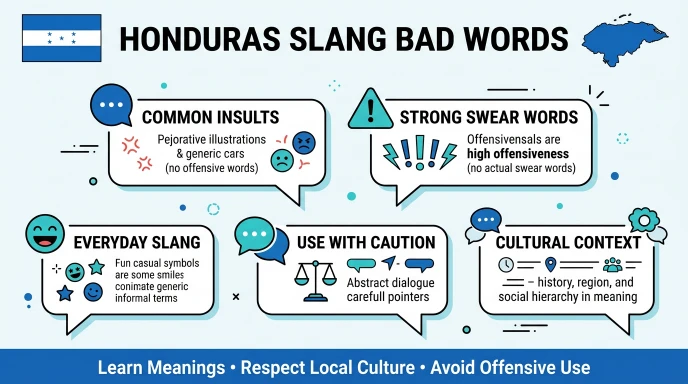
Honduras slang bad words are informal offensive words and insults used in Honduras to express anger, frustration, or disrespect, and they should be used carefully because some can be considered rude or offensive.
Honduras slang bad words are common expressions that many people search for before traveling, chatting with Hondurans, watching local videos, or understanding conversations on social media. Like every country, Honduras has its own slang, and some words can be humorous among friends but highly offensive in other situations. Knowing the meaning and context helps you avoid misunderstandings and communicate respectfully.
It’s important to remember that slang changes from one region to another. A word that sounds harmless in one place may be considered rude somewhere else.
This guide explains the most common Honduran bad words, their meanings, how they’re used, and when you should avoid saying them.
Quick Answer:
Honduras slang bad words are informal expressions used in Honduras that often express anger, insults, or strong emotions. Most should only be understood not casually used because many are considered offensive.
What Does Honduras Slang Bad Words Mean in Text?
The phrase honduras slang bad words refers to offensive or vulgar slang commonly used in Honduras during texting, social media, everyday conversations, and arguments.
These expressions may be used to:
- Insult someone
- Show frustration
- Joke with close friends
- React to surprising situations
- Add emphasis during emotional conversations
The meaning often depends on the relationship between the speakers and the tone of the conversation.
Honduras Slang Bad Words Full Form / Definition
Unlike internet abbreviations, honduras slang bad words do not have a full form.
Instead, they are local slang expressions that have developed over time through Honduran culture and everyday speech. Many originated from Spanish, while others evolved into regional expressions with unique meanings.
Is Honduras Slang Bad Words Rude, Offensive, or Neutral?
Most Honduran bad words fall into three categories.
| Type | Meaning | Should You Use It? |
| Mild slang | Informal but not extremely offensive | Only with people who know you well |
| Offensive insults | Used during arguments | Best avoided |
| Vulgar profanity | Highly offensive language | Avoid in professional or public settings |
Even when friends use these words jokingly, they can easily offend strangers.
Common Honduras Slang Bad Words and Their Meanings
Below are some commonly heard expressions. Meanings may vary slightly depending on the region.
| Slang | Meaning | Offensive Level |
| Pendejo | Fool, idiot | Medium to High |
| Cerote | Insult similar to “jerk” | High |
| Maje | Dude, guy, or idiot depending on tone | Low to Medium |
| Pisado | Difficult situation or insult | Medium |
| Hijueputa | Very strong insult | Very High |
| Cabrón | Can mean tough, clever, or insulting depending on context | Medium to High |
Important: Context matters. Some close friends may jokingly call each other “maje,” while the same word can sound disrespectful if spoken aggressively.
Is “Maje” Always a Bad Word?
No.
“Maje” is one of the most common Honduran slang words and isn’t always offensive.
It can mean:
- Buddy
- Dude
- Friend
- Idiot (depending on tone)
Friendly Example
“Hey maje, let’s grab some food.”
Angry Example
“You’re acting like a maje.”
The speaker’s tone completely changes its meaning.
Where Is Honduras Slang Commonly Used?
These expressions are often heard in:
- Everyday conversations
- Text messages
- Facebook comments
- TikTok videos
- Instagram captions
- Reddit discussions
- YouTube content
- Online gaming chats
- Street conversations
People rarely use them in formal workplaces, schools, or professional meetings.
Real-Life Examples of Honduras Slang Bad Words Usage
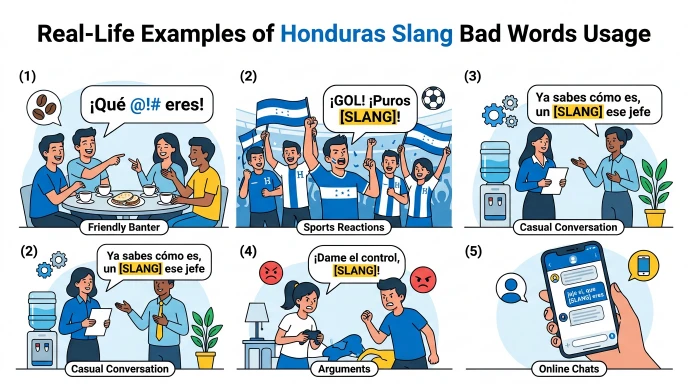
Friendly Tone
“What’s up, maje? Haven’t seen you in days.”
Here, “maje” simply means “friend.”
Casual Conversation
“That traffic was pisado today.”
The speaker means the traffic was very difficult or terrible.
Argumentative Tone
“Don’t be such a pendejo.”
This is clearly insulting and should be avoided.
Social Media
“Only my real maje understands this meme.”
Used affectionately among friends online.
Gaming Chat
“We lost because that player was acting like a pendejo.”
Used to criticize another player.
Origin and Background of Honduras Slang Bad Words
Most Honduran slang comes from everyday Spanish but has developed unique local meanings over generations.
Several influences shaped modern Honduran slang:
- Indigenous languages
- Colonial Spanish
- Neighboring Central American countries
- Youth culture
- Music
- Social media
- Internet memes
Because language constantly evolves, younger generations may use certain words differently from older speakers.
Why People Use Honduras Slang Bad Words
People use slang for several reasons.
To Express Emotion
Bad words often show anger, excitement, or frustration more strongly than standard language.
To Fit In
Friends frequently use local slang to sound natural within their social groups.
Humor
Some expressions become jokes among close friends.
Cultural Identity
Local slang reflects Honduran identity and everyday culture.
Online Communication
Short, expressive slang fits well in texting and social media conversations.
Comparison with Similar Central American Slang
| Slang | Country | Meaning | Offensive? |
| Maje | Honduras/Nicaragua | Dude or idiot | Sometimes |
| Cerote | Honduras/Guatemala | Strong insult | Yes |
| Pendejo | Many Spanish-speaking countries | Fool | Usually |
| Cabrón | Many countries | Depends on context | Sometimes |
| Güey | Mexico | Dude | Usually not |
Although some words appear across Latin America, their meanings and offensiveness vary by country.
When Should You Avoid Using Honduras Slang Bad Words?
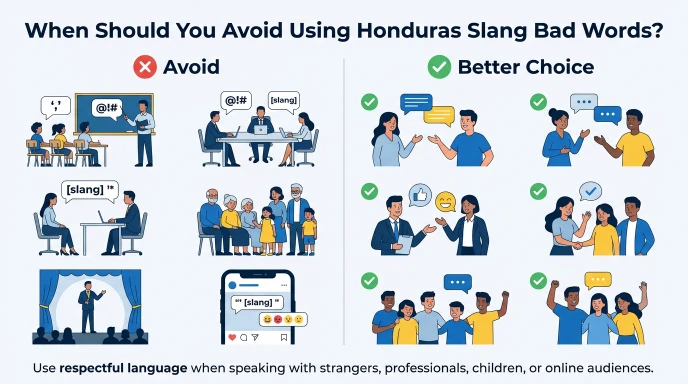
Avoid these expressions when speaking with:
- Teachers
- Employers
- Older adults
- New acquaintances
- Customers
- Business partners
- Government officials
- Formal audiences
Using offensive slang in these settings may appear disrespectful or unprofessional.
Polite Alternatives
Instead of using offensive slang, try respectful expressions.
| Offensive Expression | Better Alternative |
| Pendejo | That’s not a good idea. |
| Cerote | That person is rude. |
| Hijueputa | That’s very frustrating. |
| Insults | Stay calm and explain your opinion politely. |
Choosing respectful language usually leads to better communication.
Impact of Using Slang in Communication
Slang can improve communication when used appropriately, but it can also create problems.
Positive Effects
- Makes conversations feel natural
- Shows cultural understanding
- Strengthens friendships
- Adds humor
Negative Effects
- Can offend people
- Causes misunderstandings
- Sounds unprofessional
- May damage relationships if used carelessly
Always consider your audience before using regional slang.
Is Honduras Slang Safe for Social Media?
It depends on the word.
Mild slang among friends is generally acceptable in casual posts. However, offensive insults can:
- Violate community guidelines
- Start unnecessary arguments
- Harm your online reputation
- Be misunderstood by international audiences
If you’re posting publicly, it’s usually better to choose respectful language.
Examples in Different Contexts
Friendly
“You’re my favorite maje.”
Casual
“This homework is pisado.”
Argument
“Stop acting like a pendejo.”
Gaming
“Our teammate completely messed up that round.”
Text Message
“See you later, maje!”
Social Media
“Only Hondurans will understand this joke.”
Why Context Matters
The same word can sound:
- Friendly between lifelong friends
- Rude between strangers
- Funny in a meme
- Offensive in a serious conversation
Always pay attention to:
- Tone of voice
- Relationship with the listener
- Location
- Situation
- Cultural expectations
Context is often more important than the word itself.
Comparison
| Feature | Honduras Slang Bad Words | Neutral Spanish |
| Tone | Informal | Standard |
| Suitable for work | No | Yes |
| Used with friends | Often | Yes |
| Can offend people | Yes | Rarely |
| Common online | Yes | Yes |
| Best for formal communication | No | Yes |
Frequently Asked Questions
What does Honduras slang bad words mean?
It refers to offensive or vulgar slang expressions commonly used in Honduras to express anger, jokes, or strong emotions.
Are all Honduras slang words offensive?
No. Some words, like “maje,” can simply mean “friend” depending on the context and tone.
Can tourists use Honduras slang bad words?
It’s generally better to understand these words rather than use them. Misusing them may offend local people.
Are Honduras slang bad words common on social media?
Yes. They often appear on TikTok, Facebook, Instagram, Reddit, YouTube, and in text messages among friends.
Is “pendejo” always offensive?
Usually yes. Although some close friends jokingly use it, many people consider it insulting.
Why do meanings change?
Regional culture, age groups, and the speaker’s tone all influence how slang is understood.
Conclusion
Honduras slang bad words are a unique part of everyday Honduran communication and culture. While some expressions are harmless among close friends, others are highly offensive and should be avoided in formal or unfamiliar settings. Understanding their meanings helps you interpret conversations, enjoy local media, and communicate more respectfully.
If you’re learning Spanish or planning to visit Honduras, treat these words as cultural knowledge rather than vocabulary you should actively use. Paying attention to context, tone, and your audience will help you avoid misunderstandings while appreciating the richness of Honduran slang.
Read more about!
- What Is Sherm Slang For? Complete Guide with Examples
- 70s Slang Terms: Meaning, History & Real-Life Examples
- Poggers Meaning Slang: Simple Guide & Examples

Hi, I’m Zunaira Shafiq, a slang writer and language enthusiast. I enjoy exploring modern slang, internet expressions, texting abbreviations, and social media terms, then explaining them in simple, easy-to-understand English. My goal is to help readers understand the meaning, origin, and correct usage of popular slang words through clear definitions and real-life examples. I love making online language easier for students, language learners, and anyone who wants to stay updated with modern communication.