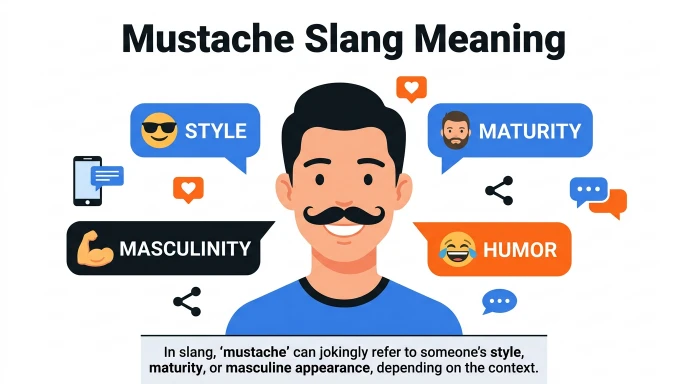
In slang, “mustache” can jokingly refer to someone’s style, maturity, or masculine appearance, and its meaning depends on the conversation and context.
Mustache slang is a phrase people search when they come across the word mustache being used in a humorous, informal, or symbolic way instead of simply referring to facial hair.
While a mustache is literally the hair that grows above the upper lip, in slang it can represent a person’s style, confidence, maturity, or even be used as a playful nickname.
The meaning depends heavily on the conversation and the culture in which it is used. You may see mustache slang in memes, TikTok videos, Reddit threads, text messages, and casual conversations where people joke about facial hair or someone’s appearance.
Quick Answer:
In slang, mustache usually refers to someone’s facial hair in a humorous or playful way, but it can also symbolize confidence, masculinity, maturity, or a distinctive personal style depending on the context.
What Does Mustache Slang Mean in Text?
When used in text messages or online conversations, mustache slang often goes beyond the literal meaning.
Depending on the situation, it may refer to:
- Someone with a noticeable or iconic mustache.
- A playful nickname for a friend.
- A symbol of confidence or maturity.
- A humorous reference in memes or jokes.
- A way to tease someone who recently grew facial hair.
For example:
“That mustache is giving detective vibes.”
Here, the speaker is joking about the person’s appearance rather than simply describing facial hair.
Mustache Full Form / Definition
Mustache is not an acronym, so it has no full form.
Instead, it is a common English word that literally means the hair growing above the upper lip. In slang, however, the word often carries additional meanings based on tone and context.
Related search terms include:
- mustache meaning slang
- mustache meaning in text
- what does mustache stand for
The answer is simple: mustache does not stand for anything. Its slang meaning comes from how people use it in conversation.
Is Mustache Slang Rude, Offensive, or Neutral?
In most cases, mustache slang is completely neutral.
Friendly Usage
People often use it as a compliment or playful joke.
Examples:
- “That mustache looks awesome.”
- “The new mustache suits you.”
Humorous Usage
Friends may jokingly exaggerate someone’s facial hair.
Example:
“Your mustache deserves its own Instagram account.”
Potentially Offensive Usage
If used to mock someone’s appearance, it can sound rude.
Example:
“That tiny mustache looks ridiculous.”
The words themselves are not offensive the speaker’s tone makes the difference.
Where Is Mustache Slang Commonly Used?
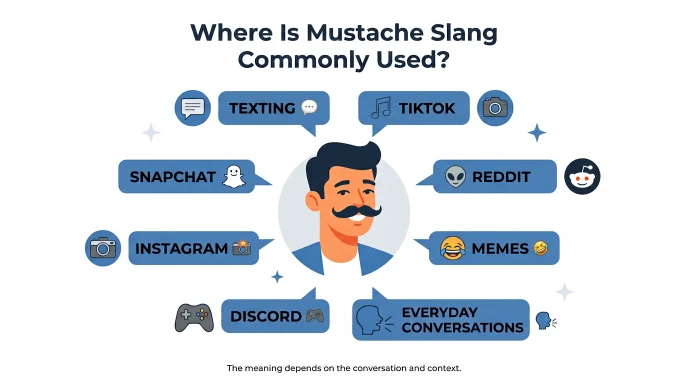
Mustache slang appears in many informal settings, including:
- Text messages
- TikTok videos
- Instagram captions
- Reddit discussions
- Snapchat chats
- Facebook comments
- Discord servers
- Meme pages
- YouTube comments
- Casual conversations
It is especially common during events like Movember, when many people grow mustaches to raise awareness for men’s health.
Different Meanings of Mustache Slang
1. Literal Facial Hair
The most common meaning simply refers to a person’s mustache.
Example:
“Your mustache looks much better after the trim.”
2. Symbol of Confidence
A mustache sometimes represents confidence or a bold personality.
Example:
“He’s rocking that mustache with confidence.”
3. Playful Nickname
Friends sometimes jokingly call someone “Mustache.”
Example:
“Here comes Mustache!”
4. Meme or Internet Humor
Online, people often joke about unusual or dramatic mustaches.
Example:
“That mustache has its own personality.”
Why People Use Mustache Slang
People use mustache slang because it adds humor and personality to conversations.
Common reasons include:
- Making jokes
- Complimenting someone’s appearance
- Creating memorable nicknames
- Referring to famous mustache styles
- Participating in online trends
- Breaking the ice in casual conversations
It makes chats feel more relaxed and entertaining.
Origin and Background of Mustache Slang
The word mustache has existed for centuries as the name for upper-lip facial hair.
Its slang usage developed naturally as facial hair became associated with different personalities and cultural trends.
Some influences include:
- Classic movie characters
- Western films
- Police and detective stereotypes
- Internet memes
- Social media humor
- Movember campaigns
Today, younger users often use the word humorously rather than literally.
Real-Life Examples of Mustache Slang Usage
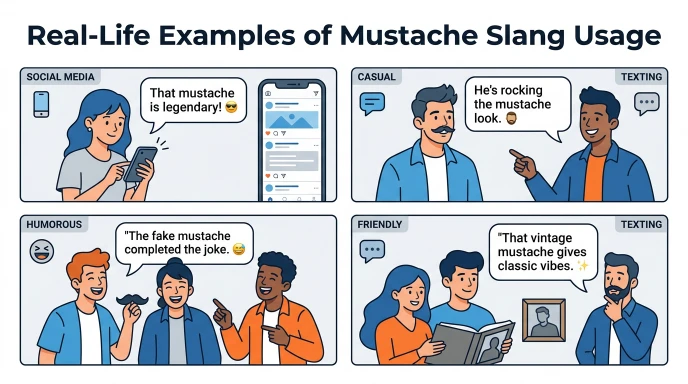
Friendly
“That mustache looks great on you!”
“You’re officially part of the mustache club.”
Casual
“I didn’t recognize you without the mustache.”
“The mustache totally changes your look.”
Argumentative
“Don’t act confident just because you grew a mustache.”
“It’s only a mustache it doesn’t make you older.”
Gaming or Social Media
“Your avatar needs a mustache.”
“That filter gave everyone a funny mustache.”
“Best mustache challenge on TikTok today!”
Comparison with Similar Slang
| Term | Meaning | Tone | Common Usage |
| Mustache | Facial hair or playful nickname | Friendly | Texting, memes |
| Beard | Facial hair, maturity, rugged look | Casual | Everyday conversation |
| Stache | Short slang for mustache | Informal | Social media |
| Handlebar | Curled mustache style | Neutral | Grooming discussions |
| Goatee | Beard style | Neutral | Appearance discussions |
When to Avoid Using Mustache Slang
Although generally harmless, there are situations where using mustache slang isn’t appropriate.
Avoid using it:
- In professional emails
- During formal business meetings
- In academic writing
- When discussing someone’s appearance sensitively
- If the person dislikes jokes about their looks
Respectful communication should always come first.
Polite Alternatives
If you want to sound more formal, use:
- Facial hair
- Mustache style
- Grooming style
- Appearance
- Look
- Upper-lip facial hair
These alternatives work well in professional conversations.
Impact of Using Mustache Slang in Communication
Using mustache slang can make conversations:
More Relaxed
It creates a friendly atmosphere.
More Humorous
Many jokes and memes use mustaches as visual comedy.
More Personal
It can become an affectionate nickname among friends.
More Engaging
Playful language often keeps online conversations fun and memorable.
However, avoid using it to criticize someone’s appearance, as humor doesn’t always translate the same way for everyone.
Is Mustache Slang Safe for Social Media?
Yes.
Mustache slang is generally safe on platforms like:
- TikTok
- Snapchat
- Discord
- X (formerly Twitter)
As long as it is used respectfully and not to bully or insult someone, it is considered harmless slang.
Frequently Asked Questions
What does mustache slang mean?
It usually refers to a mustache in a playful, humorous, or symbolic way rather than simply describing facial hair.
Does mustache have a full form?
No. Mustache is a regular English word and not an abbreviation.
Is mustache slang offensive?
No. It is generally neutral and friendly, though it can become insulting if used to mock someone’s appearance.
Where is mustache slang commonly used?
It is popular in texting, memes, TikTok, Instagram, Reddit, Discord, and everyday casual conversations.
What does mustache stand for?
It does not stand for anything. The slang meaning comes from how people use the word in different social contexts.
Is mustache slang popular on social media?
Yes. It frequently appears in memes, facial-hair challenges, grooming content, and humorous online posts.
Conclusion
Mustache slang usually refers to a mustache in a playful, humorous, or symbolic way rather than simply describing facial hair. Depending on the context, it can be a lighthearted nickname, a compliment about someone’s style, or part of a joke shared on social media. Because its meaning changes with tone and situation, it’s important to consider your audience before using it. In most casual conversations, texting, and online platforms, mustache slang is friendly, easy to understand, and perfectly safe to use.
Read more about!
- DOD Meaning Slang: Meaning, Uses & Context Explained
- Lowkey in Slang: Simple Meaning, Examples & Everyday Usage
- Honduras Slang Bad Words: Popular Offensive Terms Explained

Hi, I’m Ryan Holden, a content writer with over 8 years of experience creating clear, engaging, and easy-to-understand content. I specialize in slang meanings, internet language, text abbreviations, and modern English expressions. My goal is to explain complex words in simple English with real-life examples so readers can quickly understand and use them correctly. I enjoy researching how language changes across social media, online communities, and everyday conversations, ensuring every article is accurate, helpful, and easy to read.