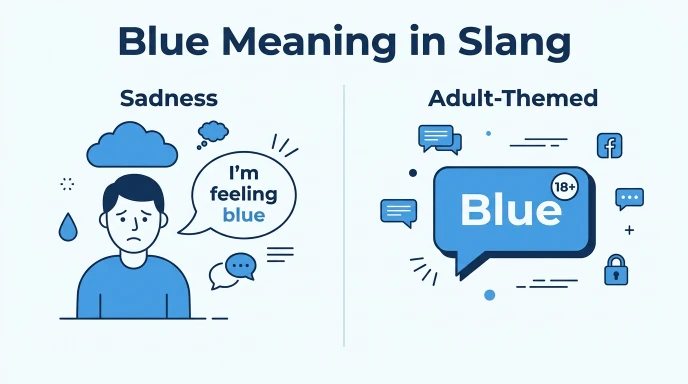
Blue in slang can mean feeling sad or depressed, or in some contexts, something explicit or adult-themed, depending on the conversation.
Blue meaning slang is a popular search because the word blue can have different meanings depending on the conversation.
In everyday English, it usually refers to the color, but in slang, it often describes emotions, jokes, or even certain types of content. The intended meaning depends on the context, the platform, and the people involved in the conversation.
You may see blue in text messages, TikTok comments, Reddit discussions, Discord chats, or casual conversations. Understanding the context helps you avoid misunderstandings since the same word can express sadness, refer to adult humor, or simply describe a mood.
Quick Answer:
In slang, blue most commonly means feeling sad or depressed, but it can also refer to adult or risqué humor (“blue jokes”) depending on the context.
What Does Blue Mean in Text?
In texting and online conversations, blue usually describes someone’s emotional state.
For example:
“I’ve been feeling blue all week.”
This means the person has been feeling sad, down, or emotionally low.
However, another common slang meaning is:
“That comedian tells blue jokes.”
Here, blue means jokes that contain adult language, sexual references, or inappropriate humor.
The correct meaning always depends on the surrounding conversation.
Blue Full Form / Definition of the Slang
Unlike abbreviations such as LOL or BRB, blue does not have a full form.
Instead, it is a regular English word that has developed slang meanings over time.
Common slang definitions include:
- Feeling sad or emotionally low
- Adult, risqué, or sexually explicit humor
- Occasionally describing gloomy emotions or negative moods
So if you’re searching for blue full form, there isn’t one. It’s simply a word with multiple slang uses.
Is Blue Rude, Offensive, or Neutral?
The answer depends on how it’s used.
| Usage | Tone |
| Feeling blue (sad) | Neutral |
| Blue humor or blue jokes | Mildly offensive depending on the audience |
| Everyday emotional conversations | Safe and respectful |
When someone says they’re feeling blue, there’s nothing rude about it.
However, if someone mentions blue comedy or blue humor, they’re referring to adult material that may not be appropriate in professional or family settings.
Where Is Blue Commonly Used?
The slang meaning of blue appears across many online platforms, including:
- Text messages
- TikTok
- Discord
- Snapchat
- X (formerly Twitter)
- Gaming chats
- Everyday conversations
People mostly use it when talking about emotions or discussing comedy styles.
Different Meanings of Blue in Slang
1. Feeling Sad or Down
This is the most common slang meaning.
Examples:
- “I’m feeling a little blue today.”
- “She’s been blue since moving away.”
- “Don’t worry you won’t feel blue forever.”
The tone is emotional and sympathetic.
2. Blue Humor or Blue Comedy
In entertainment, blue refers to jokes containing:
- Sexual references
- Strong language
- Adult themes
- Crude humor
Example:
“That stand-up comedian is known for blue comedy.”
This meaning is common when discussing comedians, TV shows, or performances.
3. Emotional Mood
Sometimes people use blue simply to describe a gloomy atmosphere.
Example:
- “The rainy weather made everyone feel blue.”
Although similar to sadness, it may describe a temporary mood rather than depression.
Real-Life Examples of Blue Usage
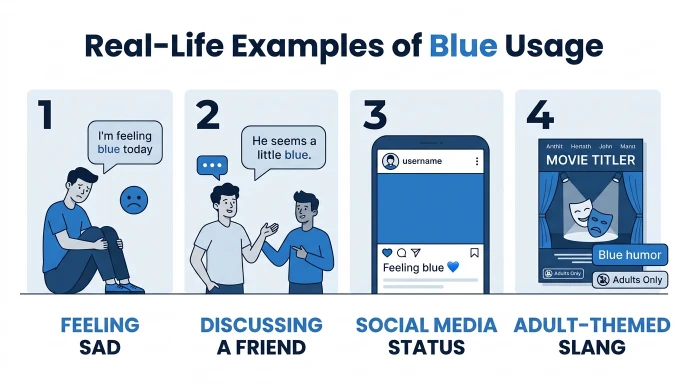
Friendly
“You seem blue today. Everything okay?”
Casual
“I’ve been feeling blue since the weekend ended.”
Social Media
“Today’s vibe is a little blue, but tomorrow will be better.”
Comedy Discussion
“The show contains blue humor, so it’s for adults.”
Gaming Chat
“He sounded kind of blue after losing five matches.”
Although less common in gaming, people still use it to describe someone’s mood.
Origin and Background of the Slang
The emotional meaning of blue has existed for centuries.
English speakers have long associated the color blue with sadness or melancholy. Over time, expressions like feeling blue became common in everyday speech.
The entertainment meaning developed later.
The phrase blue jokes became popular in the early 20th century to describe jokes that included adult or indecent material. Today, comedians and entertainment reviewers still use this expression.
Both meanings remain widely understood in modern English.
Comparison with Similar Slang
| Slang | Meaning | Tone | Common Usage |
| Blue | Sad or adult humor | Neutral / Adult | Texting, conversation |
| Down | Feeling sad | Casual | Everyday speech |
| Low | Emotionally tired or sad | Neutral | Texting |
| Depressed | Serious emotional condition | Formal | Medical and personal discussions |
| Moody | Frequently changing emotions | Casual | Everyday conversation |
When to Avoid Using Blue
Avoid using blue when:
- The meaning may confuse your audience.
- You’re writing formal or professional documents.
- Discussing mental health where precise language is more appropriate.
- Referring to adult humor around children or professional audiences.
Using clear language is always better when context isn’t obvious.
Polite Alternatives
If you mean someone feels sad, you can also say:
- Feeling down
- Feeling low
- Having a difficult day
- Feeling upset
- Feeling discouraged
- Feeling emotionally tired
If discussing blue humor professionally, you can say:
- Adult comedy
- Mature humor
- Explicit comedy
- Adult-themed jokes
Why People Use Blue Slang
People use blue because it communicates emotions quickly and naturally.
It also:
- Sounds less dramatic than saying “depressed.”
- Is widely understood in English-speaking cultures.
- Adds personality to conversations.
- Helps express feelings without long explanations.
- Is commonly recognized in literature, music, and movies.
Impact of Using Blue in Communication
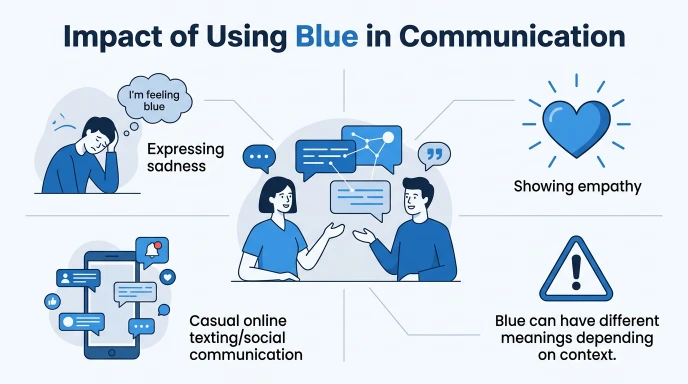
Using blue can make conversations feel more natural and emotionally expressive.
Positive effects include:
- Easy emotional expression
- Familiar wording
- Friendly tone
- Widely understood by native speakers
Potential drawbacks:
- Multiple meanings can confuse readers.
- Adult humor meaning may be inappropriate in some situations.
- International readers may misunderstand the context.
Choosing the right context makes communication clearer.
Is Blue Safe for Social Media?
Yes.
When blue means feeling sad, it’s completely safe to use on platforms like:
- TikTok
- Snapchat
- Discord
If referring to blue humor, keep your audience and platform guidelines in mind, as adult-themed content may not be suitable everywhere.
Real-Life Examples by Tone
Friendly
“I’m here if you’re feeling blue.”
Casual
“Mondays always make me feel blue.”
Argumentative
“Stop acting so blue over such a small mistake.”
Gaming
“Our teammate sounded blue after we lost the tournament.”
Social Media
“Feeling blue today, but tomorrow is a fresh start.”
Frequently Asked Questions
What does blue mean in slang?
It usually means feeling sad or emotionally low, although it can also refer to adult or risqué humor depending on the context.
What does blue mean in texting?
In texting, blue almost always means someone feels sad, disappointed, or emotionally down.
Does blue have a full form?
No. Blue is not an acronym and has no full form.
Is blue slang offensive?
Not when it means sadness. However, blue humor refers to adult jokes that may be inappropriate in certain settings.
Why do people say “feeling blue”?
It’s a long-standing English expression used to describe sadness or melancholy.
Is blue commonly used on social media?
Yes. People often use it to describe their mood or emotional state on social media and messaging apps.
Conclusion
Blue meaning slang most often refers to feeling sad, emotionally low, or discouraged, making it one of the most recognizable emotional expressions in English. In other contexts, especially comedy, blue can describe adult or explicit humor. Because the word has more than one slang meaning, context is essential for understanding it correctly.
If you see blue in a text message, on TikTok, Reddit, Discord, or in everyday conversation, paying attention to the surrounding words will help you interpret it accurately. Knowing these meanings allows you to communicate more naturally and avoid confusion in both online and offline conversations.
Read more about!
- Mustache Slang: Meaning, Origin & Everyday Usage
- Nothing in Slang: Meaning, Origin, Uses & Real-Life Examples
- Ski Mask Slang: Complete Guide to Its Meaning and Modern Usage

Hi, I’m Ryan Holden, a content writer with over 8 years of experience creating clear, engaging, and easy-to-understand content. I specialize in slang meanings, internet language, text abbreviations, and modern English expressions. My goal is to explain complex words in simple English with real-life examples so readers can quickly understand and use them correctly. I enjoy researching how language changes across social media, online communities, and everyday conversations, ensuring every article is accurate, helpful, and easy to read.