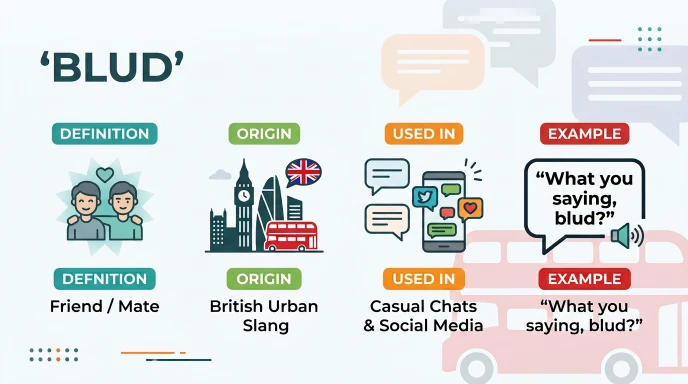
Blud slang is a casual term often used online to mean “bro,” “brother,” “dude,” or “friend.”
You may see it in texts, comments, memes, gaming chats, TikTok posts, and other social media conversations.
The word is especially associated with British-style slang and is often used in a playful or humorous way. However, its meaning can change slightly depending on the speaker, situation, and tone.
Some people use it seriously when addressing a friend, while others use it mainly as an internet joke or exaggerated way of saying “bro.”
Quick Answer
Blud is slang for “bro,” “dude,” or “mate.” It is usually casual and friendly, but it can also sound humorous, sarcastic, or annoyed depending on the context.
What Does Blud Mean in Text?
In texting and online conversations, blud usually means bro, dude, mate, or friend.
For example:
“Blud really thought he could win.”
Here, blud simply refers to “bro” or “dude.” The sentence could be playful, teasing, or slightly mocking depending on the conversation.
You might also see it used as a direct way to get someone’s attention:
“Blud, what are you doing?”
In this case, it has a similar meaning to:
“Bro, what are you doing?”
The term does not usually carry a serious meaning. Its casual style makes it popular in informal conversations.
Blud Slang Meaning and Full Form
Blud does not have a traditional full form like an acronym. It is not short for a longer phrase.
Blud is a slang form of “blood,” which can mean a close friend or person in British slang.
In modern internet use, however, many people simply understand blud as another version of bro, dude, or mate.
So, if someone asks, “What does blud stand for?”, the simple answer is that it is not an acronym. Its modern slang use is closer to a casual form of address.
Is Blud Rude, Offensive, or Neutral?
Blud is usually casual and not inherently offensive.
Its tone depends heavily on the situation.
Friendly
Among friends, it can sound warm and playful:
“Blud, you need to see this video.”
Casual
People may use it with someone they do not know well in an informal online conversation:
“Blud, that game was crazy.”
Sarcastic
It can also make a sentence sound sarcastic:
“Blud really thought that was a good idea.”
Annoyed
When used during an argument, it can sound irritated:
“Blud, I already told you twice.”
So, the word itself is generally harmless, but tone and context determine how it is received.
Where Is Blud Commonly Used?
You can encounter blud in many informal online spaces.
Common examples include:
- Text messages
- TikTok comments
- Instagram comments
- Reddit discussions
- Discord chats
- Gaming communities
- YouTube comments
- Memes
- Group chats
- Casual conversations
It is common online because people use slang to sound funny, casual, and relatable.
The word can also appear in videos and memes where the speaker is being humorous or exaggerating a reaction.
Real-Life Examples of Blud Usage
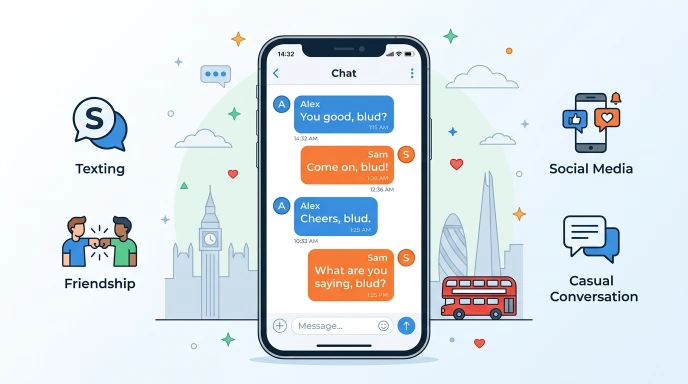
The easiest way to understand blud slang is to see how it works in different situations.
Friendly Example
“Blud, are you coming to the party tonight?”
Here, blud means something like “bro” or “mate.” The speaker is casually addressing a friend.
Casual Example
“Blud just sent me the funniest video.”
The word gives the sentence a relaxed, conversational tone.
Humorous Example
“Blud woke up and chose chaos.”
This type of usage is common in memes and social media comments. It is usually meant to be funny rather than serious.
Teasing Example
“Blud thought he was going to beat me.”
Here, the speaker is teasing someone after a competition or game.
Gaming Example
“Blud missed the easiest shot.”
In gaming chats, blud can be used much like “bro” or “dude.”
Argumentative Example
“Blud, listen to what I’m saying.”
The word is still casual, but the overall sentence sounds more frustrated.
Blud Slang Origin and Background
The modern use of blud is connected with British slang and informal ways of addressing another person.
It is commonly linked to the slang use of “blood” as a term for a close person, friend, or associate. Over time, casual speech and the internet made different forms of the word popular online.
The spelling blud is especially recognizable in modern social media and meme culture.
However, slang does not always have one exact origin story. Different communities can adopt, change, and popularize words in different ways. So, blud is best seen as part of British and internet slang, not from one exact source.
Blud vs. Bro vs. Bruh vs. Mate
These words can have similar meanings, but their style is different.
| Slang | Common Meaning | Typical Tone |
| Blud | Bro, dude, mate | Casual, playful |
| Bro | Brother, friend, dude | Friendly, casual |
| Bruh | Bro, often showing reaction | Humorous, surprised |
| Mate | Friend, person | Casual, especially British |
| Dude | Person, friend | Relaxed, informal |
For example:
- “Blud, check this out.”
- “Bro, check this out.”
- “Bruh, check this out.”
- “Mate, check this out.”
All four can communicate a similar basic idea, but the feeling can be slightly different.
When Should You Avoid Using Blud?
Although blud is generally harmless, it is still slang. That means it may not fit every situation.
Avoid using it in:
- Job applications
- Formal emails
- Academic writing
- Professional reports
- Business presentations
- Official documents
- Formal customer communication
For example, instead of writing:
“Blud, I need the report today.”
A professional message would be:
“Could you please send me the report today?”
Using standard language helps you sound more professional when the situation requires it.
Polite Alternatives to Blud
If you want a more neutral word, you can use:
- Friend
- Mate
- Dude
- Bro
- Everyone
- Hey
- My friend
- The person’s name
The best alternative depends on the situation.
For a professional setting, simply using the person’s name or saying “Hi” is usually better.
Why Do People Use Blud?
People use blud for several reasons.
To Sound Casual
The word makes a conversation feel less formal.
To Show Familiarity
Among friends or online communities, it can create a sense of closeness.
To Be Funny
Internet users often use slang words because they make comments and messages sound more humorous.
To Match Internet Culture
Words such as blud, bro, and bruh are common in memes and online conversations. Using them can make a message feel more natural within those communities.
To Express Emotion
Depending on the sentence, blud can add surprise, frustration, excitement, or amusement.
Does Blud Always Mean Friend?
No.
Although blud often refers to a friend, it does not always mean that the person is actually a close friend.
For example:
“Blud forgot his password again.”
The speaker may not literally be saying that the person is their close friend. It can simply be an informal way to refer to someone.
Online, the word can even be used toward strangers for comedic effect.
That is why you should look at the whole sentence and situation instead of translating the word by itself.
Can Blud Be Used on Social Media?
Yes. Blud is generally suitable for casual social media use.
You may see it in:
- Comments
- Captions
- Memes
- Replies
- Direct messages
- Gaming posts
- Short videos
However, if it sounds natural depends on the audience. Some people use blud frequently, while others may see it as exaggerated internet slang.
Is Blud Safe to Use?
In general, blud is not a profanity or inherently offensive term.
Still, context matters. A friendly “blud” between friends can sound completely different from the same word used during an argument.
If you are unsure about the audience, use a more neutral word such as friend, mate, or bro.
Common Mistakes When Using Blud
One common mistake is assuming that blud always means “best friend.” It usually does not.
Another mistake is using it in formal situations. Because it is slang, it can sound too informal for professional communication.
You should also avoid assuming that every person will understand it. Slang varies between countries, age groups, and online communities.
Finally, do not translate blud literally as “blood” every time you see it. In modern slang conversations, it often functions as a casual way of addressing someone.
FAQs
What does blud mean in slang?
Blud usually means bro, dude, mate, or friend. It is commonly used in casual conversations and online slang.
What does blud mean in texting?
In texting, blud is usually an informal way to address someone, similar to saying “bro” or “dude.”
Is blud a bad word?
No. Blud is generally not a bad word. It is casual slang, although its tone can become sarcastic or annoyed depending on the context.
What does blud stand for?
Blud is not an acronym, so it does not have a traditional full form. Its slang use is associated with informal British speech and modern internet culture.
Is blud British slang?
Yes, blud is mainly British slang, but social media, memes, and the internet have made it more popular.
Can I use blud in formal writing?
It is better to avoid blud in formal writing. Use standard words such as friend, mate, or the person’s name instead.
Conclusion
Blud slang is a casual term that usually means “bro,” “dude,” “mate,” or “friend.” It is commonly seen in texting, memes, gaming chats, and social media. The word is strongly associated with British slang but has gained wider attention through internet culture. Its meaning is usually friendly or playful, although it can also sound sarcastic or annoyed depending on the situation.
The most important thing to remember is that blud is informal slang. It is good for casual chats but not for professional or formal writing. When you see it online, look at the surrounding words and tone to understand what the speaker actually means.
Read more about!
- Hood Slang: What Does “Hood” Mean in Slang?
- 2020s Slang: Popular Words, Meanings & Text Examples
- Eats Slang Meaning: Complete Guide

Hi, I’m Zunaira Shafiq, a slang writer and language enthusiast. I enjoy exploring modern slang, internet expressions, texting abbreviations, and social media terms, then explaining them in simple, easy-to-understand English. My goal is to help readers understand the meaning, origin, and correct usage of popular slang words through clear definitions and real-life examples. I love making online language easier for students, language learners, and anyone who wants to stay updated with modern communication.