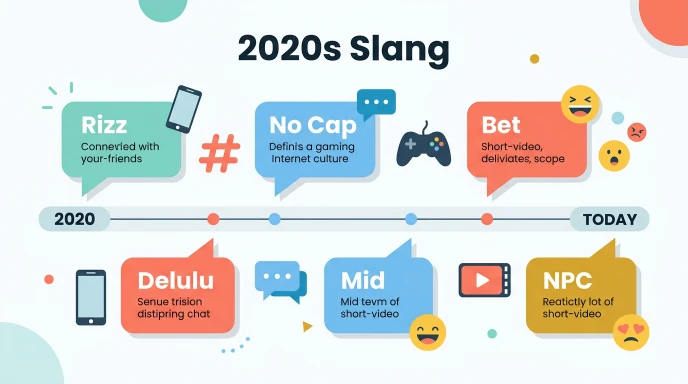
2020s slang has changed the way people communicate online and in everyday conversations. If you’ve spent time on TikTok, Instagram, Snapchat, Reddit, Discord, or even in gaming chats, you’ve probably seen words like rizz, delulu, NPC, cap, no cap, bet, and ate.
These expressions often spread quickly through social media and become part of everyday language, especially among younger users.
Unlike traditional slang that may stay popular for years, many 2020s slang terms rise and fade quickly because of internet trends and viral videos.
Learning these expressions can help you better understand text messages, memes, online discussions, and social media content without feeling left behind.
Quick Answer
2020s slang refers to the modern words and expressions that became popular during the 2020s, especially on social media, texting, gaming, and online communities. These terms are mostly casual, creative, and trend-driven.
What Does 2020s Slang Mean in Text?
In texting, 2020s slang refers to the collection of modern internet expressions people use to make conversations shorter, funnier, or more expressive.
Unlike a single slang word, 2020s slang is a category that includes hundreds of popular phrases and abbreviations.
For example:
- “That’s cap.”
- “She really ate.”
- “Bro has rizz.”
- “It’s giving confidence.”
- “That outfit is fire.”
Each phrase carries its own meaning, but together they represent the internet language that became popular throughout the 2020s.
Because these expressions spread rapidly online, their meanings sometimes evolve over time. Context is always important when interpreting them.
2020s Slang Full Form / Definition
Unlike abbreviations such as LOL or BRB, 2020s slang does not have a full form.
Instead, it refers to:
Modern informal words, phrases, abbreviations, and expressions that became popular during the 2020s through social media, online communities, texting, and internet culture.
Many of these expressions originate from:
- Social media creators
- Gaming communities
- Streaming platforms
- Internet memes
- Music culture
- Online influencers
Popular 2020s Slang Words and Their Meanings
Here are some of the most recognized slang terms of the decade.
| Slang | Meaning | Example |
| Rizz | Charm or flirting ability | “He’s got serious rizz.” |
| Cap | A lie | “That’s cap.” |
| No Cap | Seriously or honestly | “No cap, that movie was amazing.” |
| Delulu | Delusional in a humorous way | “I’m delulu enough to think I’ll meet my favorite singer.” |
| NPC | Someone acting predictable or lacking originality | “He acts like an NPC.” |
| Ate | Did something extremely well | “She ate that performance.” |
| Bet | Okay or agreed | “Bet, I’ll be there.” |
| Mid | Average or disappointing | “The game was mid.” |
| It’s Giving | Suggests a certain vibe | “It’s giving vacation energy.” |
| Slay | To perform exceptionally well | “You slayed that outfit.” |
These words often appear in text messages, memes, short videos, and online comments.
Is 2020s Slang Rude, Offensive, or Neutral?
Most 2020s slang is casual and neutral, but some expressions may sound rude depending on the context.
Friendly Examples
Words like:
- Bet
- Slay
- Ate
- Rizz
are usually positive.
Example:
“You absolutely slayed that presentation.”
Neutral Examples
Expressions such as:
- It’s giving
- Vibe
- Mid
are generally neutral, although “mid” can sometimes sound critical.
Potentially Offensive Examples
Some slang can offend people if used carelessly.
Examples include:
- NPC
- Delulu
- Clown
- Touch grass
These terms may be humorous among friends but insulting when directed at strangers.
Always consider your audience before using internet slang.
Where Is 2020s Slang Commonly Used?
Modern slang spreads rapidly because millions of people share videos, memes, and conversations every day.
TikTok
TikTok is one of the biggest sources of new slang.
Creators regularly introduce phrases that become viral worldwide.
Examples:
- “That’s giving main character energy.”
- “She ate.”
People use slang in:
- Comments
- Reels
- Stories
- Captions
Example:
“This outfit slays.”
Snapchat
Friends use modern slang in casual chats.
Example:
“Bet.”
Discord
Gaming servers and communities often create and spread new slang.
Example:
“That strategy is OP, no cap.”
Many internet expressions gain popularity through Reddit communities before becoming mainstream.
Gaming
Competitive games have helped popularize terms like:
- GG
- NPC
- OP
- Buff
- Nerf
- Sweat
Many of these became part of everyday internet conversations.
Why 2020s Slang Became So Popular
Several factors contributed to the rapid growth of modern slang.
Social Media Algorithms
Short videos spread new words to millions of viewers within hours.
Internet Memes
Funny memes introduce expressions that people quickly begin repeating.
Influencers
Popular creators often make certain words trendy simply by using them frequently.
Music
Hip-hop, pop, and viral songs introduce new phrases that fans adopt in everyday conversations.
Online Communities
Gaming groups, livestreams, and forums continuously create new expressions.
As a result, today’s slang spreads much faster than slang from previous decades.
Origin and Background of 2020s Slang
Unlike older slang that often developed slowly within local communities, 2020s slang is heavily influenced by internet culture. Platforms such as TikTok, Discord, Twitch, YouTube, Instagram, and Reddit allow new words to spread across the world in just a few days.
Many popular expressions have roots in African American Vernacular English (AAVE), gaming culture, meme communities, music, and online creators. As these words gain popularity, they are adopted by millions of users and often evolve in meaning over time.
Because internet trends change rapidly, some slang terms remain popular for years, while others disappear within months. This constant evolution makes the language of the 2020s one of the fastest-changing forms of communication in modern history.
Real-Life Examples of 2020s Slang
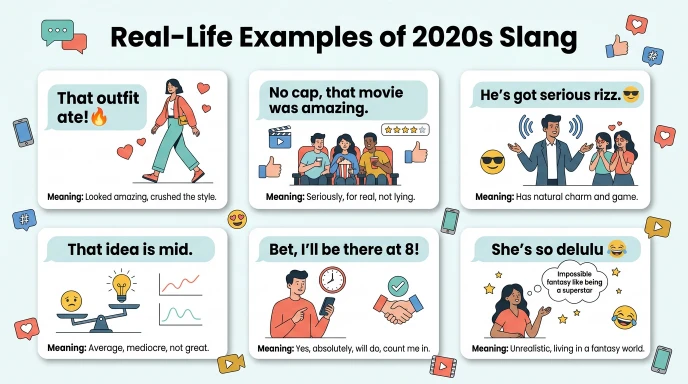
Friendly Conversation
Emma: Did you see Sarah’s dance video?
Olivia: She absolutely ate!
Casual Text
“Bet, see you at 8.”
Social Media
“That outfit is giving luxury.”
Gaming
“Our teammate has insane rizz in voice chat.”
Meme
“No cap, this is the funniest video today.”
Everyday Conversation
“That restaurant was mid.”
Compliment
“You slayed your presentation today.”
Funny Conversation
Jake: I think she’ll text me first.
Liam: You’re so delulu.
Comparison with Similar Slang Categories
Although 2020s slang is unique to the current decade, it shares similarities with slang from previous generations. The biggest difference is how quickly modern slang spreads through social media.
| Slang Category | Time Period | Main Source | Example Terms | Common Usage |
| 2020s Slang | 2020–Present | TikTok, Instagram, Discord, Reddit | Rizz, Delulu, Ate, Cap | Social media, texting, gaming |
| 2010s Slang | 2010–2019 | Vine, Twitter, YouTube | YOLO, Lit, Savage, Bae | Social media and texting |
| 2000s Slang | 2000–2009 | SMS, Forums, Early Facebook | LOL, BRB, ROFL | Text messaging |
| 1990s Slang | 1990–1999 | TV, Music, Pop Culture | Cool, Phat, Whatever | Everyday conversation |
The biggest advantage of 2020s slang is that it evolves quickly and reflects current internet culture, making conversations feel fresh and relatable.
Why People Use 2020s Slang
Modern slang isn’t just about following trends. People use it because it helps express emotions and ideas in a quick, creative way.
Common reasons include:
- Making conversations more fun.
- Showing personality.
- Connecting with friends.
- Following internet trends.
- Saving time while texting.
- Joining online communities.
- Creating humor through memes.
For example, saying:
“She ate.”
is much shorter than saying:
“She did an excellent job.”
Similarly,
“No cap.”
is an easy way to say:
“I’m being completely honest.”
When Should You Avoid Using 2020s Slang?
Although modern slang is popular, it isn’t appropriate everywhere.
Professional Communication
Avoid slang in:
- Business emails
- Job interviews
- Work presentations
- Professional networking
- Customer support
Formal language sounds more professional and avoids confusion.
Academic Writing
School essays, research papers, and reports should use standard English instead of internet slang.
Instead of writing:
“The movie was mid.”
Write:
“The movie was average.”
Speaking with People Who May Not Understand It
Older family members, clients, or international readers may not recognize current slang terms.
Using plain language makes your message easier to understand.
Polite Alternatives
If you’re writing in a professional or formal setting, you can replace slang with clearer alternatives.
| 2020s Slang | Polite Alternative |
| Rizz | Confidence or charisma |
| Ate | Did an excellent job |
| Mid | Average |
| Cap | False or untrue |
| No Cap | Honestly |
| Bet | Okay or certainly |
| Slay | Perform exceptionally well |
| Delulu | Unrealistic or overly optimistic |
These alternatives communicate the same idea while maintaining a professional tone.
Impact of 2020s Slang on Communication
The popularity of internet slang has changed the way people communicate online.
Makes Conversations Faster
Short expressions reduce typing and make messaging quicker.
Builds Community
Using shared slang helps people feel connected to the same online culture.
Encourages Creativity
Internet users constantly invent new words and phrases.
Can Cause Confusion
Because slang changes quickly, not everyone understands the newest expressions.
Reflects Digital Culture
Modern slang often mirrors current memes, trends, music, and viral videos, making it a snapshot of internet culture.
Is 2020s Slang Safe for Social Media?
Yes, most 2020s slang is safe to use on platforms like:
- TikTok
- Snapchat
- Discord
- X (formerly Twitter)
However, remember these tips:
- Avoid slang that could insult or offend others.
- Consider your audience before posting.
- Don’t overuse trendy words just because they’re popular.
- Use slang naturally rather than forcing it into every sentence.
A balanced approach makes your communication more authentic.
Common Mistakes People Make
Even though 2020s slang is common, people sometimes misuse it.
Using Slang in Formal Situations
Internet slang is best for casual conversations, not professional writing.
Assuming Every Meaning Is Permanent
Slang changes quickly. A word that’s popular today may fade in popularity next year.
Using Words Without Understanding Them
Many people repeat trending phrases without knowing their true meaning, which can lead to awkward or confusing conversations.
Overusing Slang
Using too many trendy words in a single sentence can make your writing difficult to read.
Natural communication is always more effective.
Frequently Asked Questions
What is 2020s slang?
2020s slang refers to modern words, phrases, and expressions that became popular during the 2020s, especially through social media, texting, gaming, and internet culture.
Where is 2020s slang most commonly used?
It is widely used on TikTok, Instagram, Snapchat, Discord, Reddit, YouTube, gaming platforms, and in everyday text messages.
Is 2020s slang appropriate for professional communication?
No. While it’s perfect for casual conversations, standard English is more suitable for workplaces, schools, and formal writing.
Why does 2020s slang change so quickly?
Social media trends, viral videos, memes, influencers, and online communities introduce new expressions almost every day, causing slang to evolve rapidly.
Are all 2020s slang words positive?
No. Some terms are compliments, while others can be jokes, criticism, or even insults depending on the context and tone.
Can older people use 2020s slang?
Yes. Anyone can use it, but understanding the meaning and context helps avoid misunderstandings or awkward situations.
Conclusion
2020s slang has become an important part of modern digital communication. From rizz, cap, and no cap to delulu, slay, and ate, these expressions help people communicate quickly, creatively, and with personality across social media, gaming platforms, and text messages.
Because internet culture evolves so rapidly, new slang appears almost every month while older terms gradually fade away. Understanding the meaning, tone, and context of these expressions can help you follow online conversations, enjoy memes, and communicate more naturally with friends and online communities. If you’re scrolling through TikTok, chatting on Discord, or replying to a text, learning 2020s slang makes it easier to understand today’s internet culture while knowing when to use these expressions and when it’s better to stick with standard English.
Read more about!
- Head in Slang: Meaning, Text Usage & Examples
- Backdoor Meaning Slang: Complete Guide with Examples
- Slang Words for Cool: Modern Texting Terms

Hi, I’m Zunaira Shafiq, a slang writer and language enthusiast. I enjoy exploring modern slang, internet expressions, texting abbreviations, and social media terms, then explaining them in simple, easy-to-understand English. My goal is to help readers understand the meaning, origin, and correct usage of popular slang words through clear definitions and real-life examples. I love making online language easier for students, language learners, and anyone who wants to stay updated with modern communication.