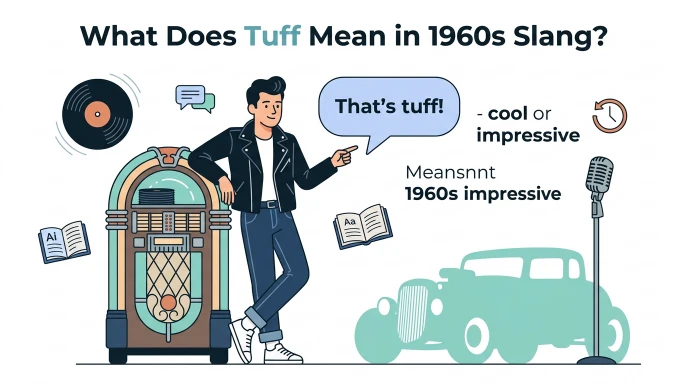
In 1960s slang, “tuff” was an alternative spelling of “tough,” used to describe someone or something as cool, strong, stylish, or impressive.
What does tuff mean in 1960s slang is a question many people ask after reading old books, watching classic movies, or listening to music from the 1960s.
At first glance, “tuff” looks like a misspelling of “tough,” but in slang it often carried its own style and meaning. During the 1960s, young people frequently used tuff to describe someone or something that was strong, cool, impressive, fearless, or difficult to deal with.
Today, the word has made a comeback on social media, although its meaning can vary depending on the context.
Learning how tuff was used in the 1960s helps you better understand vintage American slang and recognize the differences between historical and modern usage.
Quick Answer
In 1960s slang, tuff usually meant tough, cool, impressive, fearless, or hard to beat. It was commonly used as an informal compliment for people, styles, music, cars, or situations that seemed powerful or admirable.
What Does Tuff Mean in 1960s Slang in Text?
When people search for what does tuff mean in 1960s slang in text, they usually want to understand how the word appeared in old conversations, novels, magazines, or films.
Unlike internet abbreviations, tuff is not an acronym.
Instead, it is an alternative spelling of tough that became popular in casual speech and youth culture.
Depending on the sentence, tuff could mean:
- Strong
- Cool
- Stylish
- Fearless
- Difficult
- Impressive
Examples
- “That’s a tuff car.” → That’s an impressive car.
- “He’s a tuff guy.” → He’s strong or fearless.
- “That was a tuff game.” → The game was difficult.
The exact meaning depends on the context.
Tuff Full Form
Many users search for:
- Tuff full form
- Tuff meaning slang
- What does tuff stand for
The answer is simple:
Tuff does not have a full form.
It is not an abbreviation.
It is simply an informal spelling of tough, used as slang to emphasize strength, confidence, style, or difficulty.
Is Tuff Rude, Offensive, or Neutral?
Tuff is generally neutral or positive.
It is commonly used as a compliment.
Positive Examples
- “That’s a tuff outfit.”
- “She’s tuff.”
Neutral Examples
- “That exam was tuff.”
It is not considered offensive.
However, calling someone “tuff” may sound outdated unless you’re using it for a retro style or modern internet slang.
Where Was Tuff Commonly Used?
During the 1960s, tuff appeared in many places.
Everyday Conversations
“He’s one tuff kid.”
Music
The word appeared in song titles, album names, and music reviews.
Teen Magazines
Writers often described fashion, hairstyles, and celebrities as “tuff.”
Movies
Characters sometimes used tuff instead of tough to sound fashionable or rebellious.
Social Media (Today)
The word has returned in captions and comments.
Example:
“That fit is tuff.”
Real-Life Examples of Tuff Usage
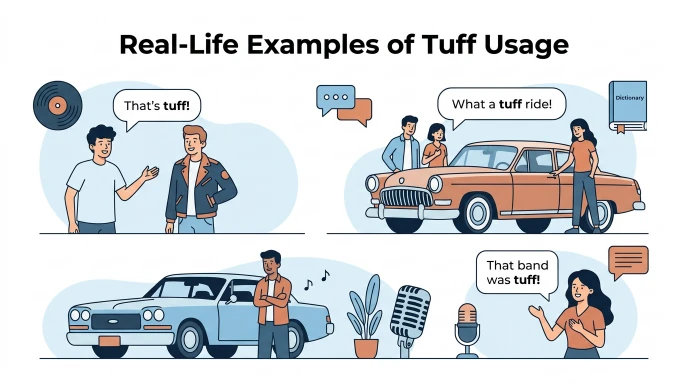
Friendly
“Your new bike looks tuff!”
Casual
“That leather jacket is tuff.”
Family
“Grandpa used to say that car was tuff.”
Text Message
“Bro, those sneakers are tuff.”
Social Media
“That outfit is tuff 🔥”
Sports
“Our team played tuff today.”
Origin and Background of Tuff
The word tuff comes from tough, an English adjective meaning strong or difficult.
During the 1950s and 1960s, alternative spellings became popular in youth culture because they looked modern and informal.
Writers, musicians, and advertisers often used tuff to create a stylish image.
Although the spelling changed, the meaning stayed closely connected to tough.
Today, younger generations sometimes use tuff online to mean:
- Cool
- Stylish
- Fire
- Awesome
This modern usage is similar to but not exactly the same as the 1960s meaning.
Comparison with Similar Slang
| Word | Meaning | Common Use |
| Tuff | Strong, cool, impressive | 1960s and modern slang |
| Tough | Strong or difficult | Standard English |
| Cool | Fashionable | Casual conversation |
| Bad (1960s/1970s slang) | Very good | Informal |
| Awesome | Excellent | Modern English |
When to Avoid Using Tuff
Although tuff is harmless, it isn’t suitable everywhere.
Avoid using it in:
- Academic essays
- Business emails
- Legal documents
- Professional reports
- Formal presentations
Instead, use:
- Tough
- Strong
- Impressive
- Difficult
These words are clearer in formal writing.
Polite Alternatives
If you prefer standard English, use these alternatives.
| Tuff | Better Alternative |
| Tuff | Tough |
| Tuff | Strong |
| Tuff | Impressive |
| Tuff | Stylish |
| Tuff | Difficult |
These alternatives fit most professional situations.
Why People Used Tuff
People used tuff because it:
- Sounded fashionable.
- Reflected youth culture.
- Looked modern in print.
- Added personality to conversations.
- Made compliments sound more exciting.
Today, social media users continue using tuff for many of the same reasons.
Impact of Using Tuff in Communication

Using tuff has several advantages.
Benefits
- Sounds casual.
- Adds personality.
- Reflects vintage slang.
- Works well in informal conversations.
- Common in fashion and music discussions.
Drawbacks
- Some readers may think it’s a spelling mistake.
- It can sound outdated in formal writing.
- Older and younger generations may interpret it differently.
Knowing your audience is important.
Is Tuff Safe for Social Media?
Yes.
Tuff is widely used on:
- TikTok
- X
- Snapchat
- Discord
Today, it often means:
- Cool
- Stylish
- Amazing
- Impressive
It is completely family-friendly.
Examples in Different Contexts
Friendly
“Your new guitar is tuff.”
Casual
“That movie was tuff.”
Argumentative
“You think that’s tuff? Wait until next week.”
Gaming
“That new skin looks tuff.”
Social Media
“Clean fit. Tuff 🔥”
Vintage Conversation
“He’s one tuff customer.”
Comparison
| Expression | Meaning | Tone | Common Use |
| Tuff | Strong, cool | Casual | Slang |
| Tough | Strong, difficult | Neutral | Standard English |
| Cool | Stylish | Casual | Everyday speech |
| Awesome | Excellent | Friendly | Modern English |
| Impressive | Worth admiration | Formal | Professional writing |
FAQs
What does tuff mean in 1960s slang?
In the 1960s, tuff usually meant tough, cool, fearless, stylish, or impressive.
Is tuff a real word?
Yes. While tough is the standard spelling, tuff has long been used as an informal spelling in slang and popular culture.
Does tuff have a full form?
No. Tuff is not an abbreviation and has no full form.
Is tuff the same as tough?
Mostly yes. In slang, tuff often means the same as tough, but it can also emphasize that something is fashionable or cool.
Is tuff still used today?
Yes. Modern social media users often say tuff to mean cool, stylish, or awesome.
Is tuff offensive?
No. Tuff is generally considered a positive and family-friendly slang word.
Conclusion
Understanding what does tuff mean in 1960s slang helps you appreciate how language evolves over time. In the 1960s, tuff was a popular informal spelling of tough that described someone or something as strong, fearless, stylish, cool, or impressive. Although the word has changed slightly in modern internet culture, it still carries a positive meaning and is commonly used to praise fashion, music, sports, and other things people admire. By recognizing the context, you can easily understand tuff in classic media as well as in today’s social media conversations.
Read more about!
STD Slang: Complete Meaning, Usage, and Examples
Lizard Slang Meaning: Complete Guide with Examples and Usage
Dig 1960 Slang: Everything You Need to Know

Hi, I’m Ryan Holden, a content writer with over 8 years of experience creating clear, engaging, and easy-to-understand content. I specialize in slang meanings, internet language, text abbreviations, and modern English expressions. My goal is to explain complex words in simple English with real-life examples so readers can quickly understand and use them correctly. I enjoy researching how language changes across social media, online communities, and everyday conversations, ensuring every article is accurate, helpful, and easy to read.