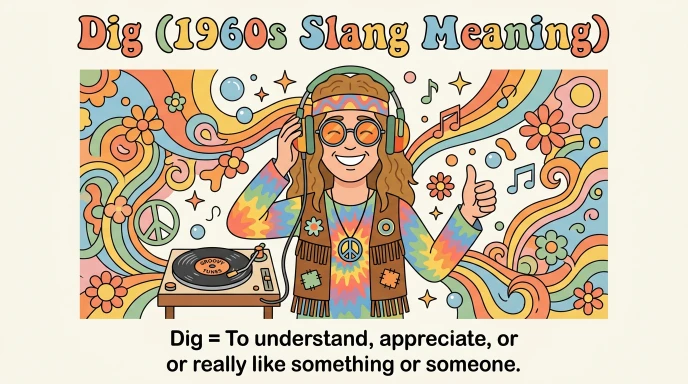
Dig (1960s slang) means to understand, appreciate, or really like something or someone.
Dig 1960 slang is a phrase many people search after hearing it in classic movies, old songs, TV shows, or conversations about the 1960s.
While the word dig normally means to make a hole in the ground, its slang meaning is completely different.
During the 1960s, “dig” became a popular expression that meant to understand, appreciate, enjoy, or like something.
The term was widely used in jazz culture before becoming part of mainstream American English during the 1960s.
Today, it still appears in retro conversations, vintage music, films, and nostalgic social media posts. Understanding this classic slang helps you better appreciate the language and culture of that era.
Quick Answer:
Dig in 1960s slang means to understand, appreciate, enjoy, or really like something. It is a friendly, positive expression that became popular during the 1960s.
What Does Dig 1960 Slang Mean in Text?
In text messages or conversations, dig usually means:
- I understand.
- I like it.
- I appreciate it.
- I get what you’re saying.
The exact meaning depends on the sentence.
Examples
- I dig your style.
- Do you dig what I mean?
- I really dig this music.
- She digs old rock bands.
In each example, dig expresses understanding or appreciation rather than its literal meaning.
Full Form / Definition of the Slang
Dig Full Form
Dig does not have a full form.
It is a standalone slang word rather than an abbreviation.
Definition
Dig is a classic slang term meaning to understand, enjoy, admire, or appreciate someone or something.
What Does Dig Stand For?
It doesn’t stand for other words. It is simply a slang verb with a figurative meaning.
Is Dig Rude, Offensive, or Neutral?
Dig is completely neutral and friendly.
It is considered a positive expression.
| Situation | Tone |
| Casual conversation | Friendly |
| Music discussions | Positive |
| Social media | Informal |
| Text messages | Neutral |
| Workplace | Slightly informal |
The word is not offensive and rarely causes misunderstandings.
Where Is Dig Commonly Used?
Although it became famous in the 1960s, dig is still used today in several places.
Casual Conversations
Some people still say:
I dig that idea.
Music
Jazz, blues, rock, and hip-hop artists have used the word for decades.
Movies
Many classic 1960s and 1970s films include this expression.
Social Media
People often use it in nostalgic or retro-themed posts.
Books
Writers sometimes include “dig” to recreate the language of the 1960s.
Real-Life Examples of Dig Usage
Friendly
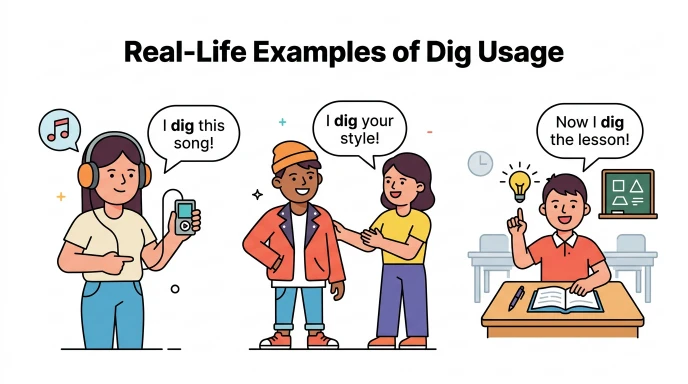
I really dig your new haircut.
Casual
Do you dig this song?
Conversation
I dig what you’re saying.
Social Media
I still dig vinyl records.
Music
Everybody digs this band.
Retro Conversation
That’s a far-out idea I dig it!
Origin and Background of Dig Slang
The slang meaning of dig existed before the 1960s.
It first became popular in African American jazz culture during the 1930s and 1940s, where musicians used it to mean understand or appreciate.
During the 1950s and especially the 1960s, the word spread into mainstream American culture through:
- Jazz music
- Beat Generation writers
- Rock musicians
- Television
- Hollywood films
- Counterculture movements
By the late 1960s, “dig” had become one of the era’s most recognizable slang expressions.
Today, it remains associated with vintage American culture and classic music.
Comparison with Similar Slang
| Slang | Meaning | Difference |
| Dig | Understand or like | Classic 1960s slang |
| Cool | Good or acceptable | More general approval |
| Groovy | Excellent | Strongly linked to the 1960s |
| Far out | Amazing | Expresses excitement |
| Like | Enjoy | Standard English |
Although these expressions are similar, dig uniquely combines understanding with appreciation.
When Should You Avoid Using Dig?
Although dig is harmless, it may sound outdated in some situations.
Avoid using it:
- Business presentations
- Academic essays
- Legal writing
- Formal reports
- Professional emails
Instead, choose modern expressions such as:
- I understand.
- I appreciate it.
- I like it.
- I enjoy it.
Polite Alternatives
If you’re writing formally, these alternatives work well.
| Dig | Formal Alternative |
| I dig it | I like it |
| I dig your idea | I appreciate your idea |
| Dig | Understand |
| I dig your work | I admire your work |
| Do you dig? | Do you understand? |
These phrases fit professional communication better.
Why Do People Use Dig?
Even today, people enjoy using dig for several reasons.
It sounds friendly
The word creates a relaxed tone.
It expresses appreciation
Compared to simply saying “like,” it communicates much more enthusiasm.
It has nostalgic appeal
Many people enjoy classic 1960s language.
It connects with music culture
The expression remains common among jazz and classic rock fans.
It’s memorable
The word has a unique style that makes conversations more interesting.
Impact of Using Dig in Communication
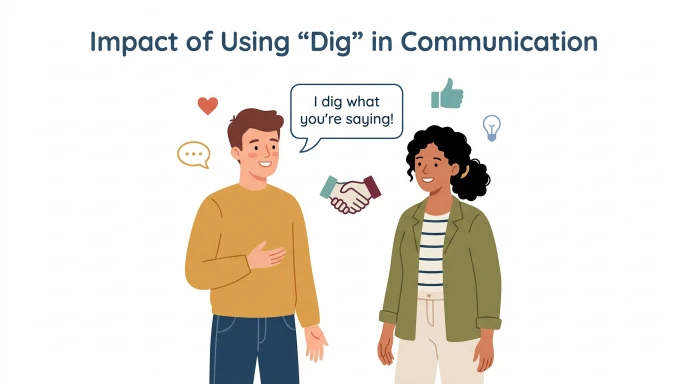
Using dig can influence conversations in different ways.
Benefits
- Sounds friendly
- Shows appreciation
- Creates a relaxed atmosphere
- Adds personality
- Reflects classic American culture
Drawbacks
- Younger audiences may not recognize it.
- It may sound old-fashioned.
- Formal readers may find it too informal.
Understanding your audience helps you decide if to use it.
Is Dig Safe for Social Media?
Yes.
Dig is completely safe on:
- TikTok
- X (Twitter)
- YouTube
- Discord
It carries a positive meaning and has no offensive or inappropriate connotations.
Many people use it in posts about classic music, fashion, movies, and vintage culture.
Common Phrases with Dig
You’ll often hear these expressions.
- I dig it.
- I dig your style.
- Dig this!
- Can you dig it?
- Dig what I’m saying?
- I really dig that.
- Everybody digs this song.
These phrases have remained recognizable for decades.
Tips for Using Dig Naturally
If you’d like to use this classic slang correctly:
- Use it in casual conversations.
- Don’t use it in formal writing.
- Remember it means “understand” or “like.”
- Avoid overusing it.
- Match the tone of your audience.
Used naturally, dig adds personality without sounding forced.
Comparison
| Expression | Meaning | Tone | Still Common? |
| Dig | Like or understand | Friendly | Sometimes |
| Cool | Good | Casual | Yes |
| Groovy | Excellent | Retro | Rare |
| Awesome | Very good | Casual | Yes |
| Like | Enjoy | Neutral | Yes |
FAQs
What does dig mean in 1960 slang?
In 1960s slang, dig means to understand, appreciate, or enjoy something.
What is the dig full form?
There is no full form. Dig is a standalone slang word.
Is dig still used today?
Yes. Although less common than in the 1960s, many people still use it in casual conversations and discussions about music or vintage culture.
Is dig offensive?
No. Dig is a positive and friendly expression.
What does “Can you dig it?” mean?
It means “Do you understand?” or “Do you like it?”, depending on the conversation.
Why was dig popular in the 1960s?
It became popular through jazz musicians, the Beat Generation, rock music, and the youth culture of the 1960s.
Conclusion
Understanding dig 1960 slang offers a glimpse into one of the most recognizable expressions of the 1960s. Rather than its literal meaning of breaking ground, dig in slang means to understand, appreciate, or enjoy something. It became popular through jazz culture before spreading into mainstream music, movies, and everyday conversations during the 1960s.
Although it may sound nostalgic today, dig is still a friendly and positive expression that appears in conversations, social media, and discussions about classic culture. By using it in the right context, you can appreciate its history while adding a touch of vintage style to your everyday language.
Read more about!
HR Slang: Definition, Meaning, and Everyday Usage
Fax Slang: Complete Guide to Its Meaning and Usage
Gen X Slang Urban Dictionary Meaning in Text

Hi, I’m Zunaira Shafiq, a slang writer and language enthusiast. I enjoy exploring modern slang, internet expressions, texting abbreviations, and social media terms, then explaining them in simple, easy-to-understand English. My goal is to help readers understand the meaning, origin, and correct usage of popular slang words through clear definitions and real-life examples. I love making online language easier for students, language learners, and anyone who wants to stay updated with modern communication.