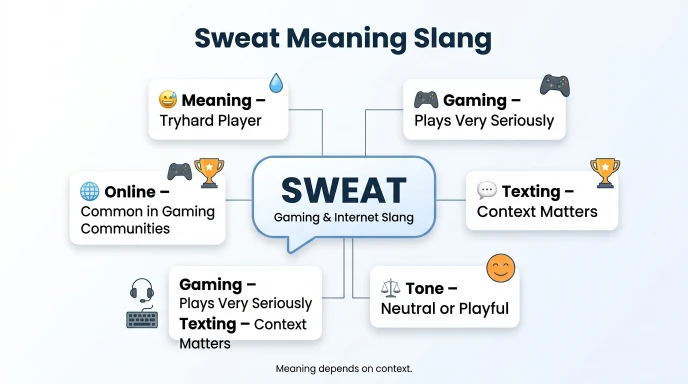
Sweat meaning slang is a popular search because many people see words like “sweat,” “sweaty,” or “sweatlord” in online games, TikTok videos, Discord chats, and social media comments.
While the literal meaning of sweat refers to perspiration, its slang meaning is completely different. In online culture, calling someone a sweat usually means they are trying extremely hard to win, often putting in much more effort than everyone else.
Depending on the situation, it can be a compliment for skill or a playful insult suggesting someone takes a game too seriously.
You’ll commonly encounter this slang in gaming communities, livestreams, and casual online conversations. Understanding the context helps you know if it’s meant as praise, teasing, or criticism.
Quick Answer:
In slang, sweat refers to someone who tries very hard to win or perform well, especially in video games. The term is usually playful but can sometimes be used as a mild insult depending on the tone.
What Does Sweat Meaning Slang Mean in Text?
In texting and online conversations, sweat describes a person who is putting in maximum effort, especially in a competitive activity.
For example:
- “That player is such a sweat.”
- “Everyone in this lobby is sweating.”
The implication is that someone is playing or competing with intense focus, often more seriously than others.
Outside gaming, people may also use sweat jokingly for anyone who works extremely hard to achieve something.
Sweat Full Form / Definition
Sweat is not an acronym, so it has no full form.
As slang, it generally means:
- Someone who tries very hard to win.
- A highly competitive player.
- A person who puts maximum effort into an activity.
- Someone who takes a casual game or competition very seriously.
The meaning depends on the context and tone.
Is It Rude, Offensive, or Neutral?
Usually, sweat is neutral to mildly negative.
| Context | Tone |
| Gaming banter | Playful |
| Friendly teasing | Neutral |
| Competitive discussions | Slightly negative |
| Insulting another player | Mildly offensive |
Most people don’t consider it highly offensive, but it may annoy someone if used repeatedly as criticism.
Where Is It Commonly Used?
The slang is especially popular on:
- Discord
- Twitch
- TikTok
- YouTube Gaming
- Fortnite
- Call of Duty
- Apex Legends
- Valorant
- Roblox
- Minecraft
- Snapchat
- Instagram comments
Gaming communities use this word more than almost any other online group.
Different Meanings of Sweat in Slang
1. Competitive Gamer
This is the most common meaning.
Example:
- “He’s such a sweat in Fortnite.”
Meaning:
The player is extremely skilled and tries hard to win every match.
2. Someone Trying Too Hard
Sometimes sweat describes a person who puts in excessive effort.
Example:
- “Relax, it’s just a friendly game. Don’t be a sweat.”
Meaning:
Someone is taking the competition more seriously than necessary.
3. Hardworking Person
Occasionally, people jokingly call someone a sweat because they work incredibly hard.
Example:
- “You’ve been studying all weekend you’ve become a sweat.”
This meaning is less common than the gaming definition.
Real-Life Examples of Usage
Friendly
- “You’re getting really good at the game you’ve become a sweat!”
Casual
- “Every match tonight is full of sweats.”
Argumentative
- “Stop sweating so hard. It’s only a public match.”
Gaming
- “The enemy team’s top player is an absolute sweat.”
Social Media
- “Only sweats can finish this challenge that fast.”
Origin and Background of the Slang
The slang sweat comes from the idea that someone is trying so hard they’re “sweating.”
The expression became popular in competitive online games during the 2010s, especially in titles like:
- Fortnite
- Call of Duty
- Apex Legends
- Rainbow Six Siege
As streaming platforms such as Twitch and YouTube Gaming grew, creators began calling highly competitive players “sweats.” The term quickly spread to TikTok, Reddit, Discord, and other online communities.
Today, it is one of the most recognizable gaming slang terms.
Comparison with Similar Slang
| Slang | Meaning | Tone |
| Sweat | Tries very hard | Playful / Slightly negative |
| Tryhard | Takes competition very seriously | More negative |
| Sweatlord | Extremely competitive player | Humorous |
| Grinder | Plays consistently to improve | Positive |
| Pro | Highly skilled player | Positive |
| Noob | Beginner player | Negative |
Although sweat and tryhard are similar, tryhard is generally considered more critical.
When to Avoid Using It
Avoid calling someone a sweat when:
- Speaking professionally.
- Giving formal feedback.
- Talking to someone who may not understand gaming slang.
- The comment could sound insulting.
- You’re communicating in academic or workplace settings.
Using plain language is often more appropriate outside gaming communities.
Polite Alternatives
If you want a more respectful way to describe someone, use:
- Skilled player
- Competitive player
- Dedicated gamer
- Experienced player
- Hardworking
- Highly motivated
- Focused
These expressions avoid sounding dismissive.
Why People Use This Slang
People use sweat because it quickly describes someone who:
- Plays very competitively.
- Wants to win at all costs.
- Practices regularly.
- Has advanced skills.
- Takes casual games seriously.
It’s a short and widely understood term in gaming culture.
Impact of Using Slang in Communication
Using sweat can make conversations:
More relatable
Gamers immediately understand the reference.
More humorous
Friends often tease each other by calling someone a sweat.
Potentially negative
Some players may interpret it as criticism rather than a joke.
Understanding the audience helps avoid misunderstandings.
Is It Safe for Social Media?
Yes.
Using sweat in gaming or casual discussions is generally safe on:
- TikTok
- Twitch
- Discord
- Snapchat
- YouTube
However, avoid using it as a personal insult or in situations where it could encourage harassment.
Tips for Using Sweat Correctly
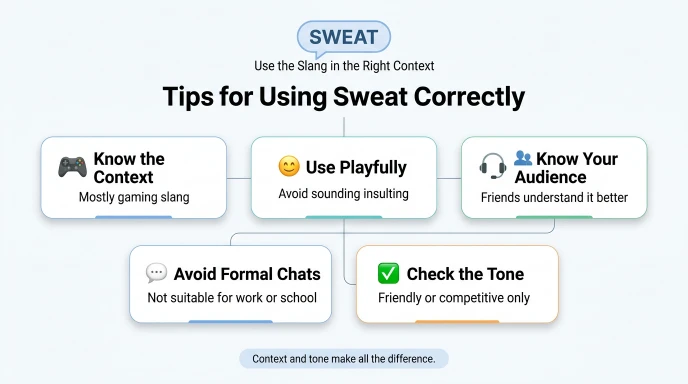
- Consider the tone before using it.
- Know if the other person understands gaming slang.
- Use it playfully among friends.
- Avoid using it in professional conversations.
- Remember that not everyone sees it as a compliment.
Frequently Asked Questions
What does sweat mean in slang?
It refers to someone who tries extremely hard to win, especially in competitive video games.
What does sweat mean in text?
In texting, it usually describes a highly competitive or hardworking person, depending on the conversation.
Does sweat have a full form?
No. Sweat is a regular English word and not an abbreviation.
Is calling someone a sweat an insult?
Usually it’s playful, but it can be mildly insulting if used to criticize someone for trying too hard.
Where is sweat slang most commonly used?
It’s most common in gaming communities on Twitch, Discord, TikTok, Reddit, and multiplayer games.
What does sweat stand for?
It doesn’t stand for anything. The slang evolved from the idea of someone trying so hard that they’re “sweating.”
Conclusion
Sweat meaning slang usually refers to someone who puts in a great deal of effort, especially in competitive games. While the term often describes highly skilled players, it can also jokingly suggest that someone is taking a casual activity too seriously. If it’s meant as a compliment or light criticism depends entirely on the context and tone.
If you spend time on Discord, Twitch, TikTok, Reddit, or online multiplayer games, you’ll likely encounter this slang frequently. Understanding its meaning helps you interpret conversations accurately and use the term appropriately. As with many internet slang expressions, knowing your audience and choosing the right moment to use it will help keep your communication clear and friendly.
Read more about!
- Backdoor Meaning Slang: Complete Guide with Examples
- Symphony in Slang: Meaning & Text Usage
- 1950 Slang: Classic Expressions from the 1950s Explained

Hi, I’m Ryan Holden, a content writer with over 8 years of experience creating clear, engaging, and easy-to-understand content. I specialize in slang meanings, internet language, text abbreviations, and modern English expressions. My goal is to explain complex words in simple English with real-life examples so readers can quickly understand and use them correctly. I enjoy researching how language changes across social media, online communities, and everyday conversations, ensuring every article is accurate, helpful, and easy to read.