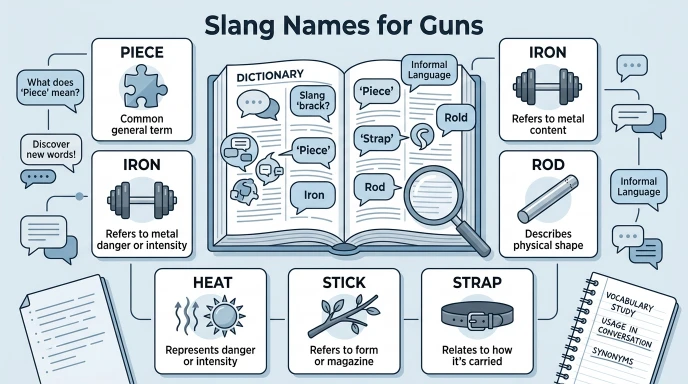
Slang names for guns are informal words or nicknames people use to refer to guns in casual conversation, music, movies, or online culture.
Slang names for guns are informal words or nicknames people use instead of the standard word gun or firearm.
You may hear these expressions in movies, TV shows, music, books, video games, or social media. Because slang changes over time and varies by region, some terms are widely recognized while others are only used within certain communities.
Many people search for slang names for guns because they want to understand conversations, lyrics, or online posts not necessarily because they plan to use the slang themselves.
Learning the meaning behind these expressions can help you better understand modern English while also recognizing when formal language is more appropriate.
Quick Answer
Slang names for guns are informal nicknames people use to refer to firearms in casual conversation, entertainment, or online culture. These terms have no official meaning or full form and should be understood in their proper context.
What Does Slang Names for Guns Mean in Text?
When people search for slang names for guns meaning in text, they usually want to know why someone used an informal word instead of saying gun or firearm.
Unlike internet abbreviations, slang names for guns are not acronyms. They are simply casual expressions that appear in:
- Text messages
- Movies
- TV shows
- Music lyrics
- Social media posts
- Video games
- Fictional stories
In many cases, the slang is used for style, storytelling, or cultural expression rather than to describe a specific type of firearm.
Slang Names for Guns Full Form / Definition
Many users search for:
- Slang names for guns full form
- Slang names for guns meaning slang
- What do slang names for guns stand for
The answer is straightforward:
Slang names for guns do not have a full form. They are informal words or nicknames used in place of the standard terms gun or firearm.
These expressions vary depending on region, generation, and popular culture.
Are Slang Names for Guns Rude, Offensive, or Neutral?
Most slang names for guns are informal rather than offensive.
However, the tone depends on the context.
Neutral
- Discussing a movie
- Explaining song lyrics
- Talking about fictional stories
- Studying language
Potentially Inappropriate
Some slang terms may sound aggressive or insensitive if used during serious discussions about crime, violence, or public safety.
Using standard words like gun or firearm is usually the better choice in professional or formal conversations.
Where Are Slang Names for Guns Commonly Used?
Informal gun-related slang often appears in:
Movies and Television
Action films frequently use informal dialogue.
Music
Some genres include regional or cultural slang in their lyrics.
Social Media
Users may reference movie quotes, memes, or fictional characters.
Video Games
Gaming communities sometimes repeat slang heard in games or streams.
Fiction
Novelists often use slang to make dialogue sound realistic.
Real-Life Examples of Usage
These examples show how the concept of gun-related slang appears in conversation without teaching or encouraging its use.
Friendly
“That movie used a lot of old-school slang for firearms.”
Casual
“I had to look up one of the slang words they used.”
Classroom Discussion
“Language changes over time, and many slang terms come from popular culture.”
Text Message
“Do you know what that slang word in the movie meant?”
Social Media
“Interesting how different regions use different slang.”
Gaming
“That game includes lots of fictional slang and dialogue.”
Origin and Background of Slang Names for Guns
Like many forms of slang, informal names for guns developed over many years through:
- Regional dialects
- Military culture
- Popular music
- Movies
- Television
- Literature
- Online communities
Some expressions became popular because they were easy to remember, while others spread through entertainment and social media.
Because slang evolves constantly, many older terms disappear while new ones emerge.
Comparison with Standard Language
| Informal Language | Standard Language | Best Used |
| Slang nickname | Gun | Casual conversation about media |
| Slang nickname | Firearm | Formal writing |
| Informal expression | Weapon | News and official reports |
| Colloquial term | Firearm | Academic or legal contexts |
In formal communication, standard vocabulary is clearer and less likely to cause misunderstanding.
When to Avoid Using Slang Names for Guns
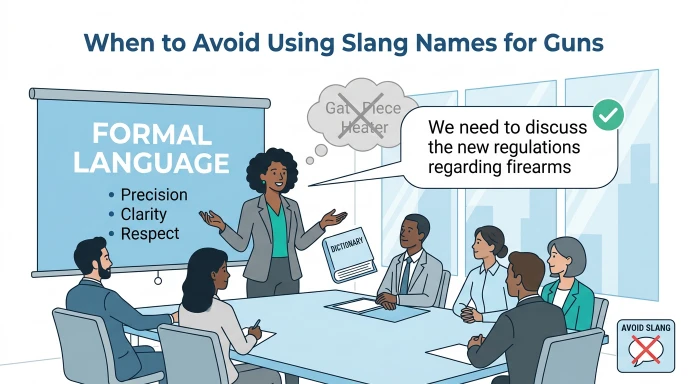
Even if you understand these expressions, it’s best to avoid them in situations such as:
- School assignments
- News reporting
- Business communication
- Legal documents
- Police or emergency reports
- Academic writing
Using precise language helps prevent confusion.
Polite Alternatives
Instead of slang, consider these standard terms:
| Informal Expression | Preferred Alternative |
| Slang nickname | Gun |
| Slang nickname | Firearm |
| Slang nickname | Weapon (when appropriate) |
| Informal wording | Licensed firearm (if relevant) |
These alternatives are suitable for most audiences.
Why People Use Slang Names for Guns
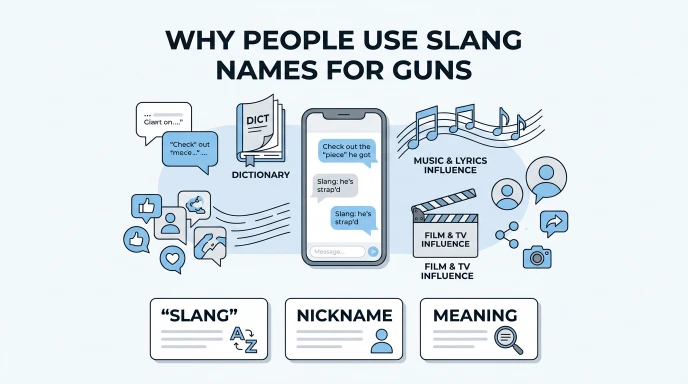
People use informal language for different reasons.
Some common reasons include:
- To sound natural in dialogue
- To reflect regional culture
- To match movie or music language
- To create realistic fictional characters
- To communicate casually with friends
Understanding these expressions is useful for language learning, even if you choose not to use them yourself.
Impact of Using Slang in Communication
Using slang can influence how a message is understood.
Advantages
- Makes dialogue sound authentic.
- Reflects cultural background.
- Helps readers understand entertainment and media.
- Adds personality to fictional conversations.
Disadvantages
- May confuse people unfamiliar with the slang.
- Can seem unprofessional.
- May not be appropriate in formal discussions.
Choosing the right words depends on your audience.
Is It Safe for Social Media?
Yes, discussing slang names for guns from a language or educational perspective is generally appropriate on social media.
However, avoid using slang in ways that:
- Glorify violence.
- Encourage illegal activity.
- Threaten or intimidate others.
- Cause misunderstandings.
Using clear, respectful language is always the best approach.
Examples in Different Contexts
Friendly
“I didn’t recognize that slang word until someone explained it.”
Casual
“That TV series uses a lot of regional slang.”
Argumentative
“Using slang doesn’t always make the conversation clearer.”
Gaming
“Some games include fictional slang for realism.”
Social Media
“Interesting how language changes across generations.”
Entertainment
“Many action movies use informal expressions to make dialogue sound authentic.”
Comparison
| Topic | Slang | Standard English | Recommended Use |
| Everyday conversation | Informal | Acceptable | Casual settings |
| Professional writing | Not recommended | Gun / Firearm | Best choice |
| News articles | Rare | Firearm | Preferred |
| Academic writing | Avoid slang | Firearm | Recommended |
| Fiction | Sometimes used | Either, depending on style | Context matters |
FAQs
What are slang names for guns?
They are informal words or nicknames people use instead of saying gun or firearm, usually in casual conversations or entertainment.
Do slang names for guns have a full form?
No. They are slang expressions, not abbreviations, so they do not have a full form.
Are slang names for guns offensive?
Most are simply informal, but they may be inappropriate in professional or sensitive situations.
Where are these slang terms commonly heard?
They often appear in movies, TV shows, music, books, video games, and social media.
Should I use slang names for guns in formal writing?
No. Standard terms like gun or firearm are clearer and more appropriate.
Why do people use slang instead of the word “gun”?
People often use slang to sound natural, reflect regional culture, or create realistic dialogue in entertainment and fiction.
Conclusion
Understanding slang names for guns can help you better interpret conversations, movies, music, books, and social media where informal language is common. These expressions are cultural and conversational rather than official terminology, and they do not have a full form. While slang can make dialogue feel more authentic, standard words such as gun or firearm are usually the best choice for professional, academic, or formal communication. By recognizing the context and choosing appropriate language, you can communicate clearly while gaining a better understanding of modern English slang.
Read more about!
NYC Slang Meaning: Everyday Expressions Explained Simply
Alcohol Slang Names: A Complete Guide to Popular Drinking Slang
SOP Meaning Slang: Explained in Easy English

Hi, I’m Ryan Holden, a content writer with over 8 years of experience creating clear, engaging, and easy-to-understand content. I specialize in slang meanings, internet language, text abbreviations, and modern English expressions. My goal is to explain complex words in simple English with real-life examples so readers can quickly understand and use them correctly. I enjoy researching how language changes across social media, online communities, and everyday conversations, ensuring every article is accurate, helpful, and easy to read.