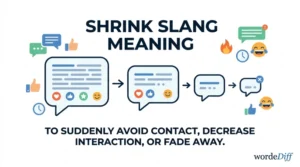
Shrink slang meaning can be confusing because the word “shrink” has several normal English meanings.
In casual conversation, however, shrink is commonly used as an informal word for a mental-health professional, especially a psychiatrist or psychologist.
You may hear someone say, “I’m seeing my shrink tomorrow” or “My shrink helped me understand it.” In these examples, the person is talking about a therapist, psychiatrist, psychologist, or similar professional.
The word is informal and can sound humorous, friendly, or slightly dismissive depending on the speaker and situation. It is more suitable for casual conversation than professional or medical communication.
Quick Answer:
In slang, shrink usually means a psychiatrist, psychologist, therapist, or other mental-health professional. It is an informal nickname rather than an official professional title.
What Does “Shrink” Mean in Text?
When someone uses shrink in a text, chat, comment, or casual conversation, they usually mean a mental-health professional.
For example:
“I have an appointment with my shrink today.”
Here, shrink means the person the speaker sees for psychological or emotional support.
The term is often used as a shorter, more casual alternative to words such as psychiatrist, psychologist, or therapist. Dictionaries specifically describe “shrink” as informal slang for a psychiatrist or psychologist.
However, it is important to remember that these professional titles are not exactly interchangeable. A psychiatrist is a medical doctor specializing in mental health, while “therapist” can refer to several types of professionals who provide psychotherapy.
Shrink Slang Meaning and Full Definition
In slang, shrink refers to a mental-health professional who helps people with psychological, emotional, or behavioral concerns.
It can refer to:
- A psychiatrist
- A psychologist
- A psychotherapist
- A therapist
- Sometimes another mental-health professional
The exact person intended depends on the context.
For example, if someone says, “My shrink changed my medication,” they probably mean a psychiatrist. If they say, “My shrink helped me work through my problems,” they could be referring to a therapist or psychologist.
So, shrink does not identify one exact profession. It is a casual umbrella term.
Is “Shrink” Rude or Offensive?
Usually, shrink is not automatically offensive, but its tone depends heavily on context.
Someone might use it casually:
“My shrink is really helpful.”
That sounds relaxed and conversational.
Another person might use it sarcastically:
“Maybe you should tell your shrink about that.”
In this situation, the word may sound mocking or dismissive.
The term has historically carried humorous and sometimes negative associations, so some mental-health professionals may prefer more precise titles. At the same time, modern usage is often neutral or playful, and some professionals even use the word themselves.
Best rule: use “shrink” casually when the setting is relaxed, but choose “therapist,” “psychologist,” or “psychiatrist” when you want to sound respectful and precise.
Where Is “Shrink” Commonly Used?
The slang appears mainly in informal English. You may encounter it in:
- Text messages
- Casual conversations
- Movies and TV shows
- Books and novels
- Social media discussions
- Online forums
- Comedy
- Pop-culture conversations
It is especially recognizable in American English and has appeared widely in popular culture. Oxford describes the noun as slang and humorous for a psychiatrist or psychologist.
You may see sentences such as:
“I need to talk to my shrink.”
“Her shrink recommended therapy.”
“He jokes about everything with his shrink.”
The word is less appropriate in formal medical records, professional healthcare communication, or academic writing.
Why Is a Therapist Called a “Shrink”?
The slang term comes from the older expression “headshrinker.” The nickname was associated with psychiatrists and psychologists and later became shortened to simply “shrink.”
The expression was built around a humorous idea of someone working on a person’s mind or “head.” Historical explanations connect the term with mid-20th-century American slang and popular culture.
Over time, headshrinker became too long for everyday speech, while shrink was much quicker.
Today, most people who use the word are not thinking about its original imagery. They simply understand it as a casual word for someone who provides mental-health care.
“Shrink” vs. Therapist vs. Psychiatrist
These words are related, but they are not identical.
| Term | Meaning | Typical Use |
| Shrink | Informal slang for a mental-health professional | Casual speech |
| Therapist | Professional who provides therapy | Everyday and professional use |
| Psychologist | Mental-health professional trained in psychology | Professional and everyday use |
| Psychiatrist | Medical doctor specializing in mental health | Medical and professional use |
| Psychotherapist | Professional who provides psychotherapy | Formal or professional contexts |
This distinction matters because shrink is a nickname, not a professional credential.
For example, saying “I saw my psychiatrist” gives more specific information than saying “I saw my shrink.”
Real-Life Examples of “Shrink” Slang
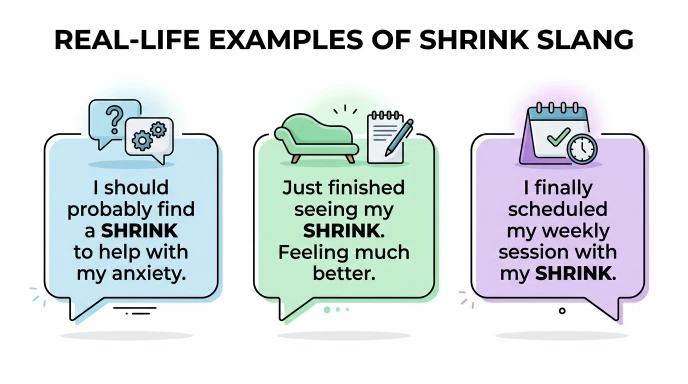
Friendly Example
“My shrink is great at helping me see things differently.”
Here, the word is warm and casual.
Casual Texting Example
“Can’t hang out tonight. I’ve got an appointment with my shrink.”
The speaker is simply using slang instead of saying “therapist” or “psychiatrist.”
Humorous Example
“I probably need a shrink after this week.”
The person may be joking about feeling stressed or overwhelmed.
Social Media Example
“My shrink told me I need to stop overthinking everything.”
Here, the word is used informally to describe a mental-health professional.
Negative Example
“That shrink doesn’t know what they’re talking about.”
In this sentence, shrink can sound dismissive because the speaker is criticizing the professional.
Pop-Culture Example
A movie character might say, “I need to see my shrink,” simply to show that they have a therapist or psychiatrist without using formal language.
Can “Shrink” Mean Something Else?
Yes. This is where context becomes important.
Outside slang, shrink is a normal English verb meaning to become smaller or make something smaller. For example:
“These clothes might shrink in hot water.”
It can also describe something becoming smaller in amount, size, value, or importance.
Therefore, the surrounding words tell you which meaning is intended.
Compare:
“My sweater will shrink.”
Here, “shrink” is the ordinary verb.
“I talked to my shrink.”
Here, “shrink” is slang for a mental-health professional.
This is why people searching shrink slang meaning should always consider the sentence where the word appears.
Why Do People Use “Shrink” Slang?
There are several reasons people use the term.
It Is Short
“Shrink” is much quicker than saying “psychiatrist” or “psychotherapist.”
It Sounds Casual
The word can make a conversation feel less formal.
It Can Add Humor
Mental-health topics can sometimes feel serious, and slang can make the conversation sound lighter.
It Is Widely Recognized
Because the term has appeared in popular culture for decades, many English speakers understand it immediately.
It Creates Familiarity
Someone may call their own therapist “my shrink” as a playful nickname rather than a serious insult.
When Should You Avoid Using “Shrink”?
Although the word is generally understandable, there are situations where a more precise term is better.
Avoid using shrink when:
- Writing a formal medical document
- Speaking in a professional healthcare setting
- Referring to someone’s credentials
- Writing an academic paper
- Introducing a mental-health professional formally
- You are unsure how the person feels about the nickname
Instead, use the exact professional title when you know it.
For example:
Casual:
“My shrink helped me with this.”
More professional:
“My therapist helped me with this.”
The second version is clearer and more respectful in formal situations.
Why People Get Confused About Shrink
The biggest source of confusion is that shrink has both ordinary and slang meanings.
Someone learning English may first encounter “shrink” as a verb meaning “become smaller.” Later, they may see:
“She went to her shrink.”
That sentence has nothing to do with physical size.
The word can also be confusing because people use it loosely for different mental-health professionals. A dictionary may define it as a psychiatrist or psychologist, while everyday speakers may use it for a therapist more generally.
So, context is essential.
Is “Shrink” Safe for Social Media?
Generally, yes. Shrink is a common informal word and is not inherently offensive or unsafe for normal social-media use.
However, tone matters.
A supportive post such as:
“Talking to my shrink really helped.”
is very different from using the word to insult or mock a mental-health professional.
On platforms such as Reddit, Instagram, TikTok, Discord, or Snapchat, users may use the term casually, humorously, or sarcastically. The meaning usually becomes clear from the surrounding conversation.
If the topic is sensitive, using therapist, psychologist, or psychiatrist can make your meaning clearer.
Polite Alternatives to “Shrink”
If you want a more neutral or professional word, consider:
- Therapist
- Psychologist
- Psychiatrist
- Counselor
- Mental-health professional
- Psychotherapist
The best choice depends on the person’s actual profession.
For example, if you know someone is a psychiatrist, psychiatrist is more precise than shrink.
What Does “Shrink” Mean in Different Contexts?
The meaning changes depending on where you see it.
In texting:
Usually a casual reference to a therapist or psychiatrist.
In movies:
Often used as humorous or informal dialogue.
In social media:
Can be casual, joking, or sometimes sarcastic.
In psychology discussions:
Usually refers informally to a mental-health professional.
In clothing discussions:
It can simply mean becoming smaller, such as when fabric shrinks after washing.
In business:
“Shrink” can also refer to losses or inventory shrinkage, depending on the context.
This makes context more important than the word itself.
Frequently Asked Questions
What does shrink mean in slang?
In slang, shrink usually means a psychiatrist, psychologist, therapist, or another mental-health professional. It is an informal term.
Is shrink short for psychiatrist?
Not exactly. Shrink developed from the older slang term headshrinker. People now use it broadly for mental-health professionals, not only psychiatrists.
Is calling someone a shrink offensive?
Not necessarily. It can be neutral or humorous, but it may sound dismissive depending on the context and tone.
What does “my shrink” mean?
“My shrink” usually means “my therapist,” “my psychiatrist,” or another mental-health professional the speaker sees.
Is shrink formal language?
No. It is an informal slang term. In professional writing, use the person’s actual professional title instead.
Can shrink mean something besides a therapist?
Yes. As an ordinary English word, shrink can mean to become smaller or cause something to become smaller. Context determines the meaning.
Conclusion
The shrink slang meaning is usually a casual way of referring to a psychiatrist, psychologist, therapist, or other mental-health professional. The term is informal and can sound friendly, humorous, or slightly dismissive depending on how it is used.
If you see “shrink” in a text such as “I’m seeing my shrink tomorrow,” the speaker most likely means they have an appointment with a mental-health professional. However, the word does not identify one exact profession, so the surrounding context is important.
The term comes from the older expression “headshrinker” and became established as informal slang in American English and popular culture.
For casual conversations, “shrink” is generally easy to understand. In professional or sensitive situations, however, therapist, psychologist, or psychiatrist is usually a better choice because it is more precise.
Read more about!
- SMO Meaning Slang: What Does SMO Mean in Text?
- HRU Slang: What Does HRU Mean?
- What Does IKR Mean in Slang? A Complete Guide

Hi, I’m Zunaira Shafiq, a slang writer and language enthusiast. I enjoy exploring modern slang, internet expressions, texting abbreviations, and social media terms, then explaining them in simple, easy-to-understand English. My goal is to help readers understand the meaning, origin, and correct usage of popular slang words through clear definitions and real-life examples. I love making online language easier for students, language learners, and anyone who wants to stay updated with modern communication.