70s slang terms are popular informal words and phrases from the 1970s that reflect the decade’s culture, music, fashion, and everyday conversations.
70s slang terms are still popular today because many people hear them in classic movies, TV shows, songs, and documentaries about the 1970s. These expressions offer a glimpse into the language and culture of that unforgettable decade.
The slang of the 1970s reflected popular trends such as disco, rock music, surfing, skateboarding, and the laid-back lifestyle of the era. Many of these words became symbols of youth culture and everyday conversations.
While some 70s slang terms have disappeared over the years, others are still used today. Expressions like “cool,” “dude,” and “awesome” have remained part of modern English, although their meanings have evolved slightly.
Learning 70s slang terms helps you better understand classic films, song lyrics, books, and conversations with people who grew up during that time. It also shows how language changes from one generation to the next while preserving pieces of cultural history.
Quick Answer:
70s slang terms are informal words and phrases that became popular during the 1970s. They were commonly used to describe people, emotions, fashion, music, and everyday situations in a fun and expressive way.
What Do 70s Slang Terms Mean in Text?
In text or conversation, 70s slang terms refer to informal expressions that were widely used throughout the 1970s. Unlike modern internet abbreviations, these were actual words and phrases people said in daily conversations.
Many of these expressions reflected the trends of the time, including:
- Disco culture
- Rock music
- Surfing and skateboarding
- Youth fashion
- Pop culture
- Everyday friendships
Some of these terms are still recognized today because they appear in nostalgic social media posts, retro fashion content, classic television shows, and vintage movies.
70s Slang Terms Full Form
Unlike abbreviations such as LOL or BRB, 70s slang terms do not have full forms. They are simply informal words or phrases.
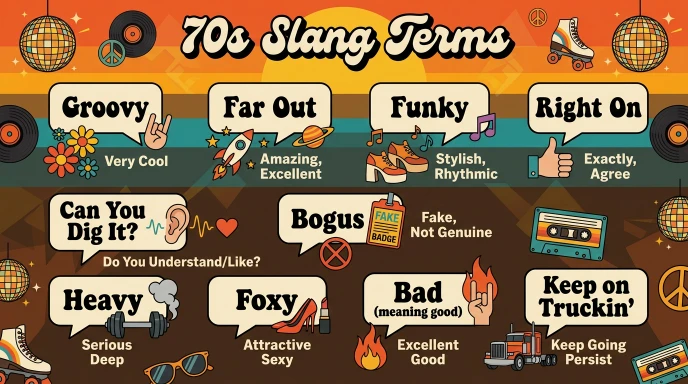
Here are some popular examples:
| 70s Slang Term | Meaning |
| Groovy | Excellent, cool, or fashionable |
| Far Out | Amazing or unbelievable |
| Right On | I agree or that’s great |
| Bogus | Fake, unfair, or disappointing |
| Foxy | Attractive or stylish |
| Bread | Money |
| Chill | Relax |
| Can You Dig It? | Do you understand? |
| Heavy | Serious or emotionally important |
| Bummer | A disappointing situation |
Are 70s Slang Terms Rude, Offensive, or Neutral?
Most 70s slang terms are completely neutral and harmless.
Usually Neutral
- Groovy
- Far Out
- Right On
- Chill
- Can You Dig It?
Sometimes Context Matters
Words like foxy or heavy may carry different meanings depending on the conversation.
Overall, these expressions are considered nostalgic rather than offensive.
Where Are 70s Slang Terms Commonly Used?
Although they were most popular during the 1970s, these expressions still appear today in several places.
You’ll often find them in:
- Classic movies
- Retro TV shows
- Vintage music
- Social media nostalgia posts
- TikTok retro videos
- Instagram reels
- Reddit discussions
- Costume parties
- Pop culture articles
People also use them jokingly to create a fun retro feeling.
Popular 70s Slang Terms and Their Meanings
Groovy
Meaning: Very cool, stylish, or excellent.
Example:
“That jacket is groovy!”
Far Out
Meaning: Incredible or surprising.
Example:
“Your new car is far out!”
Right On
Meaning: I completely agree.
Example:
“Right on! That’s exactly what I think.”
Foxy
Meaning: Attractive or fashionable.
Example:
“She looks really foxy tonight.”
Bogus
Meaning: Fake, unfair, or bad.
Example:
“That excuse sounds bogus.”
Bread
Meaning: Money.
Example:
“I need more bread before the weekend.”
Heavy
Meaning: Serious or emotionally deep.
Example:
“That conversation got pretty heavy.”
Can You Dig It?
Meaning: Do you understand?
Example:
“We’re leaving at six. Can you dig it?
Bummer
Meaning: Something disappointing.
Example:
“Missing the concert was a real bummer.”
Chill
Meaning: Relax or stay calm.
Example:
“Just chill we’ll figure it out.”
Real-Life Examples of 70s Slang Usage
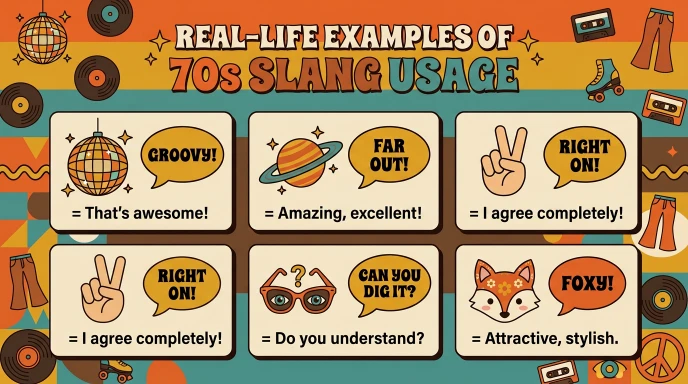
Friendly
“Your new record player is groovy!”
Casual
“Right on! Let’s go.”
Argumentative
“That’s a totally bogus excuse.”
Social Media
“Retro vibes today feeling groovy! ✌️”
Gaming
“Right on, team! We won!”
Origin and Background of 70s Slang Terms
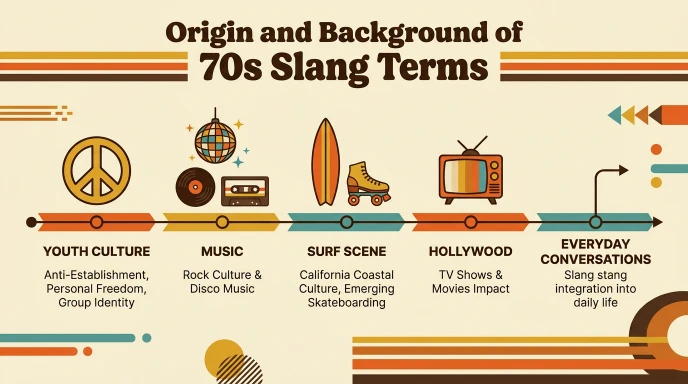
The 1970s were a decade of major cultural change. Music, movies, fashion, and youth culture all influenced the language people used.
Many slang expressions came from:
- Hippie culture
- Disco clubs
- Rock music
- Surfing communities
- African American Vernacular English (AAVE)
- College campuses
- Television shows
Some phrases became worldwide through popular musicians and Hollywood films.
Comparison with Similar Slang
| Slang | Era | Meaning | Still Common? |
| Groovy | 1970s | Cool | Occasionally |
| Cool | Multiple decades | Good or stylish | Yes |
| Awesome | 1980s onward | Excellent | Yes |
| Lit | Modern | Exciting or amazing | Yes |
| Fire | Modern | Extremely good | Yes |
Modern slang changes much faster than 70s slang, but many older expressions remain easy to understand.
When to Avoid Using 70s Slang Terms
Although these expressions are generally harmless, they may not fit every situation.
Avoid using them:
- In formal business emails
- Academic writing
- Professional presentations
- Legal documents
- Serious workplace communication
They’re best suited for casual conversations, nostalgic content, and entertainment.
Polite Alternatives
If you prefer more modern language, consider these alternatives.
| 70s Slang | Modern Alternative |
| Groovy | Great |
| Far Out | Amazing |
| Bogus | Unfair |
| Foxy | Attractive |
| Bread | Money |
| Chill | Relax |
| Right On | I agree |
Why People Use 70s Slang Terms
People continue using these expressions because they:
- Add personality to conversations
- Create nostalgic feelings
- Reference classic movies and music
- Celebrate retro culture
- Make conversations more entertaining
- Show appreciation for 1970s history
Many younger users also enjoy using them humorously on social media.
Impact of Using Slang in Communication
Slang makes conversations feel more natural and personal. Using 70s slang terms can create a relaxed atmosphere and connect people through shared cultural references.
However, it’s important to know your audience. Someone unfamiliar with vintage slang may not understand phrases like “far out” or “can you dig it.” In professional or formal settings, standard English is usually the better choice.
Is It Safe for Social Media?
Yes. Most 70s slang terms are safe for platforms like:
- TikTok
- Snapchat
- X (formerly Twitter)
Since these expressions are generally friendly and non-offensive, they work well in retro-themed posts, nostalgic captions, and vintage content.
Frequently Asked Questions
What are 70s slang terms?
They are informal words and phrases that became popular during the 1970s and reflected the culture of that decade.
What does “groovy” mean?
“Groovy” means cool, stylish, excellent, or enjoyable.
Do 70s slang terms have full forms?
No. Most are regular words or phrases rather than abbreviations.
Are 70s slang terms still used today?
Yes. Many appear in classic movies, retro content, music, and social media nostalgia posts.
Are 70s slang terms offensive?
Most are neutral and friendly. Context matters for a few words, but they are generally considered harmless.
Why do people still search for 70s slang terms?
People often encounter them in vintage media, songs, books, and TV shows or simply enjoy learning about the language of past decades.
Conclusion
70s slang terms offer a fascinating glimpse into the language, culture, and personality of the 1970s. Expressions like groovy, far out, right on, and bogus helped people communicate with style and humor, and many are still recognized today. If you’re watching classic films, listening to old music, or creating retro-themed social media content, understanding these phrases makes the experience more enjoyable. While they aren’t ideal for formal communication, they remain fun, nostalgic expressions that continue to connect generations through language and pop culture.
Read more about!
- What Does JFC Mean in Slang? Simple Meaning & Examples
- Pinky Meaning Slang: Definition, Texting Examples & Uses
- LMR Slang: Modern Meaning Explained Simply

Hi, I’m Zunaira Shafiq, a slang writer and language enthusiast. I enjoy exploring modern slang, internet expressions, texting abbreviations, and social media terms, then explaining them in simple, easy-to-understand English. My goal is to help readers understand the meaning, origin, and correct usage of popular slang words through clear definitions and real-life examples. I love making online language easier for students, language learners, and anyone who wants to stay updated with modern communication.