Slang for bad refers to informal words or phrases people use to describe something unpleasant, disappointing, low-quality, or negative in everyday conversations.
Slang for bad is a popular search because English speakers often use informal words instead of simply saying “bad.” If you’re texting a friend, scrolling through social media, watching movies, or playing online games, you’ll come across slang that describes something unpleasant, disappointing, low quality, or unfortunate.
At the same time, some slang words that literally mean “bad” can actually mean “good” depending on the context, making them confusing for English learners.
Understanding slang for bad helps you communicate more naturally and understand modern conversations.
This guide explains the most common slang words, where they’re used, their meanings, and when it’s better to choose standard English instead.
Quick Answer
Slang for bad includes informal words people use to describe something negative, disappointing, poor quality, or unpleasant. Depending on the context, some slang terms can also mean the opposite and describe something impressive or cool.
What Does Slang for Bad Mean in Text?
When people search for slang for bad meaning in text, they usually want to understand informal words used in messages, comments, or memes.
Instead of saying:
- “That movie was bad.”
Someone might say:
- “That movie was trash.”
- “That game was weak.”
- “That idea is lame.”
These expressions make conversations sound more casual and natural.
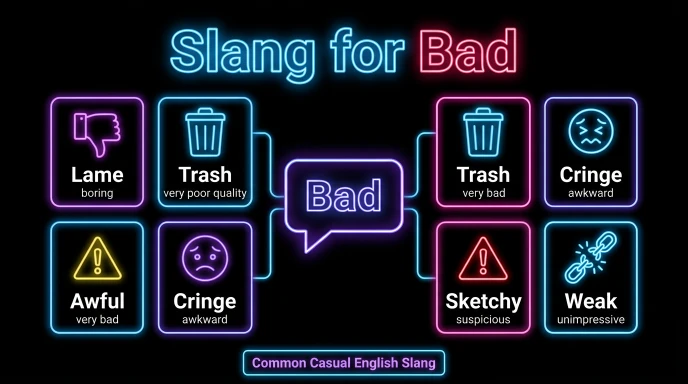
Common Slang for “Bad”
| Slang | Meaning |
| Trash | Very poor quality |
| Lame | Boring or disappointing |
| Weak | Not impressive |
| Mid | Average or disappointing |
| Wack | Strange or low quality |
| Garbage | Extremely bad |
| Cringe | Embarrassing or awkward |
The intended meaning depends on the context and audience.
Slang for Bad Full Form
Many people search for:
- Slang for bad full form
- Slang for bad meaning slang
- What does slang for bad stand for
Unlike abbreviations such as LOL or BRB, slang for bad does not have a full form.
Instead, it refers to a group of informal words people use to replace the adjective bad.
These slang terms often express stronger emotions than standard English.
Is Slang for Bad Rude, Offensive, or Neutral?
Most slang words for bad are neutral to mildly informal, but some can sound rude depending on how they are used.
Neutral Examples
- Mid
- Lame
- Weak
Stronger or Harsher Examples
- Trash
- Garbage
- Wack
When talking to teachers, coworkers, or clients, it’s usually better to use standard English.
Where Is Slang for Bad Commonly Used?
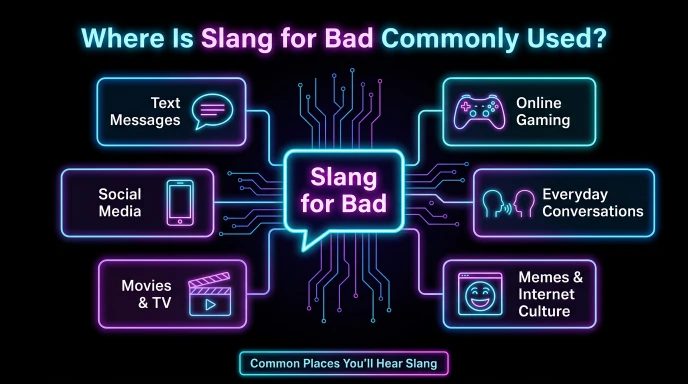
Informal words for bad appear in many places.
Text Messages
“That movie was trash.”
Social Media
“This update is mid.”
Gaming
“That weapon is weak.”
Music Reviews
“The album was fire.” (Positive)
“The album was garbage.” (Negative)
Everyday Conversations
“This restaurant is lame.”
Real-Life Examples of Usage
Friendly
“That joke was kind of lame.”
Casual
“This phone is trash.”
School
“The test was rough, but not impossible.”
Gaming
“This character is weak.”
Social Media
“That trend is so mid.”
Movie Review
“The ending was disappointing.”
Origin and Background of Slang for Bad
People have created informal alternatives for bad for generations.
Many modern slang words come from:
- Youth culture
- Music
- Movies
- Sports
- Internet communities
- Gaming
- Social media
Some expressions disappear over time, while others become part of everyday English.
New slang continues to appear every year.
Comparison with Similar Slang
| Slang | Meaning | Tone |
| Trash | Very poor | Strong |
| Garbage | Extremely bad | Strong |
| Mid | Average or disappointing | Mild |
| Weak | Not impressive | Casual |
| Lame | Boring | Friendly |
| Cringe | Embarrassing | Informal |
| Wack | Strange or poor quality | Casual |
When to Avoid Using Slang for Bad
Avoid slang in:
- Business emails
- Academic papers
- Job interviews
- Formal presentations
- Professional reports
Instead, use:
- Poor
- Low quality
- Disappointing
- Unsatisfactory
- Ineffective
These words sound more professional.
Polite Alternatives
If slang feels too informal, try these expressions.
| Slang | Polite Alternative |
| Trash | Poor quality |
| Garbage | Unsatisfactory |
| Weak | Not very effective |
| Mid | Average |
| Lame | Uninteresting |
| Wack | Unusual or disappointing |
These alternatives work better in professional conversations.
Why People Use Slang for Bad
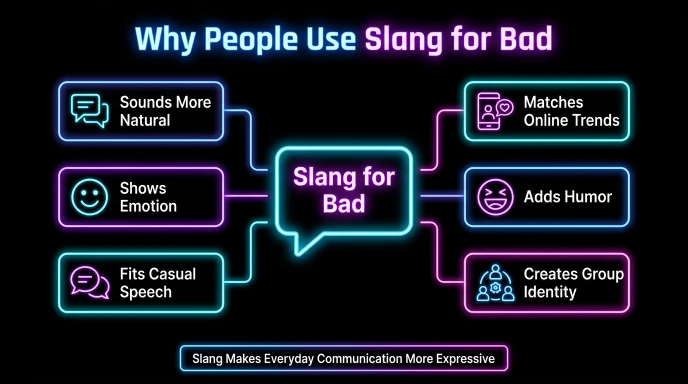
People choose slang because it:
- Adds emotion.
- Sounds more natural.
- Reflects internet culture.
- Makes conversations more expressive.
- Helps connect with friends and online communities.
Slang also changes quickly, keeping conversations fresh and relatable.
Impact of Using Slang in Communication
Using slang has both benefits and drawbacks.
Benefits
- Makes conversations sound natural.
- Expresses stronger feelings.
- Fits social media culture.
- Creates a casual tone.
Drawbacks
- Older generations may not understand it.
- Some words become outdated quickly.
- It may sound unprofessional in formal settings.
Always consider your audience before using slang.
Is Slang for Bad Safe for Social Media?
Yes.
Most slang for bad is safe to use on:
- TikTok
- X
- Snapchat
- Discord
However, avoid using insulting or offensive language when criticizing others online.
Examples in Different Contexts
Friendly
“That movie was kind of mid.”
Casual
“This pizza is trash.”
Argumentative
“That excuse is weak.”
Gaming
“This update is garbage.”
Social Media
“That trend is cringe.”
Everyday Conversation
“The service was disappointing.”
Comparison
| Expression | Meaning | Tone | Best Used |
| Trash | Very bad | Casual | Friends |
| Garbage | Extremely bad | Informal | Social media |
| Mid | Average | Friendly | Online discussions |
| Weak | Poor performance | Casual | Gaming |
| Lame | Boring | Neutral | Everyday speech |
| Poor | Low quality | Formal | Professional writing |
FAQs
What is slang for bad?
Slang for bad includes informal words like trash, lame, weak, mid, garbage, wack, and cringe, depending on the situation.
Does slang for bad have a full form?
No. It is not an abbreviation and has no full form.
Is “mid” a slang word for bad?
Yes. Mid usually means something is average or disappointing rather than excellent.
Is “trash” offensive?
It can sound harsh if directed at a person, but it’s commonly used to describe poor-quality things or performances.
Can some slang words for bad mean good?
Yes. In some contexts, words like bad or sick can actually mean impressive or excellent, depending on the speaker and culture.
Should I use slang for bad in professional writing?
No. Formal alternatives such as poor, unsatisfactory, or disappointing are better choices.
Conclusion
Understanding slang for bad helps you follow modern conversations, social media posts, movies, and everyday English more easily. Informal expressions like trash, mid, lame, weak, garbage, and cringe are commonly used to describe something negative, disappointing, or low in quality. While these slang words make casual conversations more expressive, they are usually not suitable for professional or academic settings. By choosing the right word for the right audience, you can communicate naturally while avoiding misunderstandings and keeping your message clear.
Read more about!
- LMR Slang: Modern Meaning Explained Simply
- Pinky Meaning Slang: Definition, Texting Examples & Uses
- VC Meaning Slang: Easy Guide with Real-Life Examples

Hi, I’m Zunaira Shafiq, a slang writer and language enthusiast. I enjoy exploring modern slang, internet expressions, texting abbreviations, and social media terms, then explaining them in simple, easy-to-understand English. My goal is to help readers understand the meaning, origin, and correct usage of popular slang words through clear definitions and real-life examples. I love making online language easier for students, language learners, and anyone who wants to stay updated with modern communication.